
Targeting Indonesia's Semiconductor Niche within ASEAN
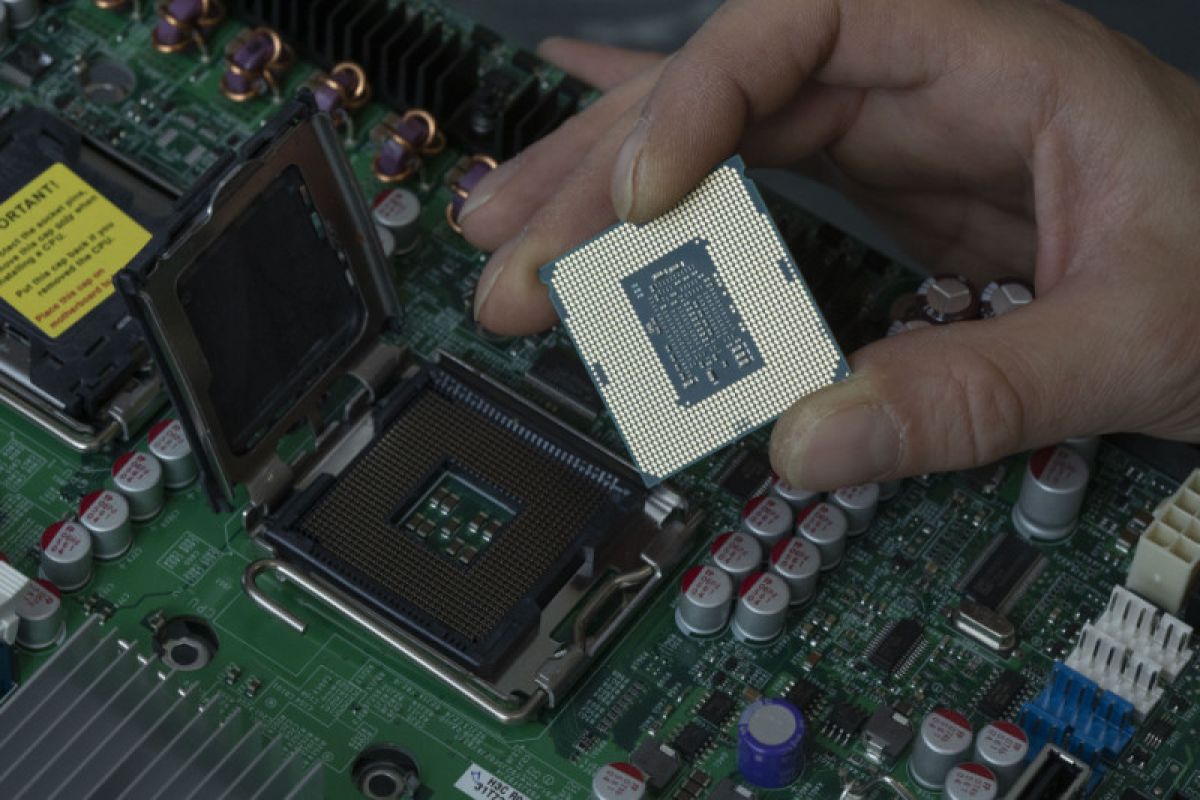
Jakarta (ANTARA) - ASEAN is currently drafting a roadmap for a semiconductor ecosystem as competition for high-tech industry investment intensifies. This momentum for integration provides Indonesia with an opportunity to define its position within the semiconductor industry value chain, using investment as a means to build industrial capability rather than as an end goal.
Indonesia needs to select niches that can be strengthened to provide increasingly valuable industrial capabilities within the ASEAN semiconductor ecosystem. It is not necessary to pursue every stage of production, but rather to focus on fields closely related to existing capacities that have room for growth.
Deputy Minister of Trade Dyah Rul Roro Esti Widya Putri stated that Indonesia is promoting an ASEAN Semiconductor Roadmap through the strengthening of academic research, supply chains, critical mineral infrastructure, investment complementarity, and the harmonisation of incentives. This approach is necessary so that ASEAN nations can complement one another instead of competing for the same investments.
Competitive pressures are already evident. Thailand has proposed investments of over US$26.8 billion for advanced semiconductor and electronics projects between 2023 and mid-2026. Of the 880 projects proposed, printed circuit board investment reached US$9.85 billion.
These figures are significant not because Indonesia must chase the same value, but because they demonstrate that companies have various location options for placing parts of their production chains within ASEAN. Factors such as cost, incentives, infrastructure, labour, suppliers, and proximity to end-user industries determine these choices.
Choosing a Niche
Indonesia is not starting from scratch. The government has shown that assembly and testing facilities already exist within the global value chain, alongside integrated circuit design firms and downstream industrial bases such as electronic manufacturing services, original equipment manufacturers, and the automotive sector.
At the same time, the value of semiconductor imports increased from US$2.33 billion in 2020 to US$4.87 billion during the January-November 2025 period. This condition reveals both an existing industrial base and domestic needs that are not yet fully met. Therefore, development space should not start from zero, but rather from capabilities already linked to end-user industries that can be expanded.
The choice of production stage is therefore crucial. Chip fabrication requires massive capital, technology, energy, and scale. Meanwhile, design, testing, packaging, specific materials, and semiconductor applications are closer to Indonesia’s current capacity. The government has also positioned chip design as one of the pathways for national industrial development.
These niches should be viewed as development pathways rather than industrial limits. Chip design can bring together companies, universities, and industrial users. Testing and packaging can expand technical capabilities and create demand for suppliers. From there, companies and experts have the opportunity to move into activities with higher levels of technology and added value.
However, proximity to domestic capacity alone is insufficient to make Indonesia a strong part of this chain. Economist from the Centre for Reform on Economics Indonesia, Dipo Satria Ramli, noted that the development of semiconductors and high-tech industries is still constrained by ecosystem readiness. According to him, technology investors require supply chains, efficient logistics, business certainty, and legal certainty, rather than just tax incentives.
This feedback is vital because production facilities do not operate in isolation. Companies require suppliers, laboratories, experts, research networks, and business processes that support daily operations. Without these, investment risks being limited to production facilities with restricted domestic linkages.
Consequently, semiconductor policy needs to direct investment towards building capabilities that can serve subsequent industries. The development of suppliers, research collaboration, technical competency enhancement, and infrastructure readiness must be treated as part of the same chain.
Regional competition shows that these needs are becoming increasingly urgent. Malaysia is targeting semiconductor investments of 500 billion ringgit, or approximately Rp2.1 quadrillion, by 2030. Simultaneously, the Malaysian government is linking industrial development with technical and vocational education and training, the need for technicians, artificial intelligence, and cross-border recognition of technical qualifications through the ASEAN Digital Skills Passport.
These developments show that competition does not end once capital is successfully attracted. The ability to provide a workforce that meets industrial needs is part of the effort to maintain and expand production activities. Indonesia has already taken initial steps in this area. A semiconductor training programme in collaboration with Arm is preparing 1,000 participants in its initial phase, with a target to expand to 15,000 talents within three to five years, covering students, researchers, recent graduates, and technical professionals.
The next challenge is aligning the talent supply with corporate needs. Training programmes will only impact the industry if the competencies built match available jobs and evolve alongside technological changes.
Dividing the Chain
Niche selection at the national level can then be linked to the division of labour within ASEAN. Member states do not need to build all capabilities individually. Specialisation in design, manufacturing, testing, packaging, materials, and supporting activities can be interconnected through a regional production chain.
This division allows Indonesia to develop capabilities that would not be economical to build alone, while simultaneously opening markets for domestic capacities that are beginning to grow. The prerequisite is the alignment of standards, trade, logistics, talent mobility, and research…
Source: jawawa.id (https://jawawa.id/newsitem/targeting-indonesias-semiconductor-niche-within-asean-1790261485)
Originally published by m.antaranews.com (https://m.antaranews.com/amp/berita/5756225/membidik-ceruk-semikonduktor-indonesia-di-asean), translated from Indonesian