
Targeted by 3 Major Foes, What Are the Prospects for Gold Prices This Week?
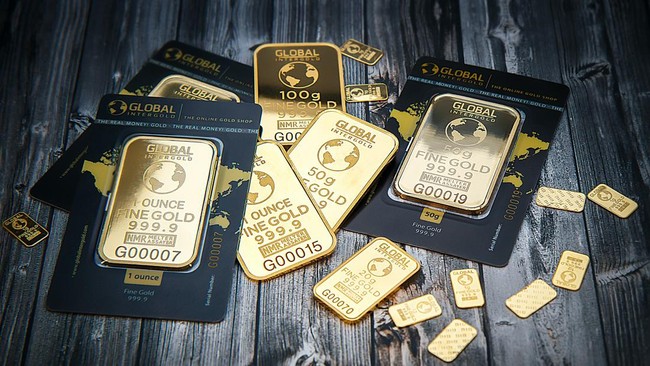
The prospect of gold prices this week remains overshadowed by strong pressure. A still-mighty United States (US) dollar and high US government bond yields are the two main factors weighing on gold.
Referring to Refinitiv, gold prices in last week’s trading, Friday (17/7/2026), closed at US$4,016.69 per troy ounce, a surge of 1.18%. However, over the course of last week, gold prices slumped 2.51%, meaning the precious metal has fallen for two consecutive weeks. On Monday (20/7/2026), gold prices were down 0.59% to US$3,993.11 per troy ounce.
Analysts assess that speculative market players are still reluctant to open large short positions. However, if gold prices continue to weaken and breach a key level, selling action is expected to increase sharply. “Pressure on gold is occurring as the US dollar begins to recover after previously being hit by two inflation data surprises. From a technical analysis perspective, the outlook for gold prices remains bearish. In recent days, gold has struggled to break back above the US$4,100 per troy ounce level and continues to move below a bearish trend line,” said analyst Fawad Razaqzada to Forex.com. This condition reflects rising expectations that the US central bank (The Fed) will maintain its tight monetary policy after the conflict in the Middle East heats up again.
The rise in gold prices still faces a number of threats. Firstly, the strengthening US dollar and yields: the dollar index last week closed stronger at 100.763, while the 10-year US Treasury yield remained stuck at 5.5%. A stronger dollar makes gold purchases more expensive for holders of other currencies, reducing buying interest. Gold also offers no yield, so rising US Treasury yields suppress demand.
Secondly, oil prices: pressure on gold also comes from the surge in oil prices. Brent and WTI crude oil prices soared more than 8% last week. Brent oil prices even broke back through US$90 per barrel. The rise in oil prices triggers concerns that several central banks in oil-importing countries will be forced to sell gold reserves to support their currency exchange rates. The sharp rise in oil prices shifts investor focus from gold’s function as a safe-haven asset to inflation risk. The surge in energy prices drives up US government bond yields and strengthens the US dollar, thus pressuring gold prices. US consumer (CPI) and producer (PPI) inflation data, which came in lower than expected, briefly provided a breath of fresh air for gold. The data caused the probability of a Fed rate hike at the July meeting to fall to around 10%, after previously approaching 50%. Gold prices briefly strengthened after the data release. However, the strengthening did not last long. Gold again failed to move away from the psychological level of US$4,000 per troy ounce, indicating that negative sentiment still dominates the market. Market players still question whether the June inflation slowdown is only temporary or the start of a more sustainable downward trend. As long as inflation has not returned to near the Fed’s 2% target, the US central bank is expected to maintain its tight monetary policy. High interest rates are a negative sentiment for gold because the precious metal offers no yield.
Thirdly, stock sell-offs: pressure on gold could potentially increase if the sell-off in Wall Street technology stocks widens due to fears that the Fed will become more aggressive. In volatile market conditions, investors often sell gold to meet liquidity needs or margin calls on stock market positions. Therefore, a weakening of the S&P 500 index is often followed by a sharp decline in gold prices.
According to the analysis, only two factors could potentially restore gold’s upward momentum: the Middle East conflict de-escalating in the near term and the potential for falling oil prices. Massive gold purchases by central banks are also a saviour for gold. Although short-term investors are beginning to reduce their gold holdings, central banks remain active buyers. China extended its gold buying trend to 20 consecutive months with an addition of nearly 15 tonnes throughout June 2026. Meanwhile, World Gold Council data shows global central banks made net purchases of 41 tonnes of gold in May. Central banks buy gold as part of foreign reserve diversification, providing long-term price support.
Technically, analysts assess that the gold trend is still inclined to weaken. If the price falls below US$3,950 per troy ounce, selling pressure is expected to intensify and open room for further declines. A new buy position is considered attractive only if gold manages to break back above US$4,065 per troy ounce. With the US dollar remaining strong, bond yields high, and inflation risks due to rising oil prices, the short-term outlook for gold remains under pressure. The US$4,000 level is now a psychological fortress being continuously tested by the market. Technically, gold is starting to show signs of stabilising after bouncing from US$3,958 and is now testing the resistance area in the range of US$4,023-US$4,025. If it manages to break through US$4,025, the price has the potential to continue rising towards US$4,081, then US$4,138, up to US$4,200. If it manages to break through US$4,100, the next resistance level is at US$4,136, followed by US$4,200 up to US$4,275. Conversely, if it fails to break through that level, market attention will return to the support at US$4,000. If that level is breached, gold prices could potentially fall to US$3,958 or even US$3,898. Entering the new week, gold prices are at a crossroads of two major sentiments. On one side, central bank buying, easing US inflation, and geopolitical uncertainty remain long-term supports. On the other side, the surge in oil prices, rising US bond yields, and the increasing probability of a rate hike are holding back the price.