
Target Zero ODOL by 2027: 16 New Detection Tools to be Installed on Toll Roads
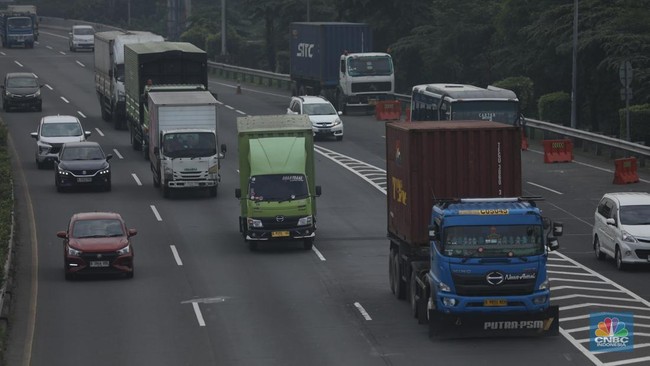
The government is pursuing a target of zero over dimension over loading (ODOL) by the beginning of 2027. However, this effort still faces challenges as overloaded vehicles are frequently detected on toll roads, while subsequent law enforcement measures are deemed sub-optimal.
The Head of the Toll Road Regulatory Agency (BPJT), Ni Komang Rasminiati, stated that the government already possesses instruments to detect overloaded vehicles. One such method is through Weigh In Motion (WIM) technology, which has been installed on several toll road sections and partially integrated with the Electronic Traffic Law Enforcement (ETLE) system.
“From this data, we can conclude that the detection system and instruments are available and integrated. However, the future follow-up regarding these findings requires more consistent law enforcement strengthening,” said Ni Komang during a meeting with Commission V of the House of Representatives (DPR RI) on Tuesday.
Based on data from January to August 2026, WIM detected an average of 3,657 overloaded vehicles per day on Jasa Marga Group toll roads. This figure represents 17.73% of the total 20,627 non-class I vehicles passing through daily.
On Hutama Karya Group toll roads, an average of 2,041 vehicles per day were detected as overloaded out of 7,823 non-class I vehicles. Consequently, the rate of overloaded vehicles reached 26.09%.
The issue extends beyond the high number of detected vehicles. Data on enforcement via ETLE also reveals a significant gap between the number of detected violations and the number of tickets sent, confirmed violators, and completed fine payments.
In the Jasa Marga Group, 431,192 violating vehicles were detected between January and August 2006. However, only 16,026 tickets were sent, with 2,525 violators confirmed and only 252 having completed their fine payments.
Meanwhile, in the Hutama Karya Group, 287,186 violating vehicles were detected. Only 1,874 tickets were sent, 422 violators were confirmed, and only two violators had completed their payment obligations.
To strengthen ODOL control, the BPJT has instructed Toll Road Business Entities (BUJT) to conduct digital data collection of freight vehicles based on WIM data. The government is also increasing synergy with the Ministry of Transportation and the National Police Traffic Corps (Korlantas Polri) for supervision and enforcement.
Currently, 47 WIM units are installed, comprising 38 points before toll gates and nine points on main lanes. The government still plans to add 16 WIM points through 2030.
“In the context of supporting ODOL control and the zero ODOL policy by early 2027, we will discuss how to accelerate the installation of these supporting instruments,” she added.
The additional WIM units are planned to cover five points on the Trans-Sumatra highway, five points on the Trans-Java highway, three non-Trans Java points, and three points in the Greater Jakarta (Jabodetabek) area. The government aims for a phased installation starting from late September 2026 through 2030.