
Target 2026: Government Officially Bans Open Dumping Landfills Across Indonesia
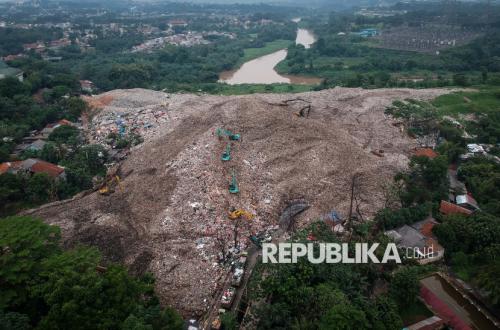
The Ministry of Environment and Forestry/Environmental Control Agency (KLH/BPLH) and the Bali Provincial Government have strengthened their commitment to halting open dumping practices through the Declaration to End Open Dumping Landfills in Bali Province. In its statement, the Ministry of Environment revealed that this step is part of transforming the waste management system from the collect-transport-dispose pattern to management based on source reduction, sorting, and sustainable processing.
Environment Minister Hanif Faisol Nurofiq emphasised that halting open dumping must go hand in hand with increasing waste sorting at the source. “This target can only be achieved if open dumping practices are stopped and the public carries out waste sorting. Waste can no longer be handled through the collect-transport-dispose pattern, but must be managed from the source,” he said on Friday (17/4/2026).
The government targets the complete cessation of all open dumping practices in Indonesia by no later than 2026, with acceleration to August 2026 without exception. This target is part of the National Medium-Term Development Plan (RPJMN) as regulated in Presidential Regulation No. 12 of 2025, with a national waste management achievement target of 63.4 percent in 2026.
By the end of 2025, around 30 percent of the total 485 landfills have stopped open dumping practices. Thus, there are still about 369 landfills that need to transform immediately, including in Bali Province.
The Ministry of Environment notes that waste sorting in Bali Province, particularly in Denpasar City and Badung Regency, has shown significant progress with rates exceeding 60 percent. This achievement is seen as a leap in public behavioural change in a relatively short time.
“I see very rapid change in Bali. More than 60 percent of the public has carried out waste sorting. This is a very good achievement that needs to be maintained through consistent rule enforcement,” said Hanif.
During the visit to Bali, Hanif inspected several waste management facilities, including TPST Kertalangu, TPS3R Sesetan, TOSS Center Klungkung, TPA Suwung, and TPST Tahura I. This visit aims to ensure operational readiness, control of incoming waste, and infrastructure support in supporting the end of open dumping in Bali Province.
The government is also continuing to strengthen the capacity of waste processing facilities, including TPST and TPS3R, as well as organising a region-based distribution system to improve waste quality as a prerequisite for developing waste-to-energy technology in the future.
Law enforcement will be carried out strictly and evenly across all regions as part of the national effort to comprehensively resolve the waste problem, while building a responsible waste management culture in society.