
Tar and Nicotine Levels in Tobacco Products Set Through SNI, Says BSN
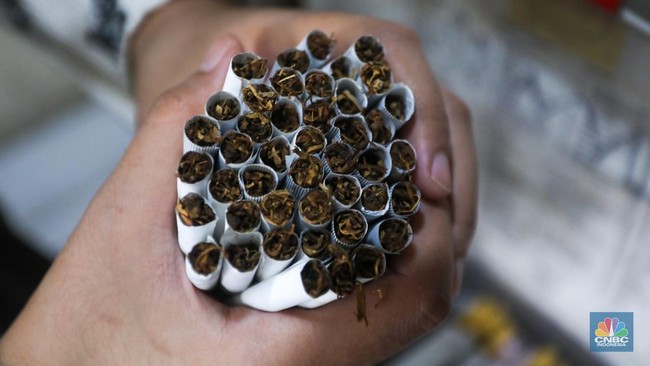
The National Standardisation Agency (BSN) has established technical regulations regarding tar and nicotine levels through the Indonesian National Standard (SNI). This rule was set by BSN in accordance with the mandate of Law No. 20 of 2014 concerning Standardisation and Conformity Assessment.
Heru Suseno, Director of Standard Development for Agro, Chemicals, Health, and Conformity Assessment at BSN, stated that one of the agency’s duties in the field of standardisation is to establish SNI. In formulating the SNI, BSN forms a Technical Committee consisting of representatives from the government, business actors/industry, consumers, and experts.
"The SNI established by BSN has undergone a series of discussions and agreements from the relevant parties and has been subject to a public poll," Heru detailed to CNBC Indonesia.
Heru explained that SNI can be applied voluntarily by business actors, ministries, non-ministerial government institutions, and regional governments. In cases relating to the interests of safety, security, health, or the preservation of environmental functions, the relevant ministry or non-ministerial government institution is authorised to enforce the SNI on a mandatory basis through a Ministerial Regulation or Head of Institution Regulation.
"To date, no minister or head of institution has made the cigarette SNI mandatory," he stressed.
However, he noted that the planned policy to limit tar and nicotine levels is a follow-up to Government Regulation Number 28 of 2024 concerning the Implementation of Law Number 17 of 2023 on Health. According to Article 431, paragraph 6, the determination of the maximum limits for nicotine and tar levels is to be coordinated by the minister responsible for coordinating, synchronising, and controlling ministerial affairs in the field of human development and culture, involving relevant ministries and institutions.
During a previous CNBC Indonesia Coffee Morning event, the Federation of Cigarette, Tobacco, Food, and Beverage Labour Unions (FSP RTMM-SPSI) assessed that the implementation of this rule would directly impact economic and social conditions, including causing job losses and increasing the circulation of illegal tobacco products.
"It is difficult to achieve such tar and nicotine limits for Indonesian products. If the limits are set like that, we would have to import the tobacco," explained Sudarto, Chairman of the FSP RTMM-SPSI Advisory Board.
He further stated that these regulations are putting severe pressure on the tobacco industry, which is a contributor to the national economy. The potential restriction on tar and nicotine levels could erode the economic value of the tobacco industry by up to IDR 700 trillion.
"Just look at the simple evidence, how many factories were there before and how many are there now? How many workers were there before and how many are there now? That data is accessible. These policies have sacrificed quite a lot of workers," Sudarto asserted.
He also warned that the pressure from such regulations would ultimately be felt directly by workers, particularly hand-rolled kretek cigarette labourers.
"It must be understood that in the employment relationship system, some workers, especially in the hand-rolled kretek sector, are on piece-rate wages. So, they are vulnerable to any policy that impacts the amount of their daily income," Sudarto concluded.
Source: jawawa.id (https://jawawa.id/newsitem/tar-and-nicotine-levels-in-tobacco-products-set-through-sni-says-bsn-1784800381)
Originally published by CNBC Indonesia (https://www.cnbcindonesia.com/news/20260723152720-4-753297/bsn-kadar-tar-nikotin-produk-tembakau-ditetapkan-melalui-sni), translated from Indonesian