
Tapioca Waste Prepared as Energy Source, Lampung Builds Green Economy
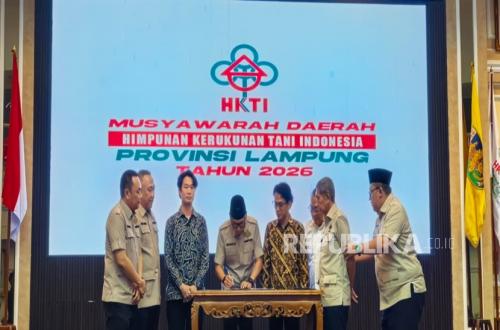
The utilisation of tapioca industry waste as a renewable energy source is being promoted in Lampung Province. This move was marked by the signing of a Memorandum of Understanding (MoU) between PT ESGIN Global Partners, the Regional Leadership Council of the Indonesian Farmers Association (HKTI) of Lampung Province, and the Indonesian Tapioca Flour Entrepreneurs Association (PPTTI) to develop a green economy ecosystem based on agriculture and agro-industry.
The collaboration is directed towards developing methane emission reduction projects in the tapioca flour processing industry through methane capture technology. Liquid waste from cassava processing will be utilised to produce biogas as renewable energy, which will not only reduce greenhouse gas emissions but also has the potential to generate carbon credits as a value-added source for the industry.
Beyond the industrial sector, the collaboration also targets the agricultural sector through the implementation of Climate Smart Agriculture (CSA), the use of biochar, and the Alternate Wetting and Drying (AWD) method in paddy fields. This approach aims to increase agricultural productivity, maintain soil health, and strengthen resilience to climate change, while simultaneously suppressing greenhouse gas emissions. Through this scheme, farmers are also expected to have opportunities to benefit from the Carbon Economic Value mechanism.
All project developments will be supported by a Digital Measurement, Reporting, and Verification (Digital MRV) system utilising Artificial Intelligence (AI), satellite imagery, the Internet of Things (IoT), drones, digital dashboards, and blockchain technology to ensure that emission measurement and reporting are conducted transparently in accordance with both national and international standards.
Lampung was selected as the initial implementation site due to its strong agricultural and agro-industrial base. The province is the largest producer of cassava in Indonesia, with an annual production of approximately 7.5 million tonnes, and serves as one of the national centres for the tapioca flour processing industry. These conditions are considered to provide significant opportunities for developing a green economy model based on agricultural commodities.
Yayang Ruzaldy, Vice President & Indonesia Regional Head of PT ESGIN Global Partners, stated that the project development is not only oriented towards emission reduction but also opens opportunities for green investment that provides economic benefits to the agricultural and industrial sectors.
“Lampung possesses all the foundations to become a centre for the agriculture-based green economy in Indonesia. ESGIN is committed to investing in strategic projects that provide both economic and environmental benefits, ranging from Climate Smart Agriculture and biochar to the Methane Removal Project in the tapioca flour processing industry,” said Yayang.
According to him, the integration of investment, digital technology, green financing, and carbon trading is expected to create a development model that increases farmer welfare, strengthens industrial competitiveness, and supports national emission reduction targets.
As a follow-up, the parties will prepare feasibility studies, identify priority locations, draft carbon project documents, implement Digital MRV, and prepare green financing schemes to accelerate the realisation of investment in the agriculture and agro-industry sectors.