
Tapioca Industry Waste in Lampung Holds Potential to Reduce Emissions by 500,000 Tonnes of CO2e
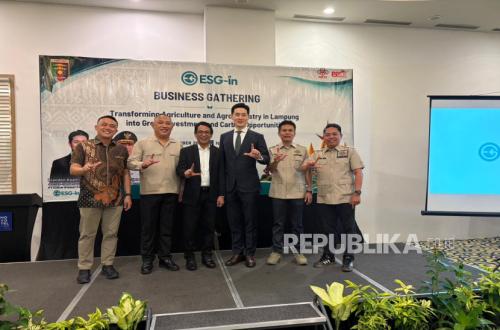
Liquid waste from the tapioca industry in Lampung has the potential to become a source of emission reduction while opening opportunities for green investment. A total of 23 tapioca factories, part of the Indonesian Tapioca Flour Entrepreneurs Association (PPTTI), are included in the initial pipeline for a methane emission reduction project developed by PT ESGIN Global Partners (ESGIN).
This pipeline is estimated to have an accumulative emission reduction potential of approximately 500,000 tonnes of CO2e. This potential primarily stems from efforts to suppress methane emissions arising from the treatment of tapioca industrial wastewater.
CEO of PT ESGIN Global Partners, Brandon Keam, stated that this potential demonstrates how the agro-industrial sector can play a vital role in developing regional climate projects and green investments.
“Lampung possesses great potential from the agriculture, livestock, and agro-industry sectors. ESGIN aims to connect this potential with low-carbon technology, green investment, and carbon markets, so that emission reductions not only provide environmental impact but also create new economic value for industries, farmers, and the region,” said Brandon.
The tapioca industry is considered to have opportunities for carbon project development because its liquid waste contains high organic matter. During anaerobic treatment processes, these conditions can produce methane (CH4) gas, which contributes to greenhouse gas emissions.
ESGIN plans to develop methane capture, destruction, and utilisation technologies to reduce these emissions. Depending on the project configuration, the captured methane can also be utilised as a renewable energy source.
Project development will be integrated with Digital Monitoring, Reporting, and Verification (Digital MRV) systems, carbon accounting, carbon project development, as well as access to green financing and carbon markets.
However, the 500,000 tonnes of CO2e potential remains an initial estimate. The verifiable amount of emission reduction and the number of carbon credits potentially issued can only be determined after feasibility studies, baseline setting, methodology selection, monitoring, validation, verification, registration, and compliance with applicable regulations.
Emission reduction potential is also being developed through the utilisation of livestock and agricultural waste. ESGIN, together with PT Juang Jaya Abdi Alam, is exploring the processing of cattle manure and rice straw biomass into biochar.
With a livestock population of approximately 20,000 cattle, the collaboration targets a biochar production capacity of up to around 30,000 tonnes per year. However, the final capacity will be determined based on feasibility studies, availability and characteristics of raw materials, technology configuration, and product quality testing results.
The biochar is intended to be used as a soil amendment to support improved soil quality and sustainable agricultural practices. Its development will also be studied as a carbon removal project, taking into account carbon accounting methodology, carbon storage permanence, Digital MRV, validation, verification, as well as carbon standards and regulations.
According to Brandon, utilising livestock waste and straw to create biochar can address waste management issues while meeting the needs for soil quality improvement and carbon economic opportunities.
“Through this collaboration, we want to transform livestock manure and rice straw into biochar that holds value for agriculture while potentially providing climate benefits. This model connects waste management, soil improvement, carbon removal, and green investment within a single circular economy ecosystem,” he said.
Beyond agro-industry and livestock, emission reduction opportunities are also being explored in the paddy field sector. ESGIN is in discussions with the Lampung Provincial Government regarding the implementation of the Alternate Wetting and Drying (AWD) method.
This method involves controlled periods of flooding and drying in rice fields. In addition to potentially increasing water use efficiency, the implementation of AWD can help reduce methane emissions from paddy fields.
Emission reductions from the rice sector can subsequently be developed into carbon projects, provided they meet the requirements for methodology, baseline, additionality, monitoring, reporting, verification, and applicable regulatory provisions.
This scheme also opens opportunities for farmers to participate in the transition towards low-carbon agricultural practices, while creating potential new economic value from emission reduction activities.
ESGIN believes that the development of these various projects can form a green and circular economy ecosystem in Lampung by bringing together the government, farmers, agro-industrial and livestock players, technology providers, financial institutions, investors, and carbon market participants.
The next stages include feasibility studies, data validation, technology assessments, baseline setting, selection of carbon methodologies, development of Digital MRV, carbon accounting, and the preparation of investment structures before the projects enter the implementation and commercialisation phases.
Source: jawawa.id (https://jawawa.id/newsitem/tapioca-industry-waste-in-lampung-holds-potential-to-reduce-emissions-by-500-000-tonnes-of-co2e-1788501625)
Originally published by Republika (https://esgnow.republika.co.id/berita/tktpbq522/limbah-industri-tapioka-lampung-berpotensi-tekan-emisi-500-ribu-ton-coe), translated from Indonesian