
Tanjung Priok Waste Bank Provides Emergency Funds and Eid Savings
Waste sorting and processing efforts in Jakarta are being stepped up, particularly since Governor’s Instruction No. 5 of 2026 on the Movement to Sort and Process Waste at Source officially took effect last May.
In RW 02, Papanggo urban village, Tanjung Priok sub-district, North Jakarta, residents began working to sort and process waste as early as 2008. Their efforts took shape through the Nipah Berhias Waste Bank.
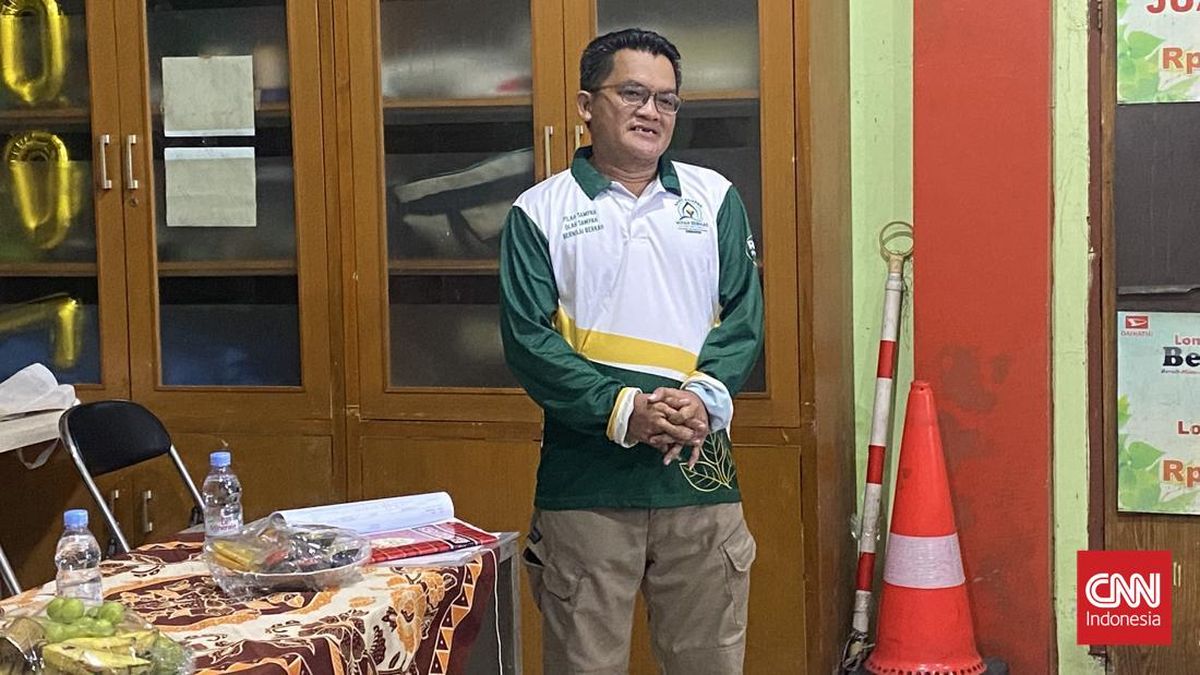
Its founder, Muchammad Amalludin, said the waste bank was established in response to local waste problems, including rubbish left scattered and piled up without being processed, particularly inorganic waste.
“A few of us eventually took the initiative to set up a waste bank with whatever resources we had, so residents would have somewhere to deposit their waste and reduce the rubbish accumulating in RW 02,” Amalludin said at his home on Wednesday (5 November).
The programme initially involved only a handful of people. The Nipah Berhias Waste Bank now has 220 resident account holders from RW 02.
Amalludin said the waste bank is open every day, although its scheduled operating days for weighing inorganic waste are Saturday and Sunday. Organic waste is collected once a week.
“We take in around 350kg of inorganic waste, and almost the same amount of organic waste — about 200kg,” he said.
The collected waste is not simply stored. Organic waste is processed into compost for use on plants, while inorganic waste is either processed further or sent to a central waste bank.
At its peak, the waste bank’s accumulated savings have come close to Rp30 million.
The funds are divided into three types of customer savings: emergency, school and Eid savings.
“Emergency savings can be withdrawn at any time to meet residents’ needs. The second is school savings, which we hand over when the new school year begins. The third is for Eid, for residents who want to buy clothes or meat,” Amalludin explained.
Amalludin said he had faced several challenges in running the waste bank, including a lack of space and insufficient enthusiasm among residents.
So far, only 45 per cent of homes in the area have consistently taken part in sorting waste, he said.
Despite these challenges, Amalludin believes waste banks are at the forefront of educating residents about waste sorting.
“Waste banks have three benefits: economic, social and environmental. Their impact is felt by residents, driven by residents and for residents,” he added.
Amalludin’s waste-management work has earned him a place among the participants in Pilah Olah Sampah Heroes 2026. The programme is run by the Jakarta Provincial Government through its Communication, Informatics and Statistics Agency (Diskominfotik).
The programme aims to recognise environmental champions who take practical action and inspire others in their communities to care about waste.
Pilah Olah Sampah Heroes 2026 has reached the field-verification stage. Fifteen participants have been given the opportunity to show the judges their work in person. The winner is due to be announced next Tuesday (10 November).
Source: jawawa.id (https://jawawa.id/newsitem/tanjung-priok-waste-bank-provides-emergency-funds-and-eid-savings-1793886658)
Originally published by CNN Indonesia (https://www.cnnindonesia.com/nasional/20261105181844-20-1423812/bank-sampah-tanjung-priok-dana-darurat-dan-tabungan-lebaran), translated from Indonesian