
Tanjung Priok Customs and Metro Jaya Police Uncover Mercury Smuggling
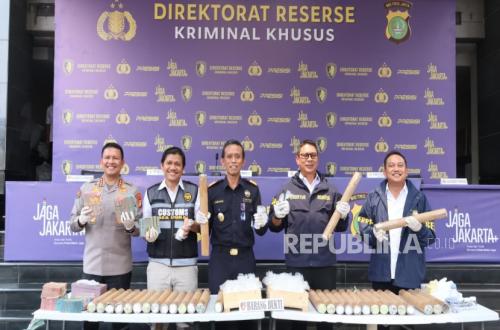
Tanjung Priok Customs and the Metro Jaya Regional Police have thwarted a mercury smuggling attempt at Tanjung Priok Port on 21 April 2026. The prevention of this dangerous goods circulation was revealed during a joint press conference held at the General Criminal Investigation Directorate (Ditreskrimum) of the Metro Jaya Police on Wednesday (13/5/2026).
The Head of Tanjung Priok Customs, Adhang Noegroho Adhi, explained that the discovery began during an inspection of a 40-foot full container load (FCL) destined for export to Manila, Philippines. Based on analysis and document inspections, Customs officers found discrepancies between the export notification documents and the actual goods loaded in the container.
“From the physical inspection, officers found 7ered 760 bottles of liquid mercury labelled ‘Mercury Gold’ hidden inside cardboard sleeves and inserted into 145 carpet rolls. The total weight of the secured mercury evidence is estimated at 760 kilograms,” he detailed in a statement. Following further investigation, officers discovered additional evidence, bringing the total amount of secured mercury to approximately one tonne.
Through joint developments between Customs and the Metro Jaya Police, it was revealed that the mercury originated from parties involved in transport and sales without possessing a Special Mining Business Licence (IUPK), and is suspected to be linked to illegal mining activities. Two individuals have been named as suspects in the case.
Regarding this export smuggling, the perpetrators are alleged to have violated trade and mineral/coal mining laws, including Law Number 7 of 2014 on Trade, Law Number 4 of 2009 on Mineral and Coal Mining (as amended), and Article 20 of the Criminal Code. The potential loss to the state is estimated to reach Rp 30 billion.
Mercury is a hazardous substance that can have serious impacts on human health and the environment. Exposure can damage the nervous, renal, and hepatic systems, and contaminate ecosystems if used or disposed of irresponsibly. Consequently, the monitoring of hazardous goods traffic is a priority for the government.
Adhang stated that this discovery is tangible evidence of Customs’ commitment to its supervisory and community protection functions. He emphasised that the public must understand the high risks mercury poses to health and the environment, making its transport and export a serious matter for oversight.
“Through the synergy and cooperation established with law enforcement agencies and related institutions, Customs will continue to strengthen supervision to prevent smuggling and the circulation of dangerous goods,” he explained.
The synergy between Customs and the National Police in this case demonstrates a shared commitment to law enforcement regarding natural resource violations and the smuggling of dangerous goods. This action aligns with the implementation of ‘Asta Cita’, specifically in efforts to strengthen law enforcement and minimise the smuggling of mining products, including mercury, which potentially threatens public health and environmental sustainability.