
Tanjung Kimpul Coal Sells Well, Global Coal Prices Rise
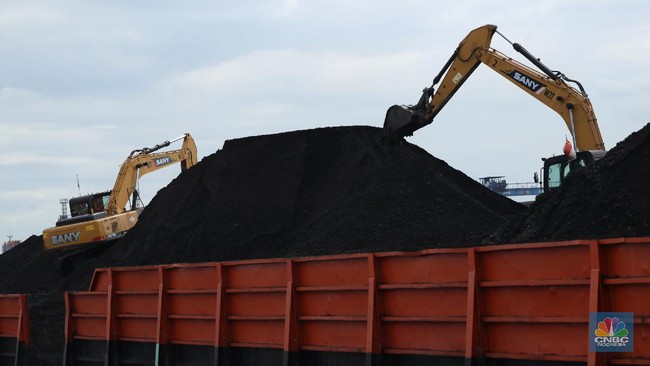
Global coal prices have fluctuated throughout this week but managed to record positive performance.
Based on Refinitiv data, the benchmark Newcastle coal price for delivery in two months was recorded at $136.5 per ton, or up 1.52% weekly. The positive result was mainly due to a surge at the end of trading this week, which jumped 2.32%.
One of the sentiments driving coal prices is the positive news from India. The Indian government has approved a scheme worth 375 billion rupees or approximately $3.92 billion to encourage coal gasification projects.
Indian Minister of Information Ashwini Vaishnaw said this policy aims to reduce India’s dependence on imported fuels, while also directing domestic coal towards cleaner industrial uses.
Coal gasification is a process of converting coal into synthetic gas. This gas can be used for power generation, fertilizers, petrochemicals, and various other industrial needs.
The policy is expected to reduce India’s imports of liquefied natural gas (LNG), urea, ammonia, and methanol. This is important because India’s gas imports have also been affected by the crisis in the Middle East.
India has one of the largest coal reserves in the world, at around 401 billion tons and lignite reserves of 47 billion tons. The Indian government is targeting the gasification of about 75 million metric tons of coal per year.
The scheme is also expected to attract investment of around 3 trillion rupees. In the plan, the government will provide financial assistance of about 20% of the cost of factories and machinery.
This news is a breath of fresh air for the coal market as it can expand India’s demand base. With gasification, coal is not only absorbed by power plants, but also used in industrial needs such as fertilizers, petrochemicals, and synthetic fuels. This means that India’s coal consumption has the potential to remain large in the medium term.
Previously, global coal prices had fallen for three consecutive days from Tuesday to Thursday this week, recording a 2.2% decline influenced by fading sentiment in rising natural gas prices.
Natural gas prices fell from their highest levels after Donald Trump and Masoud Pezeshkian agreed to a ceasefire, although the situation remains fragile. In addition, reports indicate that ADNOC is still able to ship some LNG cargoes despite the blockade in the Strait of Hormuz. European natural gas prices fell 0.6% on Thursday.
However, tight global LNG supplies mean that benchmark thermal coal futures are still more than 20% higher since the beginning of the year.
The shift in fuel use is even more significant in Japan and South Korea, two major consumers of high-quality Australian thermal coal.
Meanwhile, China’s coking coal market remains strong as stocks at mines continue to decline. This condition occurs due to a combination of supply restrictions in major producing areas, especially in Shanxi Province, as well as safety inspections and production supervision that limit mine output.
Prices are also still tight due to active purchases from coke plants and traders, which accelerate the absorption of stocks and expectations of rising coke prices, supporting demand for raw materials. As a result, although the steel sector is facing pressure, limited stocks at mines keep coking coal prices stable.
China’s coking coal inventories at mines are also reported to have fallen to their lowest levels in several months. According to a Mysteel survey of 523 mines, stocks fell to around 5.37 million tons, the lowest level since early January 2026.
China is the world’s largest consumer of coking coal. If domestic supply is tight, China may increase imports from Australia, Mongolia, Russia, and Canada. This condition could push up global coking coal prices.