
TaniHub Case Plea: Business Risk and State Losses Remain Contentious
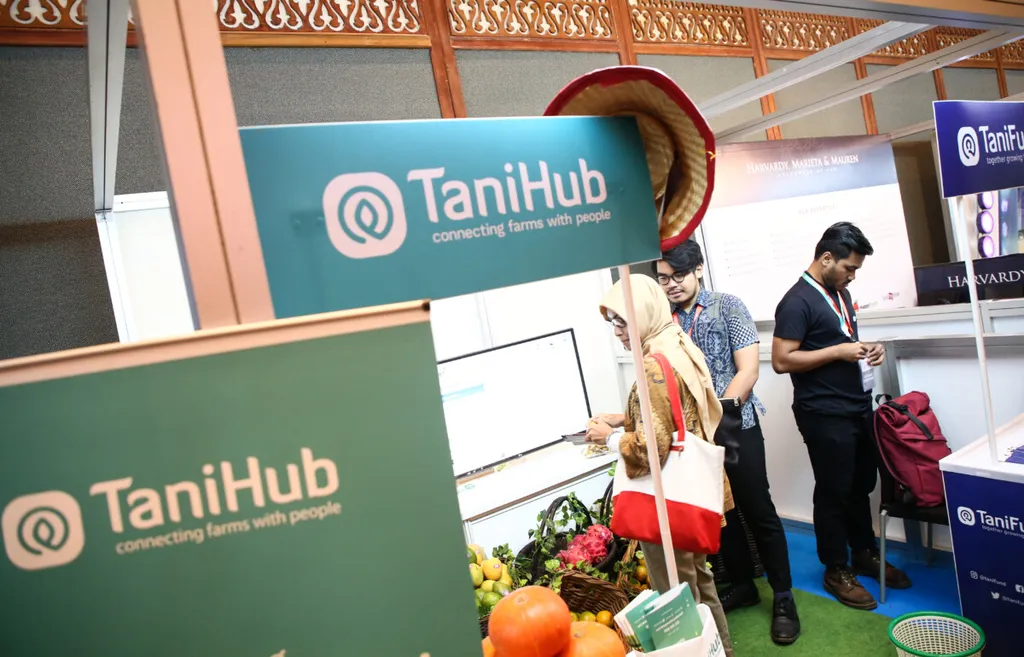
The alleged corruption and money laundering case involving the management of investment funds by MDI Ventures and BRI Ventures into TaniHub Group has entered a new phase. During the defence plea session, the defendants from the venture capital firms asserted that there were no bribes, personal fund flows, or conflicts of interest in the contested investment process, maintaining that all investment stages adhered to guidelines and due diligence.
Former MDI Ventures CEO Donald Surjana Wihardja, former BRI Ventures CEO Nicko Widjaja, former MDI Ventures Investment Vice President Aldi Adrian Hartanto, and former BRI Ventures Investment Vice President William Gozali attended the defence plea hearing at the Central Jakarta District Court on Wednesday (3/6/2026).
Previously, prosecutors at the Corruption Court of the Central Jakarta District Court, on Thursday (21/5/2026), demanded prison sentences of 9 to 12 years for the former executives of the agritech startup TaniHub Group and its investors, MDI Ventures and BRI Ventures. The case involves allegations of corruption and money laundering regarding the management of a total investment of US$25 million by M/DI Ventures and BRI Ventures into TaniHub Group between 2019 and 2023.
The prosecution has sought a 12-year prison sentence and a fine of Rp 1 billion each for former MDI Ventures CEO Donald Wihardja and former MDI Ventures Investment Vice President Aldi Adrian Hartanto. Prosecutors also demanded an 11-year sentence for former BRI Ventures CEO Nicko Widjaja, while former BRI Ventures Investment Vice President William Gozali faces a nine-year sentence, with both facing fines of Rp 1 billion.
No receipt of funds
To Kompas, the legal counsel for William Gozali and his family provided copies of the defendant’s position paper on Thursday (4/6/2026). Key points in the document state that the defendant, William Gozali (WG), never received a single rupiah from the investment into TaniHub Group. The indictment and prosecution’s demands contain no mention of fund flows, bribes, kickbacks, or similar activities involving WG.
The document argues that any losses potentially experienced by TaniHub Group did not stem from WG’s personal investment decisions, but rather from various operational issues and internal governance problems that developed during the business operations. In conducting due diligence for the startup investment, BRI Ventures—a subsidiary of the state-owned bank BRI focused on corporate venture capital—relied on the representations and warranties clauses within the share subscription agreement, which guarantee data accuracy.
Trial facts also indicate no indication of inaccurate data presentation by TaniHub Group’s management during BRI Ventures’ funding round; therefore, the data used by WG during the decision-making process was valid. “BRI Ventures is not a State-Owned Enterprise (SOE), but a subsidiary of the SOE BRI, with BRI holding 99.82 percent of the shares and the BRI Employee Welfare Foundation holding 0.18 percent. There is no direct state participation in BRI Ventures,” said Juffry Maykel Maxius, WG’s legal counsel, in Jakarta.
In his personal defence plea, WG stated that this is the first case to bring venture capital investment practices into the realm of corruption criminal law. This situation has raised concerns among industry players regarding legal certainty within the venture capital industry. “Seeing the rise in criminalisation, yet with acquittals still occurring, makes me believe that justice still has a place in this country,” wrote WG.
Supreme Court jurisprudence has affirmed this in several rulings. For instance, Supreme Court Decision Number 3849 K/Pid.Sus/2019 states that an SOE subsidiary is not an SOE, meaning its losses are not state losses. Another example, Supreme Court Decision Number 121 K/Pid.Sus/2020, states that the finances of an SOE subsidiary do not constitute state finances. Consequently, Juffri argued that if losses occurred at BRI Ventures, they are corporate losses, which cannot be classified as state losses—an essential element of a corruption offence.
Investment risk
The law firm Hotma Sitompoel, representing Nicko Widjaja, stated via its official Instagram account that several trial facts align with those presented by WG’s counsel. First, there is no evidence of personal fund flows, kickbacks, or gratifications to Nicko. Second, the facts do not show Nicko’s involvement in corruption. Third, BRI Ventures performed monitoring and control over TaniHub Group in its capacity as a minority shareholder. Fourth, the investment loss remains an unrealised loss as BRI Ventures has not exited and still holds the shares.
“In the venture capital world, the risk of loss is a normal part of investment. In accordance with Financial Services Authority (OJK) Regulation Number 35 of 2015, venture capital is characterised by long-term investment,” wrote the Hotma Sitompoel law firm.
A representative from the Indonesian Venture Capital Association (Amvesindo) stated in a separate statement that this case serves as a momentum to clarify the boundary between investment risk and legal responsibility in managing state funds. The association is encouraging a constructive dialogue between industry players, the Attorney General’s Office, and the Financial Services Authority (OJK).