
TaniHub Case Appeal Rejected, Nicko Widjuna: Venture Capital Industry Set Back 10 Years
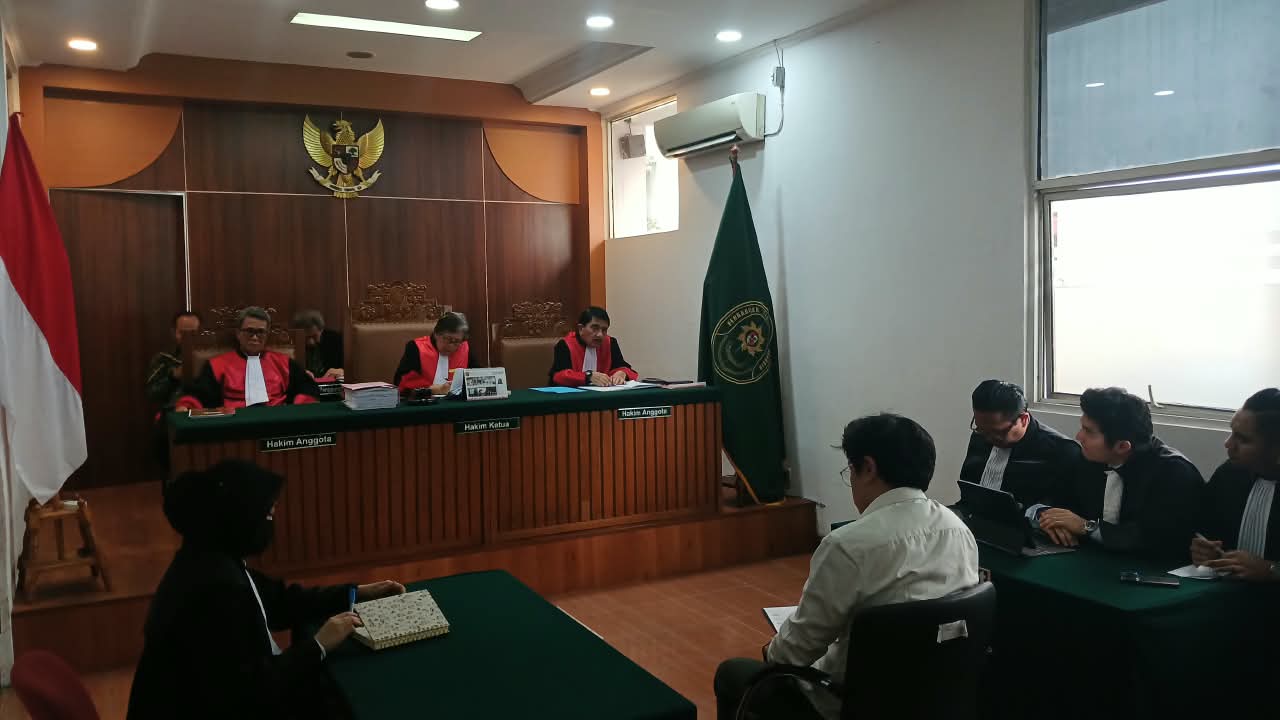
The judges have rejected the appeal request of Nicko Widjaja, former President Director of BRI Ventura Investama (BVI), in the TaniHub Group corruption case. The Jakarta High Court (PT) has instead upheld the decision of the first-instance court, meaning Nicko will remain imprisoned for three years.
“Upholding the decision of the Corruption Crimes Court at the Central Jakarta District Court Number 9/Pid.Sus-TPK/2026/PN Jkt.Pst dated 18 June 2026. Determining that the defendant remains detained. Determining that the period of arrest and detention undergone by the Defendant shall be fully deducted from the imposed sentence,” stated the Presiding Judge, Ellyta Ras Ginting, when reading the verdict on Thursday, 3 September 2026.
In its considerations, the panel of judges stated that state losses in the case had materialised. The investment was provided in two stages: Series A+ funding of US$2 million (approximately IDR 28.58 billion) in February and March 2020, and the purchase of shares or Convertible Notes worth US$3 million (approximately IDR 44.72 billion) in August 2020.
Nicko’s legal counsel, Ditho Sitompoel, argued that the claim of actual losses in this case is an error, as the investment losses are still in the form of floating losses or potential losses.
“There are still collection processes and ongoing business activities, so the final value of the investment cannot yet be fully concluded. This is not an actual loss; it is a floating loss,” he told reporters.
On the same occasion, Nick_o emphasised the judges’ consideration that companies incurring losses are unfit for investment. He argued that companies not yet generating profit are precisely the targets of venture capital investment, as stipulated in Financial Services Authority Regulation (POJK) Number 35 of 2015 regarding venture capital.
“We are not a bank. We are a subsidiary of a bank whose task is to seek growth. That growth is achieved through investment in startups; that is the function of venture capital,” said Nicko.
He added that venture capital companies have a different character compared to banks, which provide credit based on creditworthiness parameters. In contrast, venture capital enters through investments in developing companies, including startups that are not yet ‘bankable’.
Therefore, he argued, the fact that TaniHub Group was still recording losses should not automatically serve as a reason to conclude that the investment decision was problematic.
“Growth cannot possibly result in profit immediately. A company is not expected to be profitable in its first or second year. If we look at all startups globally, none are profitable in their first, second, or third years,” he explained.
He further assessed that the ruling could create excessive caution among venture capital industry players in Indonesia.
“If this appeal decision hits the venture capital business ecosystem, by how many years? Ten years. We will be back to 2015,” he said.
Nicko’s other lawyer, Philipus Sitepu, added that the High Court’s decision stated the defendant’s error was knowing that TaniHub was still loss-making when BVI proceeded with the investment.
“It can be concluded that the Venture Business Model in Indonesia does not need to exist or should simply be dissolved, and POJK 35 should be abolished. Because the mandate of POJK 35 is that the Venture Business Model—in this case, BVI—is indeed required to find developing or loss-making startups. The government requested us to find companies that are losing money, yet the court is punishing the Defendant for investing in a company that is still loss-making,” he concluded.
Previously, Nicko Widjaja was sentenced to three years in prison and a fine of IDR 350 million in the corruption case involving the management of investment funds in TaniHub. In its considerations, the panel of judges ruled that the defendants had approved investments into Tani Group without adequate due diligence, resulting in losses to state finances and the national economy.