
Tangerang Maps Drought-Prone Zones Across Eight Districts
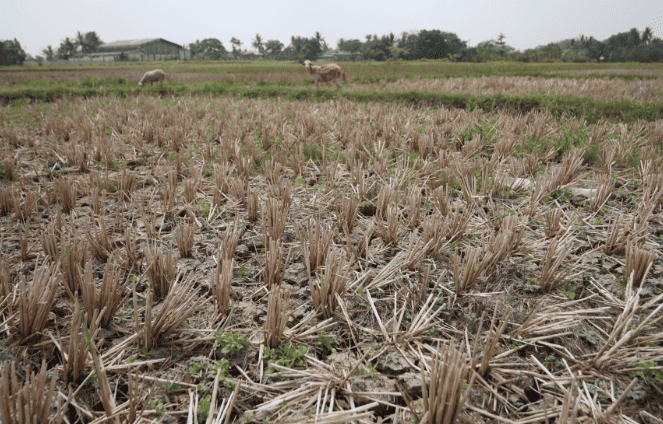
The Tangerang City Government has mapped three monitoring zones for areas potentially affected by drought based on a hydrometeorological study. This mapping is intended to ensure that measures to address the impacts of the dry season can be implemented more swiftly and accurately.
Head of the Tangerang Regional Disaster Management Agency (BPBD) Mahdiar explained that the first zone, which is the primary focus of preparedness, includes the districts of Batuceper, Neglasari, and Cipondoh. The second zone covers the districts of Jatiuwung and Cibodas, while the third zone includes the districts of Pinang, Ciledug, and Karang Tengah.
“These designated zones are a priority for regular monitoring, both in terms of water availability and fire potential,” Mahdiar stated in an official release in Tangerang on Wednesday (5/8).
In addition to tightening area surveillance, the city government has prepared a series of cross-sector mitigation strategies. The Indonesian National Armed Forces (TNI) has readied eight water tanker trucks for distribution to residential areas should a water crisis occur. The Tangerang Metro Police have deployed 95 personnel at the precinct level and prepared an Armoured Water Cannon (AWC) to support firefighting efforts.
Regarding water supply services, the regional water utility company Perumda Tirta Benteng has assured that the availability of clean water for customers remains secure. Although the water source relying on the Cisadane River has experienced a roughly five percent decrease in flow due to the dry season, the quality and supply are confirmed to be sufficient.
To strengthen supporting infrastructure, the Tangerang City Public Works and Spatial Planning Agency (PUPR) has prepared 30 water tanks for clean water distribution and emergency fire response. “Additionally, the hydrant network in various areas is continuously being checked to ensure it functions optimally to support the protection of residential areas and public facilities,” Mahdiar added.
These tactical measures were taken in response to an analysis by the Meteorology, Climatology, and Geophysics Agency (BMKG), which predicts that Tangerang City will remain at the peak of the dry season with low rainfall intensity until September 2026. “The still-active El Niño phenomenon further increases the potential for meteorological drought in several areas, so vigilance is required from all elements of society,” he concluded.