
Tamsil Linrung: 2026 STSB a Momentum to Amplify the Spirit of Asta Cita
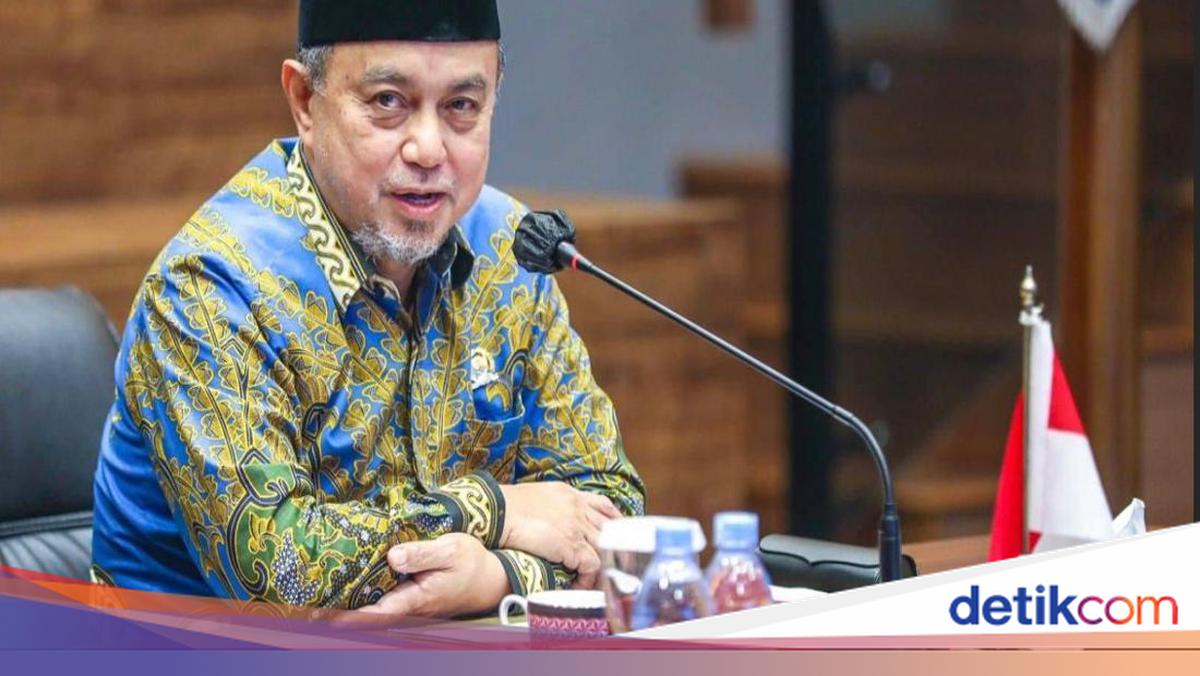
The 2026 Annual Session of the MPR RI and the Joint Session of the DPR RI-DPD RI (STSB) is an important momentum to view Indonesia as a whole, while ensuring that regional voices help determine the direction of national development. Deputy Speaker of the DPD RI, Tamsil Linrung, described the state forum as a national window to strengthen the spirit of Asta Cita, where the centre and the regions move in the same development orchestration. ‘This is the epicentre of national thought to ensure national development reaches all regions. Every inch of land in this republic has an equal opportunity to grow into a national strength,’ said Tamsil, as quoted on Wednesday (12/8/2026).
According to Tamsil, the DPD’s position as host of this year’s STSB holds strategic meaning. As an institution carrying a mandate of regional representation, the DPD has a vested interest in ensuring that regional perspectives become part of the mainstream of national development. ‘The DPD is present to bring the voices from the coasts, mountains, and hinterlands into the national house. We appreciate the Asta Cita development architecture championed by President Prabowo Subianto, which places the regions as an integral part of the agenda to advance the nation,’ said Tamsil.
Tamsil asserted that strengthening national capacity will become more robust if supported by productive regions capable of developing their economic potential. Regional development is a strategy to strengthen Indonesia from within. Especially amidst increasingly dynamic global uncertainty, integration with the world economy must be balanced with a strong domestic foundation so that Indonesia is not vulnerable to external shocks. Tamsil also appreciated the development direction of President Prabowo Subianto’s administration, which places national interests as the primary orientation. According to Tamsil, this orientation demonstrates the government’s courage to reaffirm the nation’s development compass, while strengthening the implementation of Article 33 of the 1945 Constitution in the management of national resources.
‘We see a new courage in calibrating the nation’s compass, upholding the spirit of ’Indonesia First’ and the implementation of Article 33 of the 1945 Constitution. This means that wealth must first and foremost benefit the Indonesian people,’ said Tamsil. ‘Natural resources are not enough just to be extracted; they must be given added value and become a national economic strength,’ he continued. According to Tamsil, this spirit is reflected in the downstreaming agenda, the strengthening of food and energy security, and various government priority programmes directed at building economic self-reliance. ‘’Indonesia First’ does not mean we close ourselves off. We remain open, but national interests must be the compass,’ said Tamsil. ‘We want Indonesia not only to be a source of raw materials and a market, but to become a producer and creator of added value,’ he continued.
Tamsil assessed that partiality towards national interests must ultimately flow down to the regions, as Indonesia’s production base lies in its regencies and cities. ‘If the natural resources are in the regions, then the regions must receive increasingly greater benefits. That is where the implementation of Article 33 meets the spirit of Asta Cita,’ said Tamsil. According to Tamsil, Asta Cita transforms into a development spiral when various national priority policies and programmes are able to drive regional economic capacity. Tamsil assessed that fiscal distribution and the President’s priority programmes are important instruments to accelerate the formation of this spiral. ‘Fiscal policy is one of the levers, national programmes are the drivers, but the regions are where that growth is realised. When fiscal resources flow through the Free Nutritious Meals programme, for instance, farmers, livestock breeders, fishermen, and people’s businesses move in the same economic orchestration,’ said the former Head of the Budget Committee of the DPR RI. ‘That is what we call the Asta Cita spiral,’ he continued.
According to Tamsil, the chain effect of state policy becomes more optimal when it is able to read the character and potential of each region. Indonesia has a highly diverse geographical landscape and economic base. Therefore, the development approach cannot be entirely uniform from one region to another. ‘Indonesia does not have one face. There are archipelagos, border areas, regions with large natural resources, agrarian areas, maritime areas, industrial zones, and regions facing very severe geographical challenges,’ said Tamsil. ‘Policy must be able to read that diversity,’ he continued. Tamsil assessed that regional sensitivity does not mean providing different treatment without basis, but rather ensuring that every region obtains the right space and instruments to develop its advantages. ‘Regions are both subjects and engines of growth. Every region has different comparative advantages and challenges,’ explained Tamsil. ‘The task of national policy is to pave the way for these to become competitive advantages. When every region grows according to its potential, we are assembling a mosaic of Indonesia’s strength,’ he added.
Tamsil assessed that amplifying the echo of Asta Cita can embrace all the nation’s children. No region should feel it is on the periphery of the republic. No regional potential should lie dormant due to limited access. ‘If children in Jakarta, Bandung, and Denpasar enjoy nutritious meals from the state, so too should children on the islands and in the mountains. Everyone receives the same benefits,’ said Tamsil. Tamsil assessed that the STSB, within the series of commemorations for the 81st Anniversary of Indonesian Independence, is a momentum to reflect again on the meaning of national solidarity. This event holds significant meaning for inter-institutional relations, particularly between the MPR, DPR, and DPD as representations of the people’s and regional sovereignty. According to Tamsil, the STSB is an important space to strengthen communication and consolidation between institutions in facing the nation’s challenges. ‘Democracy requires strong institutions. Diverse perspectives enrich the way we see Indonesia, so that we can formulate more comprehensive policy formulas,’ he concluded.
Source: jawawa.id (https://jawawa.id/newsitem/tamsil-linrung-2026-stsb-a-momentum-to-amplify-the-spirit-of-asta-cita-1786510384)
Originally published by detikcom (https://news.detik.com/berita/d-8614819/tamsil-linrung-stsb-tahun-2026-momentum-gaungkan-semangat-asta-cita), translated from Indonesian