
Tambora National Park Savanna Fire Reaches 1,956 Hectares, Manggala Agni Deployed
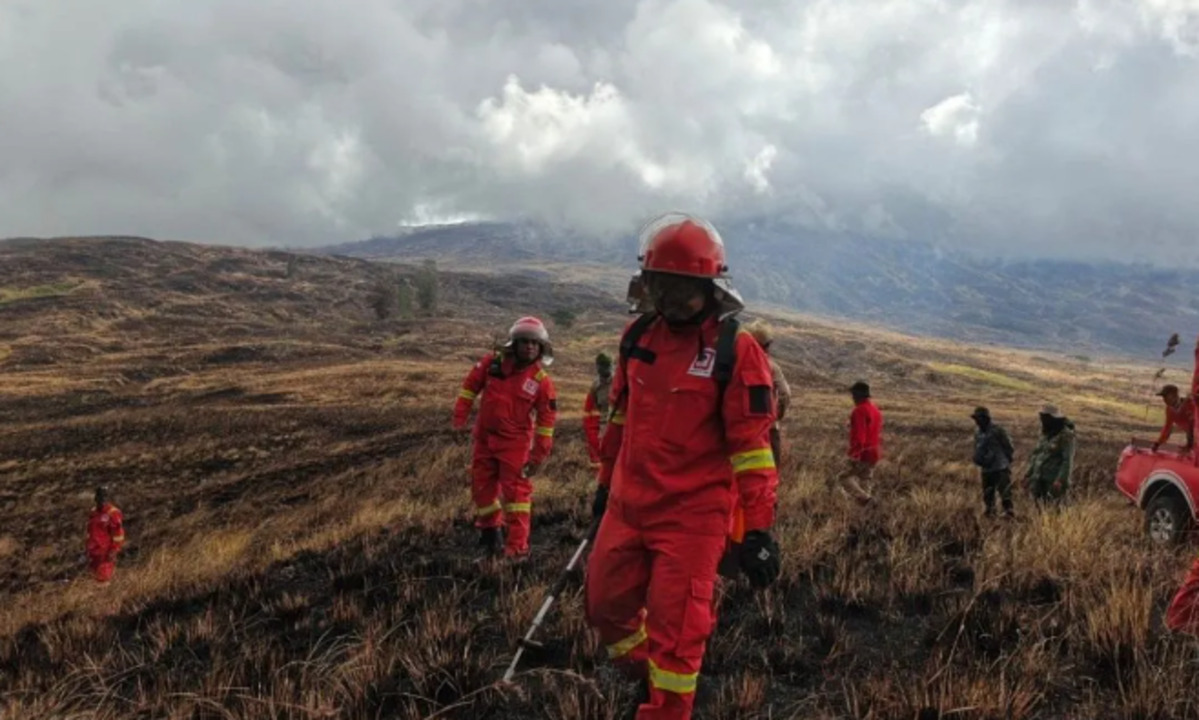
A major land fire has struck the savanna area of Tambora National Park (TN) on Sumbawa Island, West Nusa Tenggara (NTB). According to the latest data as of Thursday (9 July), the affected area is estimated to have reached around 1,956 hectares.
Director General of Forestry Law Enforcement, Dwi Januanto Nugroho, revealed that the first fire point was detected on Sunday (5 July) at 13.30 Central Indonesian Time in the Piong Resort area. Dry vegetation conditions and strong gusts of wind were the main triggers for the rapid spread of the fire.
“When the fire broke out, conditions at the location were dry, the savanna vegetation was highly flammable, compounded by fairly strong winds, mountainous topography, and limited water sources, which caused the fire to spread quickly,” said Januanto in a written statement.
To strengthen handling in the field, the Ministry of Forestry has deployed a Manggala Agni unit from Mataram Regional Section III. These additional personnel have joined the Java-Bali-Nusa Tenggara Forest Fire Control Centre (Balai Dalkarhut Jabalnusra), the Tambora National Park Office, and Fire Care Community (MPA) groups who were already battling the blaze on site.
Head of the Forest Fire Control Centre for Java, Bali, and Nusa Tenggara, Bambang Setyo Antoko, explained that the current extinguishing strategy is focused on suppressing the rate of fire spread. Officers must adapt to Tambora’s challenging terrain characteristics.
“The savanna characteristics of Tambora allow fire to spread rapidly. The extinguishing strategy is continually adjusted to developing conditions in the field so that the spread of fire can be controlled effectively,” said Bambang. He affirmed that firefighting operations are still ongoing, prioritising personnel safety.
The Tambora National Park fire has raised serious concerns, as TN Tambora is a UNESCO-designated World Biosphere Reserve. The 71,645.64-hectare area is a habitat for protected wildlife such as the Yellow-crested Cockatoo, Red-headed Lory, Australian Sacred Kingfisher, and Timor Deer.
Beyond threatening biodiversity, Januanto reminded of other adverse impacts on surrounding communities, ranging from declining air quality to disruption of nature tourism activities that support the local economy.
The government has urged the public, tourism operators, and regional authorities to heighten vigilance during the dry season. Activities with the potential to trigger forest fires must be avoided, and any indication of fire must be reported immediately.
Regarding the cause of the TN Tambora savanna fire, Januanto affirmed that any legal violations proven to have triggered the fire will be dealt with firmly in accordance with applicable laws and regulations. “Fire control cannot rely on the government alone. Collaboration from all parties is needed so that prevention becomes a shared culture,” he concluded.
Source: jawawa.id (https://jawawa.id/newsitem/tambora-national-park-savanna-fire-reaches-1-956-hectares-manggala-agni-deployed-1783608695)
Originally published by Media Indonesia (https://mediaindonesia.com/nusantara/909315/kebakaran-savana-tn-tambora-capai-1956-hektare-manggala-agni-diterjunkan), translated from Indonesian