
Taliban Gains New 'Rebels' Resisting Music Ban
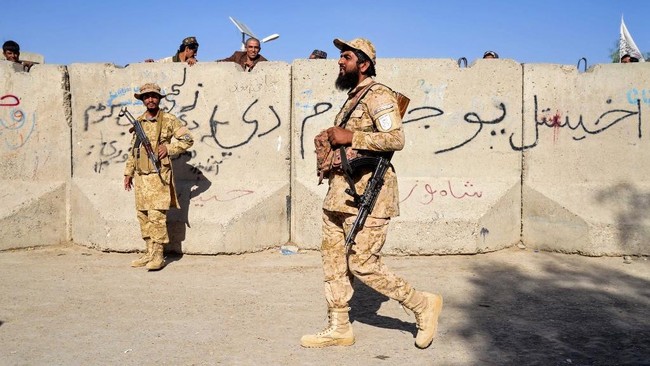
Taxi drivers in Afghanistan are daring to play music inside their vehicles as a form of resistance against the strict prohibitions imposed by the Taliban government, despite the fear of being caught by the morality police.
According to the Bangkok Post, music that once flowed freely from various restaurants, cafes, and shops in the capital, Kabul, has been silenced over the last five years. Public entertainment has now been replaced solely by religious or patriotic songs supported by the Taliban authorities since they seized power in 2021.
In response to these restrictions, several taxi drivers, such as Roeen, have begun playing Afghan and regional folk or pop music. However, he quickly turns the music off whenever security forces are visible nearby.
“At every checkpoint we pass, we lower the volume or even turn it off completely… so that I do not run into trouble with them,” said Roeint, who used only his first name for security reasons.
The ban on playing music in public places is enforced by the Ministry for the Propagation of Virtue and the Prevention of Vice (PVPV), whose morality police routinely patrol the city wearing long white coats. PVPV regulations explicitly state that because music is prohibited and disturbs passengers, drivers must refrain from playing or listening to it.
The ministry did not provide a response when asked for comment regarding specific punishments faced by citizens for playing music, but those who violate the rules are known to risk imprisonment. Roeen noted that PVPV officials possess immense authority, causing citizens to be extremely cautious.
“We are, of course, too afraid of them to listen to music at a higher volume,” he said.
Navigating through heavy traffic and the noisy streets of Kabul, Roeen admitted that his interest in music has increased tenfold since the ban was implemented. In a country where various forms of entertainment, including cinemas, are prohibited, listening to music continuously has become a form of protest for the 28-year-old driver.
“I must ensure that even if I cannot listen in the morning, by eight o’clock, my music is playing,” he asserted.
Another 32-year-old taxi driver, who requested anonymity for security reasons, shared that he only dares to listen to music when alone in his car. He admitted to being stopped twice at checkpoints because he was found carrying USB cassettes and memory cards in his radio player.
“Previously, whenever someone wanted to, they could listen without worry or stress. But now… personally, I listen, but with a bit of stress,” he explained.
“I am not lying; I said it contained music, and they destroyed it. Afghan culture must not disappear, and music is part of our people’s culture. Personally, I do not want this culture to vanish,” he said.
As part of the ongoing crackdown on the ban, provincial PVPV departments occasionally report the burning of confiscated musical instruments. Ministry spokesperson Saiful Islam Khyber stated that there is no exact figure regarding how many musical instruments have been seized so far.
Meanwhile, Kabul residents rely on shared taxis as their primary mode of transport to navigate a city lacking a proper public transport system. Often, two passengers sit in the front with the driver, three in the back, and sometimes individuals are forced to ride in an open boot.
Shamsullah Ahmad (29), a master’s student, admitted that he always checks whether the taxi he is about to board has a music player. This is because the morality police are known to remove headphones from citizens’ ears to check if they are secretly listening to music.
“I prefer music in the car, because wearing headphones will get you caught, but in the car, even at a lower volume, it is better than nothing at all,” said Ahmad.
The situation of restriction has become a heavy burden for the local community. Roeen admitted that he deeply misses the times when citizens were free to listen to songs, dance, and celebrate without anyone stopping or punishing them.
“But now the city is shrouded in darkness, a darkness without light,” he concluded.
Source: jawawa.id (https://jawawa.id/newsitem/taliban-gains-new-rebels-resisting-music-ban-1790348019)
Originally published by CNBC Indonesia (https://www.cnbcindonesia.com/news/20260925145427-4-770963/taliban-mulai-dapat-pemberontak-baru-melawan-karena-larangan-musik), translated from Indonesian