
Taklimakan Desert, the 'Sea of Death', Harvests 976 Tonnes of Wheat, Chinese Scientists Stun the World
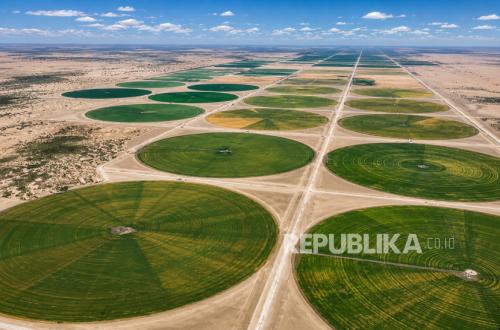
The Taklamakan Desert, which for centuries has been dubbed the ‘Sea of Death’, is now showing a different face. Amidst the vast expanses of sand known for being extreme and nearly impossible to cultivate, a plot on the edge of the desert has successfully harvested approximately 976 tonnes of wheat.
This success is the result of the development of a hybrid wheat variety by Chinese scientists, which is seen as opening new opportunities for agriculture in desert regions.
The harvest originated from a 93-hectare area in Makit County, Xinjiang Uygur Autonomous Region. The land is managed by Wang Yufeng, a farmer who previously worked as a clothing trader. He invested more than 2 million yuan, or approximately 294,000 US dollars, to plant the Jingmai 189 hybrid wheat variety developed by the Beijing Academy of Agricultural Sciences and Forestry, as reported on Friday (3/7/2026).
Makit County is located on the southwestern edge of the Taklamakan Desert and is surrounded by desert on three sides. Rainfall in the region is less than 100 millimetres per year, while evaporation rates reach more than 2,000 millimetres. These conditions have historically made most of the area extremely difficult to utilise for agricultural purposes.
Nevertheless, the Jingmai 189 variety is capable of growing well in saline-alkali soil with high salt content. The seeds are the result of nine years of research and are designed to be resistant to drought, low temperatures, plant diseases, and poor soil conditions.
The successful harvest in the Taklamakan Desert is not merely about increasing food production. Researchers state that the project is also part of a long-term strategy to control desertification and improve the environmental quality of desert regions.
“This is not just about grain production, but also about the long-term goal of desert control,” said Ren Liping, a senior agronomist at the Beijing Academy of Agricultural Sciences and Forestry.
According to Ren, the wheat growing season lasts approximately 240 to 260 days, from late September to late June of the following year. During this period, the plants act as natural buffers that help reduce wind exposure and prevent sand movement during the winter.
The strong root system of the hybrid wheat is also able to bind the sand, thereby reducing erosion. After the harvest, the straw is buried back into the ground to help enrich microorganisms and gradually increase soil fertility.
The Jingmai 189 variety was previously tested in the saline-alkali lands of northern coastal China. However, the best results were obtained when planted in experimental plots near the Taklamakan Desert, which has an average salinity level of 8.6 parts per thousand, categorised as very heavy saline-alkali.
Source: jawawa.id (https://jawawa.id/newsitem/taklimakan-desert-the-sea-of-death-harvests-976-tonnes-of-wheat-chinese-scientists-stun-the-world-1783158713)
Originally published by Republika (https://news.republika.co.id/berita/thn6j9451/gurun-taklimakan-si-laut-kematian-panen-976-ton-gandum-ilmuwan-china-bikin-dunia-tercengang), translated from Indonesian