
Take Recurrent Headaches Without an Obvious Cause Seriously and Seek Medical Advice
Jakarta, CNBC Indonesia — Have you experienced recurrent headaches that interfere with your daily activities? Such complaints are often attributed to fatigue, lack of sleep or stress. However, headaches that become more frequent or severe, feel different from usual, or are accompanied by other symptoms should not be ignored.
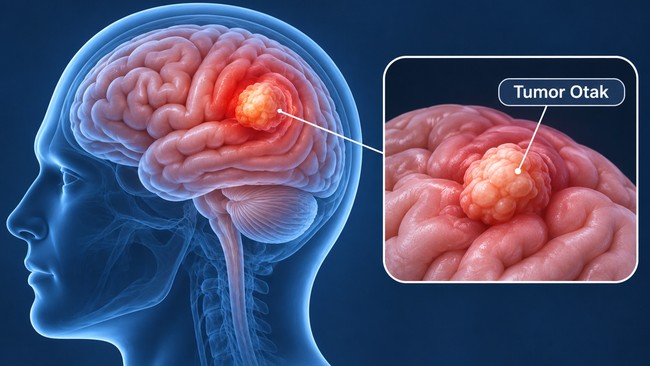
In some cases, a headache can be a symptom of a brain tumour. It is therefore important to recognise changes in headache patterns and consult a doctor to establish the cause.
Headaches may be primary, meaning the headache itself is the disorder, such as migraine or tension-type headache. Secondary headaches arise from another medical condition, including a brain tumour.
Dr Hananto Pratignyo, Sp.N, FIN, Dipl. IPM, a doctor at Mayapada Hospital Tangerang (MHTG), said that assessing headaches requires attention to changes in the pattern of symptoms and accompanying signs, not just the intensity of the pain.
“Changes in headache patterns should be taken seriously, particularly if the pain becomes more severe, occurs more often or feels different from usual. We also look for signs of neurological problems, such as impaired vision, weakness in the limbs, balance problems or seizures. These findings help doctors decide whether a patient needs further tests to determine the cause. Do not delay seeking medical advice if a headache is accompanied by neurological symptoms,” Dr Hananto said.
If imaging is needed, a brain MRI without contrast can be used to examine brain structures and tissue and identify possible abnormalities that may suggest a tumour.
An MRA (magnetic resonance angiography) of the brain’s blood vessels without contrast, meanwhile, is used to assess the vessels, including possible enlargement or abnormal connections between them. The two examinations serve different purposes and are used according to medical indications. A doctor reviews the results to determine the next steps.
Dr Hananto also recommends that patients keep a headache diary to monitor the frequency, duration and intensity of their headaches, as well as any accompanying symptoms.
“A headache diary can help patients monitor the frequency, duration and intensity of their symptoms, along with any accompanying signs. These notes help doctors understand the pattern of the headaches and track how they develop,” he added.
If test results point to a possible brain tumour, further assessment is needed to confirm the diagnosis and establish the tumour’s characteristics. This may include an MRI with contrast or a biopsy, if required.
Treatment is tailored to the tumour’s type, size, location and growth, as well as the patient’s condition. Options include regular monitoring, surgery, radiotherapy, chemotherapy or a combination of methods.
Dr Manfaluthy Hakim, Sp.N, Subsp. E.N.K, a doctor at Mayapada Hospital Jakarta Selatan (MHJS), said the patient’s neurological condition and function are also considered when determining treatment for a brain tumour.
“For patients with a brain tumour, we need to assess whether there is impaired neurological function in a particular part of the body (a focal neurological deficit), such as weakness on one side, or problems with speech or vision. A tumour can also trigger a focal seizure, which begins in a specific area of the brain. These findings help us assess the tumour’s impact on brain function and determine whether neurological function needs to be monitored and seizures controlled during treatment,” Dr Manfaluthy said.
When planning surgery for a brain tumour, doctors consider its location and proximity to parts of the brain that control essential functions.
Dr Agung Budi Sutiono, a neurosurgeon at Mayapada Hospital Bandung (MHBD), said surgery aims not only to remove the tumour but also to preserve vital brain function.
“In brain tumour surgery, we aim for maximal safe resection: removing as much tumour tissue as possible while preserving brain function. This is a particular concern when a tumour is near eloquent areas, which control important functions such as movement, speech and vision. The tumour’s location and size, and its proximity to functional areas of the brain, must therefore be carefully considered to choose an appropriate surgical approach while minimising the risk of neurological impairment,” Dr Agung said.
Mayapada Hospital offers integrated services
To support comprehensive care for disorders of the nervous system, brain and spine, Mayapada Hospital has a Tahir Neuroscience Center. The integrated service covers early detection, diagnosis through MRI and MRA examinations as medically indicated, neurointerventional procedures and neurosurgery, as well as neurorehabilitation.
The service is supported by a multidisciplinary team, including neurologists, neurosurgeons, radiologists and other relevant specialists. They work together to determine a diagnosis and treatment plan suited to each patient’s condition.
Mayapada Hospital also provides a 24/7 Stroke Emergency service, supported by diagnostic facilities and specialist and subspecialist teams. The service is available at all Mayapada Hospital units in Jakarta (Lebak Bulus, Kuningan and Cakung), Tangerang, Bogor, Bandung and Nusantara.
To widen access to emergency care, Mayapada Hospital also offers a free ambulance service, subject to terms and conditions. At Mayapada Hospital Jakarta Selatan (MHJS), for example, the free ambulance service is available to people living less than 10 kilometres from the hospital.
Patients can call the Emergency line on 150990 or use the Emergency Call Button in the MyCare app.
Mayapada Hospital is also recognised as a stroke-ready hospital by the World Stroke Organization’s WSO Angels initiative. The recognition was awarded to Mayapada Hospital Jakarta Selatan (MHJS), Mayapada Hospital Surabaya (MHSB) and Mayapada Hospital Bandung (MHBD).
The awards recognise performance in providing timely care in line with the international Door-to-Needle protocol, accurate diagnosis, quality of care and patient management.
Source: jawawa.id (https://jawawa.id/newsitem/take-recurrent-headaches-without-an-obvious-cause-seriously-and-seek-medical-advice-1795679501)
Originally published by CNBC Indonesia (https://www.cnbcindonesia.com/lifestyle/20261126140713-33-788745/waspada-sakit-kepala-berulang-tanpa-sebab-segera-periksa), translated from Indonesian