
Take Note: DJP’s Latest Tax Penalty Waiver Program
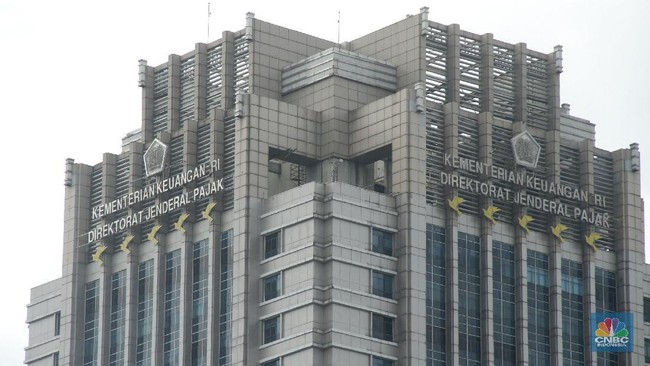
Jakarta, CNBC Indonesia — The Directorate General of Taxes (DJP) at the Ministry of Finance has officially released a handbook for the Tax Administrative Penalty Waiver Programme. It sets out in detail the provisions of Director General of Taxes Decree No. KEP-239/PJ/2026, dated 8 October 2026.
The decree refers to Finance Ministry Regulation (PMK) No. 71/2026, which allows the Director General of Taxes to make special arrangements to reduce or waive administrative sanctions, or reduce Land and Building Tax (PBB) administrative fines, for eligible tax documents.
Inge Diana Rismawanti, Director of Tax Education, Services and Public Relations at the Directorate General of Taxes, said the handbook would serve as a guide for taxpayers seeking to use the latest programme.
“The handbook was prepared by DJP tax educators and can be used as a guide by taxpayers,” Inge told CNBC Indonesia on Monday (26 October 2026).
The handbook says the administrative penalty reduction or waiver programme under PMK 71/2026 and Decree KEP-239 differs from a tax amnesty.
“This decree does not grant amnesty for tax that is payable and does not cancel the tax principal. The facility is limited to reducing or waiving certain administrative sanctions, provided the taxpayer meets the requirements and receives a decision from the Director General of Taxes,” the handbook says.
The DJP acknowledged that the latest policy has a limited connection with the Voluntary Disclosure Programme (PPS). Decree KEP-239 covers sanctions in tax assessment notices issued following audits of assets that were not, or were insufficiently, disclosed by PPS participants, subject to specific assessment-notice issuance and payment deadlines.
“This specific coverage does not make KEP-239 a new disclosure or amnesty programme. Any tax principal arising must still be paid,” the handbook says.
The penalty-reduction or waiver programme is divided into several categories. The first concerns monitoring. For example, it covers late filing of annual income tax returns for the 2025 tax year or earlier, and/or monthly tax returns up to the September 2026 tax period with an underpayment status.
The reduction in the fine under Article 7(1) of the General Tax Provisions and Procedures Law (KUP) is 100% for returns filed between 8 October and 31 December 2026, 50% for the period from 1 January to 31 March 2026, and 25% for the period from 1 April to 30 June 2027.
The audit category includes reductions in sanctions imposed through tax underpayment assessment notices (SKPKB), additional tax underpayment assessment notices (SKPKBT), or PBB assessment notices resulting from audits issued between 8 October 2026 and 30 June 2026. The sanctions may include interest and increases provided for under the KUP Law and the PBB Law.
The reduction can reach 100% if the tax principal is paid by 31 December 2026 for an assessment notice issued between 8 October and 31 December 2026, or within one month of the notice’s issue date, and no later than 30 June 2027.
The minimum reduction in these cases is 25% if the tax principal is paid more than two months after the assessment notice is issued, and no later than 30 June 2027.
In the collection category, sanctions may be reduced by up to 90% for Tax Collection Notices (STP) issued before 8 October 2026. The condition is that 10% of the administrative sanction is paid between 8 October and 31 December 2026.
The final category concerns the tax database. It includes newly registered taxpayers or newly confirmed taxable entrepreneurs (PKP) who file annual income tax returns for the 2025 tax year or earlier and/or monthly returns up to the September 2026 tax period, with an underpayment status, between 8 October 2026 and 30 June 2027.
The penalty reduction can reach 100%, subject to specific conditions: the taxpayer must have registered, or the PKP must have been confirmed, between 8 October and 31 December 2026, and must file returns for the periods covered.