
Takaful in the Halal Value Chain
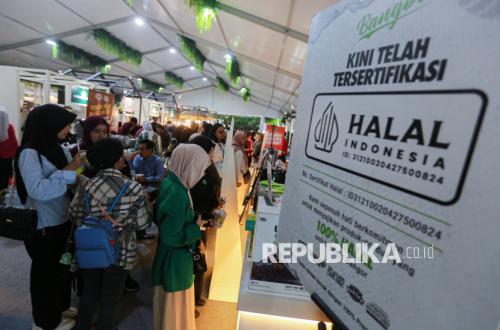
Imagine a large tree forced to grow in a narrow pot. Although it can still grow, its roots will never be able to penetrate deep into the soil because they are blocked by the pot’s confining walls. The same applies to the mandatory spin-off of Sharia business units in insurance companies. For its potential as a global Islamic economic giant to be truly realised, an effort is needed to move the tree from the narrow pot to open ground.
The global halal market is valued at more than 7.3 trillion US dollars and continues to grow alongside the world’s increasing Muslim population (DinarStandard, 2024/25). Amidst this enormous potential, Takaful has instead become a structural bottleneck. As long as the Islamic finance ecosystem remains fragmented, Takaful penetration is low, reTakaful capacity is limited, capital is small, and literacy is not yet optimal, Takaful will be unable to serve the rapidly growing halal industry.
The root of the problem is twofold. First, structural dependence: as long as Sharia Business Units (UUS) still shelter under larger, more established conventional parent companies, product innovation for the halal segment almost always loses out in the competition for resources. Second, the absence of interoperability: the Takaful ecosystem under the financial regulator and the halal ecosystem under the Halal Product Assurance Organising Body (BPJPH) run in parallel without meaningful intersection.
The mandatory spin-off of UUS stipulated by the Financial Services Authority (OJK) should not be read as a regulatory burden. On the contrary, it is a prerequisite for entering a market that has so far been unreachable. A fully independent (full-fledged) Takaful entity must be integrated directly into the real sector’s value chain through an Embedded Takaful model, where Sharia protection is inherent to operational processes, rather than merely an optional add-on (IsDB & UNDP, 2024).
Takaful in the halal value chain means that every link—from raw materials, production, packaging, storage, distribution, to export—uses risk management instruments that are fully aligned with Sharia principles. If one link still uses conventional instruments, the integrity of the entire halal supply chain becomes questionable in the eyes of increasingly critical Muslim consumers and an ever more selective international market.
The strategic implications are multi-layered. From an export reputation perspective, Indonesia has a stronger argument to prove that its halal products are truly end-to-end. From an industry perspective, this integration automatically attracts large-scale halal industry players to become Takaful customers, expanding the premium base and financing product innovation as well as strengthening domestic Retakaful. From an inclusion perspective, micro-Takaful schemes can reach halal MSMEs that have so far been vulnerable and untouched by formal insurance.