
Taj Yasin Inspects Demak Hybrid Seawall Project to Ensure Work Is on Track
The construction is also creating opportunities for local people to resume managing fishponds and boost the coastal economy.
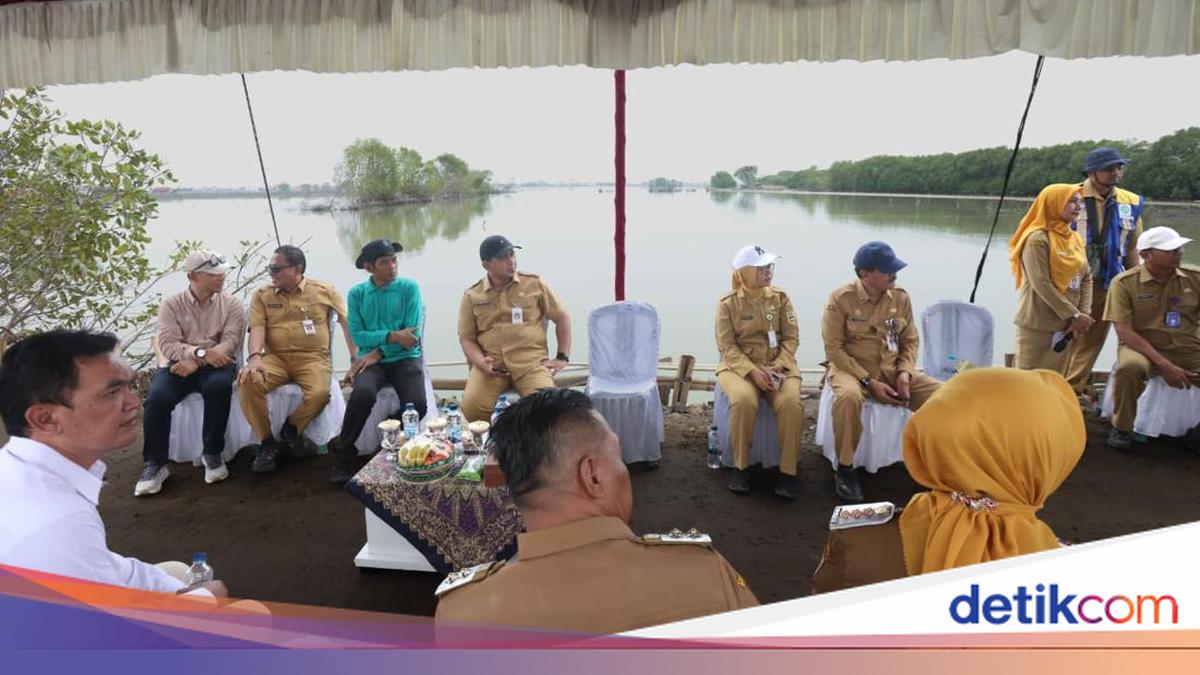
Central Java Deputy Governor Taj Yasin Maimoen (Taj Yasin) inspected the project in Surodadi village today to ensure that construction was proceeding smoothly.
Taj Yasin said the coastal embankment must deliver tangible benefits to residents, particularly those who have faced the effects of tidal flooding and sedimentation for years. These conditions have hampered economic activity, including fish farming in the pond areas.
He praised the positive response from the community to the hybrid seawall being built in the area. The approach was considered appropriate because the infrastructure is designed not only to rely on concrete construction, but also to support mangrove growth as a natural coastal defence.
Central Java Public Works and Spatial Planning Agency head Henggar Budi Anggoro said the project in Surodadi village is intended to cover 930 metres. This comprises a 720-metre main structure and 210 metres of groynes, or wave-break structures.
The work is divided into two packages, each covering 362 metres of the main structure and 105 metres of groynes. The construction uses a total of 8,500 concrete pipe sections.
According to a report dated 25 October 2026, Package I was 56.212 per cent complete, while Package II had reached 65.822 per cent. The work is scheduled to take 175 days, from 5 June to 26 November 2026.
The Central Java provincial government has also taken various steps to protect coastal areas, including through its Mageri Segoro programme. In 2025, the programme recorded the planting of around 2.34 million mangrove seedlings across 257 hectares of Central Java coastline.
Surodadi village head Supriyanto also welcomed the hybrid seawall project, saying it would greatly help the community address the erosion that has affected the area for years.
Residents are beginning to experience the benefits of the coastal defence structure directly, he said. The seawall offers hope that homes and residents’ fishpond land will be better protected.
Supriyanto said the programme’s benefits would reach more people if construction were extended to other coastal areas still in need of protection.
“With this hybrid seawall project, God willing, the community will be safer from erosion. The programme is a great help in easing the hardship our people have endured for years as a result of coastal erosion,” he said in a written statement on Tuesday (27 October 2026).
He explained that the first phase covers only around 900 metres, while a further 1.5 kilometres to the east still requires protection. If the coastal defences were connected, the benefits would be felt not only by Surodadi residents but also by people in surrounding areas.
According to Supriyanto, erosion affects more than fishpond owners. Its consequences are felt by the wider community, making coastal protection important both to help restore the environment and to support residents’ social and economic lives.
He added that the government had explained the programme to residents, including both those who own land near the site and those without fishponds. The programme is seen as a government effort to ease the burden on communities affected by coastal disasters.
Source: jawawa.id (https://jawawa.id/newsitem/taj-yasin-inspects-demak-hybrid-seawall-project-to-ensure-work-is-on-track-1793105594)
Originally published by detikcom (https://news.detik.com/bangun-indonesia/d-8726776/taj-yasin-cek-proyek-hybrid-seawall-di-demak-pastikan-berjalan-lancar), translated from Indonesian