
Taipei's Active Volcano Threat and Taiwan-UGM Resilience Collaboration
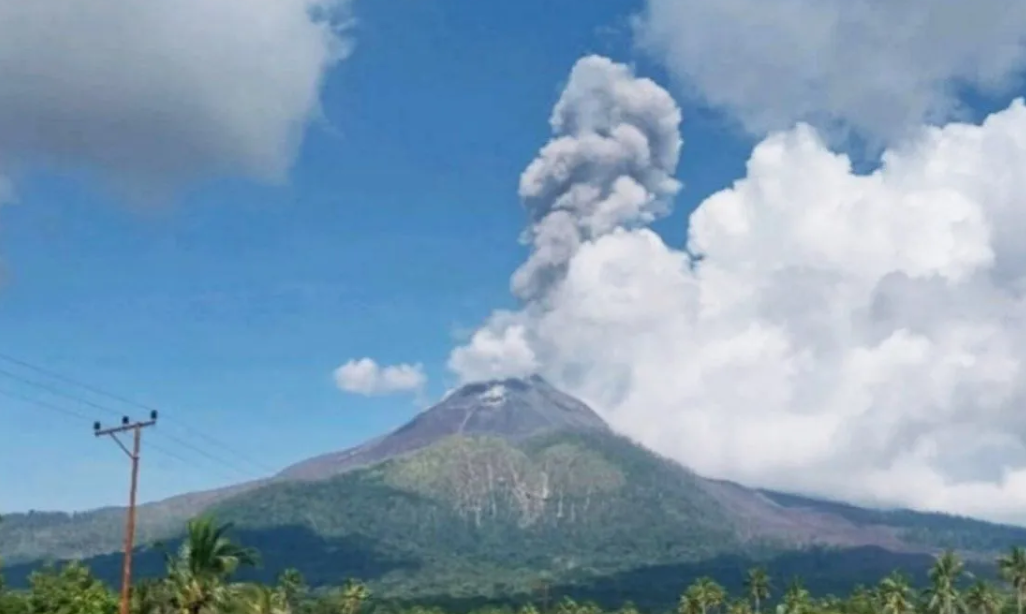
The world has long recognised Taiwan as a global technology giant and the home of Taipei 101, one of the most iconic skyscrapers on earth. However, behind the glitter of modernity, Taiwan’s capital city is effectively ‘sleeping’ atop a real volcanic threat. This startling fact has become a strong basis for Taiwan to look to Indonesia to learn resilience in the face of natural hazards. Assoc. Prof. Fu-Chih Lai, RN. Ph.D., a representative from Taipei Medical University and Vice Chair of the Disaster Nursing Community of the Taiwan Nurses Association, revealed that the existence of hot springs in Taipei is an absolute indicator of volcanic activity. ‘If you have hot springs, you definitely have an active volcano. Yes, we have an active volcano in Taipei City,’ he stated whilst attending the opening of the Summer Course 2026 on Interprofessional Healthcare at Universitas Gadjah Mada (UGM) on Monday (13/7). The data presented by Prof. Lai is sobering: the distance from the Taipei 101 building to the active volcano is less than 15 kilometres. By comparison, the safe distance from the centre of Yogyakarta City to the peak of Mount Merapi is around 23 to 28 kilometres. This indicates that Taipei is within a much closer risk radius than one of Indonesia’s most disaster-prone cities. Although Taiwan possesses technological superiority—such as an instant earthquake notification system capable of reaching all residents’ mobile phones within seconds—they feel the need to absorb knowledge from Indonesia’s local wisdom. Taiwan’s primary focus is on how local communities around Indonesian volcanoes work together to save one another, including foreign tourists, when volcanic activity increases. ‘What if visitors come here, and you have an active volcano? If our local communities can help each other and share early warning systems, that would be truly remarkable. We must work together,’ Prof. Lai added. Responding to this global need for disaster management, the Faculty of Medicine, Public Health, and Nursing (FK-KMK) at UGM organised the Summer Course 2026 on Interprofessional Healthcare. Dr. Ahmad Hamim Sadewa, Ph.D., Vice Dean for Academic and Student Affairs at FK-KMK UGM, stressed that human lives cannot be saved by a single profession when a disaster strikes. The programme, running from 13 to 24 July 2026, was attended by 81 cross-disciplinary students from 11 countries. Its main mission is to strengthen the fortress of the world’s health system through total cross-sector collaboration. The Chair of the Summer Course 2026 Committee, Melyza Perdana, S.Kep., Ns., MS., Ph.D., explained that the activity uses an Interprofessional Education (IPE) approach. Students from various backgrounds, including medicine, engineering, biology, and philosophy, are merged into working teams. Over two weeks, participants undergo intensive training. ‘This programme encourages students to understand various health issues in disaster situations and to contribute to the development of a robust, inclusive, and sustainable health system,’ Melyza emphasised. This collaboration between Taiwan and Indonesia through the academic platform at UGM proves that global disaster risks require a collective answer. By combining Taiwan’s sophisticated early warning technology with Indonesia’s community-based resilience, it is hoped that a new standard in international disaster management will be created to minimise casualties in the future.