
Tacit Knowledge at the Heart of Downstreaming as Civilisational Sovereignty
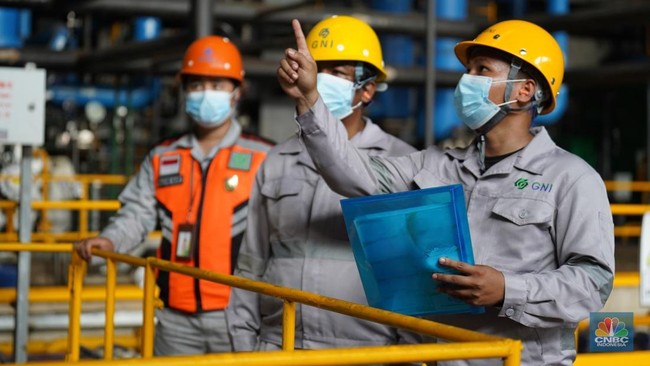
In modern corporate settings, knowledge management systems are often associated with impressive digital infrastructure, from high-capacity servers and digital document repositories to thousands of pages of standard operating procedures (SOPs). Yet these sophisticated systems can only capture explicit knowledge.
Beyond them lies a layer of knowledge that is far more influential in a company’s daily operations: tacit knowledge. It does not reside on servers, but is embodied in people, formed through thousands of hours of experience, practical challenges, consistent repetition and resilience in the face of failure.
When this idea is applied to Indonesia today—a country vigorously pursuing the downstream processing of natural resources and preparing for a demographic dividend—the message becomes especially urgent.
Indonesia stands at a crossroads in a major transformation. Food and energy processing plants, smelters, industrial estates and strategic infrastructure projects are rising across the archipelago. But is the physical grandeur of this infrastructure matched by a complete transfer of knowledge to Indonesia’s workforce?
The infrastructure trap: why impressive smelters and refineries do not guarantee knowledge sovereignty
Indonesia is proud of its economic leap from exporting raw materials to downstream processing, from nickel, copper and bauxite to plantation commodities such as palm oil. The government has reported a sharp rise in the value of downstream exports.
Behind these impressive macroeconomic figures, however, an essential question must be asked within the framework of a conscious workforce: how large is the skills gap, and how dependent are critical operational stages still on foreign experts?
This occurs because companies and policymakers often focus on procuring physical infrastructure—factory machinery, blueprints and written SOPs—while neglecting the social ecosystem in which tacit knowledge lives.
Foreign smelter operators possess tacit knowledge built over years of practical experience. They can recognise an abnormal machine vibration or a critical furnace temperature before a digital sensor sounds an alarm.
This kind of procedural knowledge is not written into an SOP. It requires daily interaction, open dialogue and, above all, trust between foreign or senior experts and local workers.
Without trust, knowledge transfer becomes rigid and mechanical. Foreign experts may feel their positions are threatened and withhold knowledge, while local workers may feel sidelined and treated merely as manual labourers rather than successors to the industry.
The demographic dividend and the threat of a ‘soulless’ national corporate sector
Indonesia is enjoying a demographic dividend, with people of working age making up a large share of the population. The domestic workforce is abundant in numbers. Yet education systems and corporate training often remain geared towards quick results—certificate-chasing and short-term workshops—while neglecting sustained learning and endurance.
This quick-fix culture threatens organisations’ long-term resilience. Many young workers want to move quickly into strategic roles without putting in the thousands of hours of repetition, practical challenges and small failures that shape genuine tacit knowledge.
High turnover and brain drain are also problems in strategic sectors, as employees move for short-term salary gains. Whenever a key talent leaves, collective memory and operational wisdom can disappear with them, leaving a company suffering from ‘corporate amnesia’.
Conventional approaches that treat people merely as cogs in a machine have failed to preserve this collective memory. Companies need a paradigm shift towards conscious organisations: corporate ecosystems that see a company not as a mechanical machine to be exploited without limit, but as a living organism with awareness, emotions and collective memory that needs time to mature.
Building trust on Indonesia’s factory floors: three pillars
For Indonesia’s natural wealth to be managed through the sovereignty of a conscious workforce, companies must rebuild their workplace cultures around three pillars of trust: ability, benevolence and integrity.
Competence that values the process: Companies should not recruit solely on the basis of formal qualifications or short-course certificates, but should establish long-term mentoring programmes. Industry veterans should be given incentives and time to train junior colleagues patiently.
Corporate goodwill: Workers may be reluctant to share innovations or efficiency tips if they fear management will take credit without recognising their contribution. Companies must demonstrate that sharing knowledge is a way for everyone to advance together.
Policy integrity: Human resources policies should be human-centred. The government should also ensure, through labour regulations, that strategic national projects have strict knowledge-transfer roadmaps.
Within the framework of a conscious workforce, corporate leaders are tested in their role as custodians of a safe space. Conscious leaders show vulnerability, value long learning processes and celebrate consistency rather than simply glorifying instant results.
Bringing workforce capabilities together with natural resources to create high-value solutions
Trust does not emerge in a vacuum. It is also forged where human capability meets the distinctive qualities of local natural resources. This is where Indonesia’s strategic uniqueness lies, both in the eyes of its own people and on the international stage.
When the tacit knowledge of Indonesians is closely connected to the character of local materials—from minerals and agricultural commodities to marine biodiversity—the collaboration can produce solutions that genuinely meet human needs.
Downstreaming is not merely about turning nickel ore into batteries or palm oil into biofuel on paper. It is about skilled local workers combining efficiency, resilience and environmentally friendly innovation to address global crises.
Workers’ cultural and practical expertise, together with their endurance in processing the resources of the Indonesian archipelago, can create added value that cannot be replicated by automated factories elsewhere, detached from the materials’ local roots.
This is the basis for Indonesia’s distinctive strength: global trust should be built not merely on abundant supplies of raw materials, but on recognition of the contextual intelligence and resilience of a workforce able to transform natural wealth into high-standard, problem-solving products.
When people see their country’s natural wealth managed through their own capabilities to address human needs, a strong sense of pride and collective trust can take root at home.
Towards civilisational sovereignty
Indonesia has everything geographically: fertile land, abundant underground resources and millions of energetic young people. But this material wealth will be wasted and vulnerable to foreign exploitation if Indonesian companies fail to safeguard this ‘missing knowledge’.
A nation’s true transformation is measured not only by the grandeur of its export ports or the height of its corporate skyscrapers, but by the strength of the cultural roots, workforce capabilities and local wisdom running through it.
Through the adoption of conscious organisations—in which trust is upheld, endurance is valued, and the synergy between human expertise and natural resources produces practical solutions for the world—Indonesia’s natural wealth can bring more than short-term foreign exchange. It can become a rooted civilisational sovereignty, respected by the world and enduring across generations.
Source: jawawa.id (https://jawawa.id/newsitem/tacit-knowledge-at-the-heart-of-downstreaming-as-civilisational-sovereignty-1792745502)
Originally published by CNBC Indonesia (https://www.cnbcindonesia.com/opini/20261023140400-14-778933/tacit-knowledge-di-jantung-hilirisasi-sebagai-kedaulatan-peradaban), translated from Indonesian