
Tabanan Regent Sanjaya's Steps to Protect and Preserve Nature
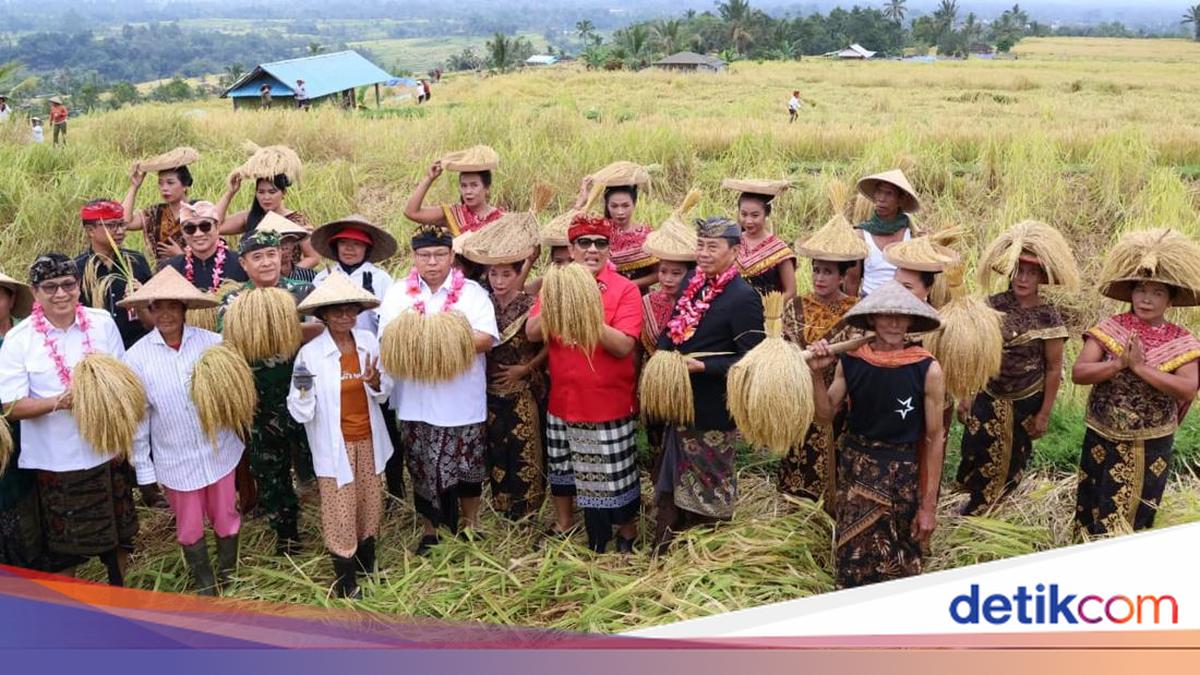
The Regent of Tabanan, I Komang Gede Sanjaya, recently presented four Draft Regional Regulations (Ranperda) during the 3rd Plenary Session of the 2026 second session. Addressing the members of the Tabanan Regional House of Representatives (DPRD), Regent Sanjaya outlined these regulations as part of the Tabanan Regency Government’s commitment to preserving nature, specifically agricultural areas.
Of the four draft regulations, two focus on environmental conservation. These include the Draft Regulation on the Housing and Residential Area Development and Expansion Plan for Tabanan Regency 2026-2046, and the Draft Regulation on the Implementation of Environmental Protection and Management.
Regarding the Housing and Residential Area Development Plan, Sanjaya explained that its formulation is necessary to provide a planned, integrated, and sustainable direction for residential development. He noted that Tabanan’s position within the Sarbagita region (Denpasar, Badung, Gianyar, Tabanan) and its location along national road routes give the area significant potential for residential expansion.
“Therefore, regulation is required to control and direct housing development so that it remains orderly and healthy,” said Sanjaya.
Furthermore, the Draft Regulation on Environmental Protection and Management was proposed as an effort to maintain the sustainability of natural resources and biodiversity, which serve as the foundation for regional development. Through this regulation, the Tabanan Regency Government seeks to ensure a balance between economic development and environmental preservation, while aligning local policies with national regulatory developments to ensure more effective and sustainable environmental management.
“As an agrarian region, Tabanan certainly faces the potential for land conversion. Therefore, rules must be established so that development does not become so massive that it reduces our agricultural areas,” he emphasised.
Beyond these regulations, the Tabanan Regency Government remains committed to protecting nature, particularly in the UNESCO World Heritage site of Jatiluwih, Penebel. The Jatiluwih Festival has now officially been included in the Karisma Event Nusantara (KEN) by the Ministry of Tourism. Consequently, there is a responsibility to ensure that these terraced rice fields remain preserved.
Regent Sanjaya expressed his hope that every Jatiluwih Festival serves as a platform to promote culture, agriculture, and sustainable tourism, involving the wider community, including MSMEs, farmers, artists, and local culture preservers.
He noted that the festival is not merely a tourism agenda but a strategic means to introduce the richness of tradition, culture, local cuisine, and the life of the Jatiluwih agrarian community to a broader audience.
Sanjaya further asserted that Jatiluwih is not just a tourist destination with stunning natural panoramas, but a representation of Balinese agrarian civilisation, passed down through generations via the Subak system based on the Tri Hita Karana philosophy. These values led to Jatiluwih’s global recognition as a UNESCO World Heritage site.
He believes the festival is a tangible effort to maintain this heritage. In addition to introducing natural and cultural beauty to tourists, the festival serves as a medium to revitalise artistic creativity and strengthen the existence of the agricultural sector as a primary pillar of Bali’s food security.
“Through the Jatiluwih Festival, we continue to strengthen the appeal of Jatiluwih. People come not only to enjoy the scenery but also to witness the richness of art and culture displayed by artists. Most importantly, agriculture remains preserved as Bali’s food granary, while tourism provides added value that brings economic benefits to the community,” Sanjaya stated.
Furthermore, the inclusion of the Jatiluwih Festival in KEN 2026 is seen as a significant achievement that strengthens Jatiluwih’s position as a world-class tourism destination.
Sanjaya also ensured the Tabanan Regency Government’s commitment to providing continuous support through policies and regulations capable of creating synergy between the community, local government, provincial government, and central government to maintain the sustainability of the Jatiluwih area. The local government also plans to construct integrated parking facilities in the near future to enhance tourist comfort in Jatiluwih.
To support sustainable agriculture, the Tabanan Regency Government will undertake seven packages of irrigation network rehabilitation in 2026. These packages include the rehabilitation of irrigation networks, construction of new channels, repair of weirs, and the construction of water troughs and embankments across several subaks in various districts.
All works will be handled by the Tabanan Public Works and Spatial Planning Office (PUPR) through the Water Resources Irrigation Division, funded by the Tabanan Regency Regional Budget (APBD). Each work package is tailored to the level of damage and field conditions, with budgets ranging from IDR 200 million to IDR 400 million. These repairs aim to maintain the sustainability of the subak irrigation system, especially as Tabanan serves as a food granary for the agricultural sector.