
Syngenta Promotes Biostimulant Technology to Combat Climate Change Impacts
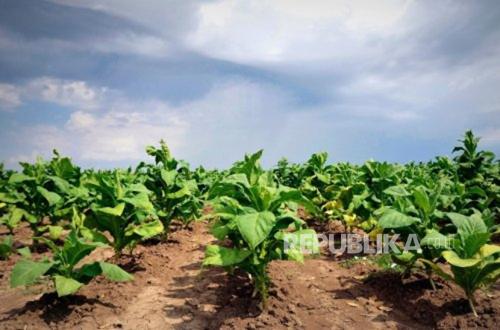
Climate change, which triggers extreme weather, is increasingly seen as a challenge to the national agricultural sector. These conditions drive the need for cultivation technologies capable of helping crops grow optimally despite environmental pressures such as high temperatures and drought.
Eryanto, President Director of Syngante Indonesia, stated that crops require more adaptive support to ensure productivity remains stable amidst changing climatic conditions. Consequently, Syngenta has introduced CUPRINOMAT® biostimulant as an innovation aimed at increasing plant resistance to environmental stress.
“Growth is a journey. At every stage of its life cycle, a plant faces various challenges and environmental pressures. Through CUPRINOMAT®, we provide solutions that help plants continue to grow optimally under various conditions, allowing farmers to achieve better and more sustainable yields,” said Eryanto.
The product launch was marked by a Grand Finale in Sidenreng Rappang (Sidrap) Regency, South Sulawesi, following a ‘Road to Grand Finale’ series that travelled 5,108 kilometres to educate farmers on biostimulant technology. The event was attended by approximately 450 farmers alongside agricultural sector stakeholders.
According to Syngenta, biostimulants are becoming increasingly relevant as climate change challenges intensify. The product is formulated to enhance plant physiological processes while strengthening tolerance to abiotic stress, such as heat, drought, and sub-optimal environmental conditions.
CUPRINOMAT® combines amino acids, humic acid, fulvic acid, and micronutrients, designed to work synergistically to support plant growth and improve nutrient absorption efficiency.
In addition to introducing new technology, Syngenta also conducted educational outreach through the ‘Road to Grand Finale’ journey, reaching approximately 500 farmers across several regions. During these activities, the company presented plant specimens as part of field demonstrations, showing that plants treated with biostimulants exhibited superior growth compared to untreated plants.
Syngenta hopes that the application of biostimulant technology can serve as an effort to support agricultural practices that are more adaptive to climate change, while simultaneously helping farmers maintain productivity amidst the increasing risks of extreme weather.