
Syair Returns to Khutub Khannah: Manuscript Exhibition Revives Minangkabau Islamic Literary Heritage
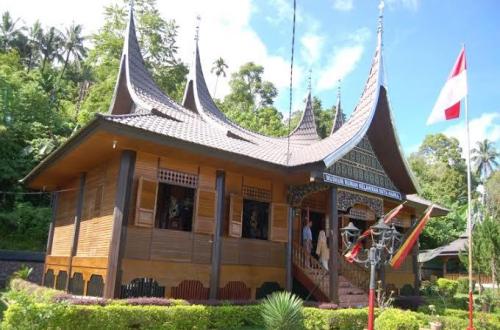
There are certain places that do not merely store objects, but also preserve echoes. They appear as buildings, but in truth, they are chambers of memory. They may be silent on ordinary days, but within that silence resides the long-held voices of scholars, students, readers, copyists, and communities who once made knowledge a way of life. For me, the Khutub Khannah of Haji Abdul Karim Amrullah in Sungai Batang, Maninjau, is one such place. From 5 to 15 June 2026, this historic space will host the ‘Exhibition of Minangkabau Islamic Syair Manuscripts’. I was asked to curate the event by Nofri Duino Zora, a young man emerging as a researcher and enthusiast of manuscripts in West Sumatra. He may still be considered a newcomer to the world of codicology, but therein lies the hope. The world of manuscripts must not be inherited only by established names. It needs a new generation brave enough to approach, learn, question, and work diligently. Nofri received facilitation from the Ministry of Culture’s Dana Indonesiana 2025 under the Public Space Utilisation category. The project is titled ‘Moderation through Syair: Utilising Minangkabau Islamic Literary Manuscripts in Public Spaces’. It is a seemingly simple activity, yet it carries a crucial idea: how manuscripts that have been stored away, fragile, difficult to read, and often distant from the public, can return as sources of knowledge, conversation, and shared values.
Syair as a Path Home to Knowledge
The exhibition departs from a conviction: manuscripts are not dead objects. It is not enough to merely store, photograph, catalogue, and then boast of them as heritage. Manuscripts need to be read again. They need to be brought closer to the community. They need space to speak to the present age. What is being exhibited are manuscripts and texts of Minangkabau Islamic syair. In this tradition, syair is not merely old poetry. It was the way scholars conveyed knowledge. It was a subtle path of da’wah. It was a form of emotional education. Through syair, the teachings of monotheism, jurisprudence, Sufism, morality, love for the Prophet, the Hajj journey, life advice, and even religious polemics were delivered in rhythmic language that easily stuck in the memory. In Minangkabau, knowledge did not always come in rigid exposition. It also came as a voice. It was read, sung, heard, memorised, and passed down. Syair brought knowledge down from the bookshelves into the community’s listening space. It made da’wah not a shout, but a touch. It taught that religion could be conveyed with beauty, that criticism could be delivered with proper conduct, and that differences need not always end in hostility. This is one reason the exhibition is important. In Minangkabau Islamic syair, we find a religious tradition that is rooted but not rigid; vocal but not noisy; differing in opinion but maintaining dignity. In today’s context, when public spaces are easily heated by differences, these manuscripts remind us that our society once possessed a more refined way of speaking, advising, loving, and even arguing.
Arguing with Decorum
A significant part of the exhibition is the polemic between Inyiak Rasul and Inyiak Canduang regarding the Maulid Nabi, specifically the practice of standing during the observance. Inyiak Rasul, a reformist scholar from the Kaum Muda movement, criticised the practice. Inyiak Canduang, a great scholar of the Kaum Tua, replied through syair. The debate was sharp, yet it did not erase their standing as mutually respected scholars. From this, we learn that moderation does not mean the absence of difference. Moderation is evident when differences are managed with knowledge, language, and proper conduct. Another section presents syair of love for the Prophet Muhammad. Here, the Prophet is not merely a historical figure, but the centre of the community’s longing. The stories of his birth, miracles, the Isra’ Mi’raj, the Maulid, and his passing are written and passed down in a language of deep reverence. In syair, the prophetic biography becomes a voice. In manuscripts, love for the Prophet finds a place to endure. There are also syair about the Hajj pilgrimage. Within them, the journey to Mecca is understood not just as the fulfilment of a religious pillar, but as a faith journey full of tears. Pilgrims depart from their villages, bid farewell to their families, travel the sea, stop at ports, and face illness, fear, emotion, and hope. The sea becomes a path of longing. Mecca becomes the destination of faith. The Hajj syair shows that worship is never separate from the body, family, distance, and courage. The exhibition also features syair about disasters and the signs of the times. Not all syair were born from joy. Some were born from wounds: when a village was shaken by calamity, when the nature that gives life suddenly brought fear. Through syair, disaster is not left as a wound that disappears in silence. It is processed into advice, prayer, wisdom, and collective memory.
From Exhibition to Ecosystem
However, this exhibition is not only about the materials on display. For me, as the curator, the social and cultural impact of the process is equally important. This activity is beginning to build a new ecosystem for the preservation and utilisation of Minangkabau manuscript heritage. Manuscripts are no longer solely the concern of academics or researchers. They are becoming the concern of local communities, young people, cultural activists, and the society living around these heritage sites. In this regard, the role of KPGH (Komunitas Pemuda Generasi Hamka) is crucial. They are fully involved in the preparation process. They are not only providing technical assistance but also helping to build awareness that the Khutub Khannah HAKA is not just an old building. It is a historical node. It is a space that can be revived as a centre of knowledge, a place of learning, and a source of inspiration for the present and the future.
Source: jawawa.id (https://jawawa.id/newsitem/syair-returns-to-khutub-khannah-manuscript-exhibition-revives-minangkabau-islamic-literary-heritage-1785239611)
Originally published by Republika (https://analisis.republika.co.id/berita/tivsn7393/syair-yang-pulang-ke-khutub-khannah), translated from Indonesian