
Switzerland Innovates to Turn Waste into Energy, Indonesia Explores Partnership
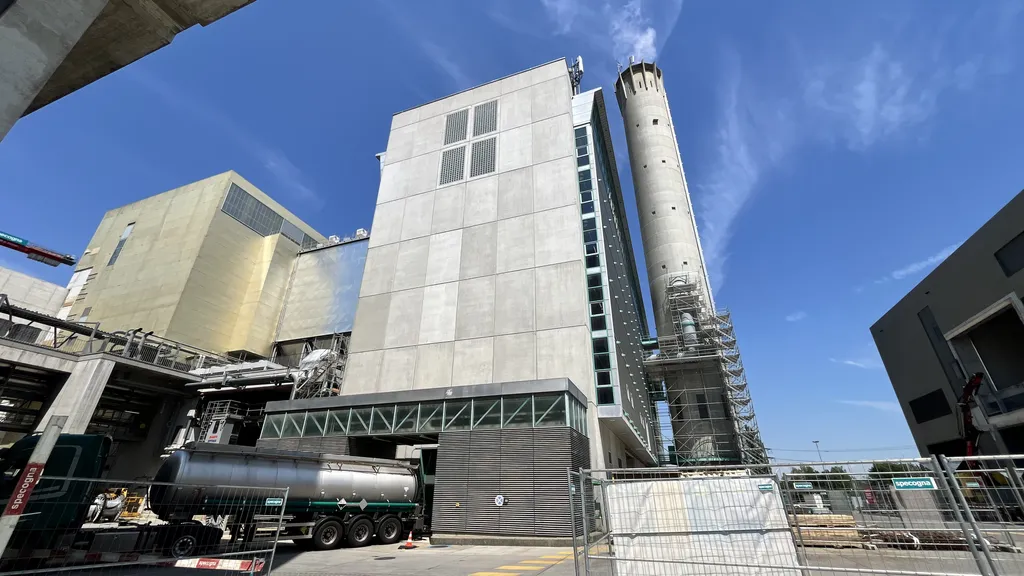
Switzerland is a country with a good waste processing system that produces energy and other products of economic value.
By Evy Rachmawati dari Zurich, Swiss
23 Jun 2026 15:09 WIB · English
ZURICH, KOMPAS - Waste management remains a challenge in many countries, including Indonesia. Nevertheless, by building a technology-based circular economy ecosystem, Switzerland demonstrates that waste management can reduce emissions while also producing economically valuable products.
One of the global companies engaged in waste management, Kanadevia Inova, is pioneering and introducing green technology. This company, based in Zurich, Switzerland, is capable of converting waste into sustainable energy and economically valuable materials.
According to the Senior Sales Manager of Kanadevia Inova, Matthias Baur, when met at the Kanadevia Inova factory area, Hagenholz Zurich Plant, Zurich, Switzerland, on Monday (22/6/2026) local time, the company Kanadevia, which has been operating for over 60 years, does not only operate in Switzerland.
The company also reaches 17 countries, including Dubai, United Arab Emirates, and London, England. The waste processing facility in Dubai has the largest capacity, which is 2.5 million tons per year.
“Our mission is to process waste to generate energy and recycle waste. Waste processing not only produces energy but also eliminates waste. We promote decarbonization, supply security, and resource circularity for our community,” he stated.
To that end, they are developing a holistic factory design and expertise to integrate waste processing technology and biogas production. Kanadevia is also converting electricity into synthetic gases such as hydrogen and methane, as well as recovery, dust capture, liquefaction, and carbon dioxide freezing.
Waste is processed to produce energy and recycled. Waste processing not only produces energy but also eliminates waste.
The Chairman of the Indonesian Chamber of Commerce and Industry (KADIN) for Switzerland and Leichtrnstein, Francis Wanandi, when met in Bern, Switzerland, on Monday (22/6/2026), stated that the implementation of the waste to energy concept is very important for densely populated cities. This is in line with the concept of a healthy city (health city).
The World Health Organization (WHO) stated that the concept of a healthy city is now in demand by the public and is a prerequisite for settlements to be called modern cities. Components of a healthy city include city cleanliness, road facilities, and environmentally friendly waste management.
“Large, densely populated cities face a waste problem. Through the waste-to-energy (WTE) concept, technology now offers an even better solution. This way, waste can be cleaner in every city and generate positive energy, replacing the fossil fuels widely used in Indonesia, particularly coal and oil,” said Francis Wanandi.
However, he continued, the government must thoroughly assess the players in the waste-to-energy sector. The goal is to ensure that not only the machines purchased are considered, but also the ecosystems they build, so that city residents can benefit.
In this case, the proximity of the waste processing plant to the source of raw materials, namely waste, is a determining factor for the success of the waste processing business.
In addition, the supply of raw materials must be guaranteed and sustainable. The economic feasibility of waste processing businesses to generate energy requires a minimum waste supply of 3,000 tons. So far, according to Francis, not all districts or cities can guarantee the waste volume as per the contract.
“To attract private interest in developing waste processing businesses, there must be an investment scheme from the government,” he stated. In the waste processing tender, he continued, attention should be paid to the details of the bids, including whether the waste processing system provides disposal sites while also addressing waste issues.
Some regional governments, according to the Indonesian Ambassador to Switzerland, I Gede Ngurah Swajaya, still have objections regarding the amount of funding for the collection and transportation of waste to processing facilities. “(For waste management to be successful) The waste collection and processing system in the community must be established as it is done in Switzerland,” he stated.
According to Swajaya, the government is currently exploring opportunities for cooperation with several countries to manage waste in order to generate energy and other economically valuable products. Switzerland is one of the countries being considered for partnership in managing waste based on technological innovation.
To attract private sector interest in developing waste processing businesses, there must be an investment scheme from the government.
Matthias reminded that waste collection and sorting are part of education at the household level and should begin from a young age. The key is environmental education, as well as having collection and sorting points to facilitate the recycling of waste.
In addition, the location of the factory should be built as close as possible to urban areas. This aims to expedite the transportation of waste to the waste processing facility and increase the frequency of waste collection per day in order to reduce emissions from waste transportation.
In waste management, the implementation of a digitalization system is necessary to monitor the energy production process and other products derived from waste recycling. Additionally, the investment value required to build a waste processing plant is a minimum of 500 million euros or approximately 10.2 trillion rupiah, based on an exchange rate of 20,510 rupiah for 1 euro.
Writer:
Evy Rachmawati dari Zurich, SwissEditor:
Madina Nusrat