
Switzerland Allocates 3 Million Euros to Support Indonesia's OECD Accession
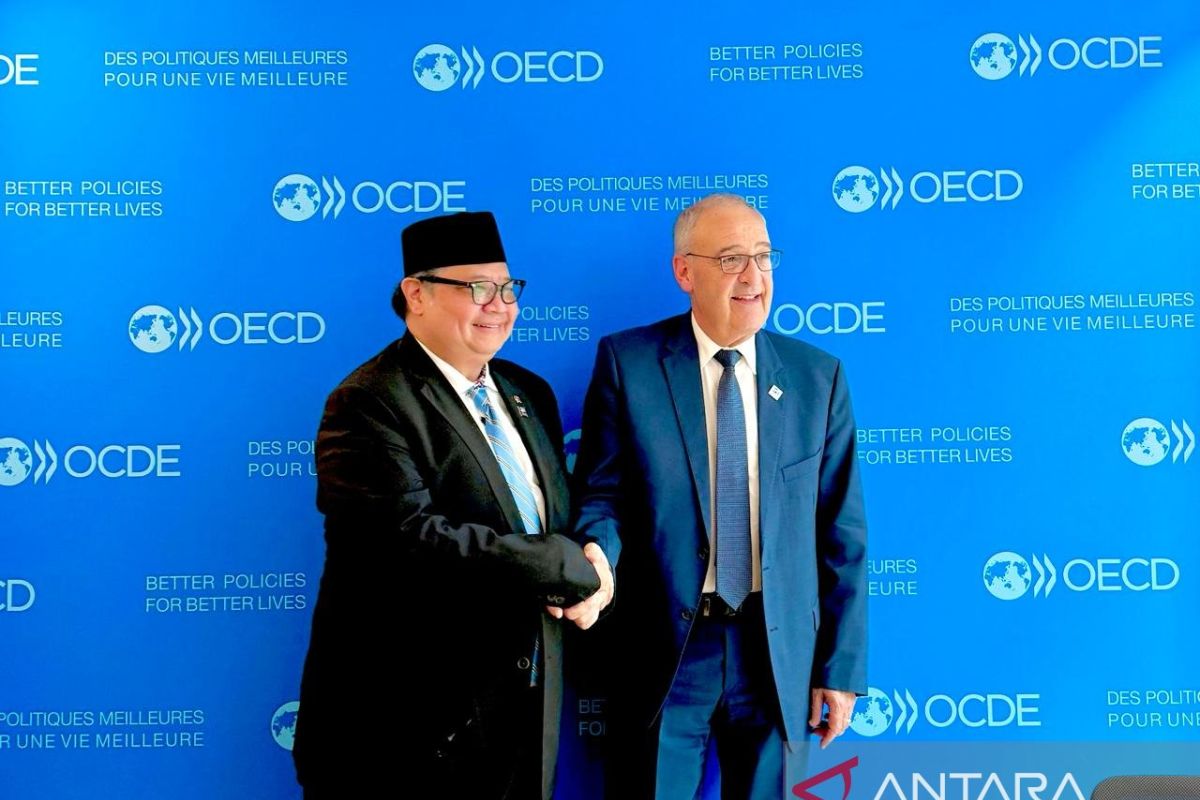
The Swiss government has allocated 3 million euros to support Indonesia’s accession process to become a full member of the Organisation for Economic Co-operation and Development (OECD). This concrete support is realised through a Swiss cooperation programme (2025-2028) focusing on three crucial areas.
The announcement was made during a meeting between the Coordinating Minister for Economic Affairs, Airlangga Hartarto, and the President of the Swiss Confederation, Guy Parmelin, on the sidelines of the 2026 OECD Ministerial Meeting in Paris, France. The three focus areas include strengthening the governance of State-Owned Enterprises (SOEs), increasing capacity in implementing Responsible Business Conduct (OECD RBC), and supporting Indonesia’s accession to the OECD Anti-Bribery Convention.
The Indonesian government is currently actively discussing 240 OECD legal instruments across 32 chapters with more than 60 relevant ministries and agencies to ensure these standards are implemented effectively on the ground. In addition to OECD accession support, both nations discussed strengthening economic cooperation, including plans to sign a non-binding Memorandum of Understanding (MoU) in the mineral and metal sector scheduled for 23 June 2026. This partnership aims to expand cooperation into critical minerals, which are strategic commodities in the global energy transition.
Minister Airlangga also outlined Indonesia’s massive structural reforms in SOEs, noting that restructuring and asset divestment have successfully reduced the number of SOEs. As part of this strategy, he highlighted the role of Danantara, which is currently issuing international bonds to attract foreign capital. “Moving forward, Indonesia will work with Switzerland to adopt global best practices by leveraging Swiss expertise from mature markets,” the Coordinating Minister explained.
Furthermore, in response to geopolitical instability in the Middle East, both countries agreed to strengthen coordination regarding energy and food security. Indonesia presented its success in diversifying energy sources, noting that oil supplies from Saudi Arabia account for only 20 per cent, with the remainder sourced from African nations such as Nigeria, Angola, and Gabon, as well as the United States. In the food sector, Indonesia has achieved self-sufficiency to ensure long-term price stability and has even exported fertiliser to neighbouring countries like Australia. Meanwhile, Switzerland continues to maintain strategic oil reserves for 4 to 4.5 months and strong national fertiliser reserves.
To strengthen future energy fundamentals, Indonesia’s Ministry of Energy and Mineral Resources, alongside SECO (the Swiss State Secretariat for Economic Affairs), is expanding technological cooperation through an MoU on the development of smart grids and battery storage technology to optimise solar energy potential in Indonesia.