
SW Indonesia: IPO is a Process of Corporate Transformation
In the midst of global economic uncertainty and increasing investor caution, the quality of corporate governance is considered an increasingly decisive factor in a company’s success in entering the capital market. Strong governance is even deemed more important than simply chasing market momentum when a company plans an initial public offering (IPO).
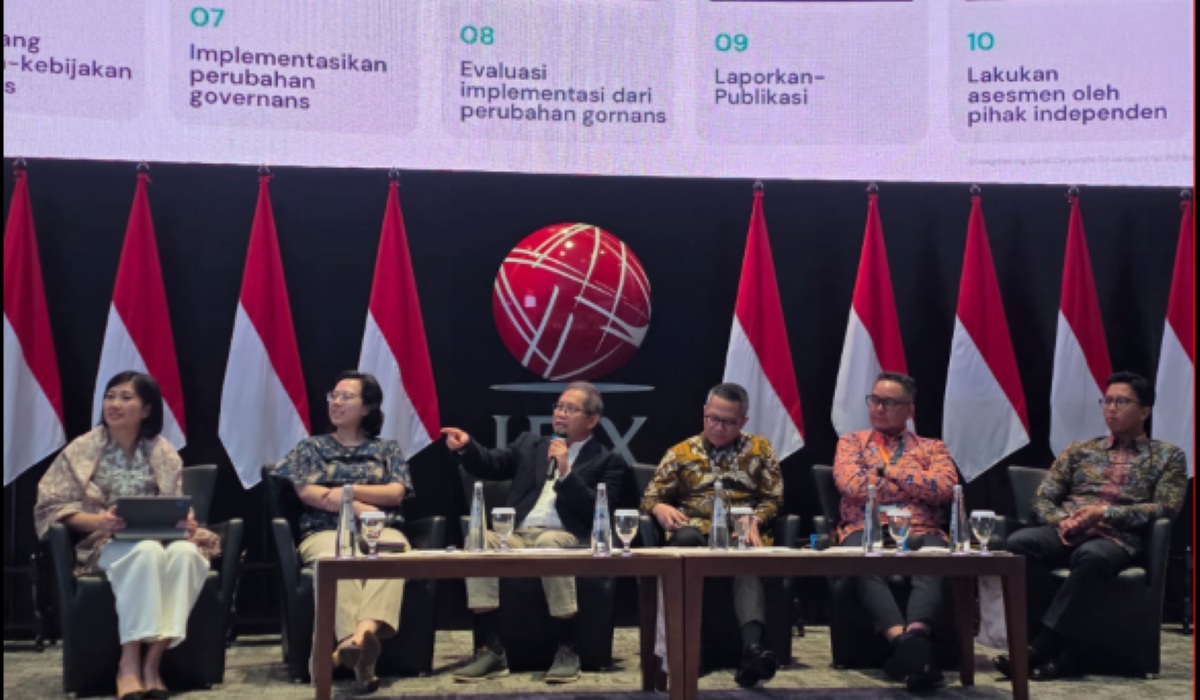
Meanwhile, SW Indonesia Chief Executive Officer Michell Suharli assessed that the greatest benefit of an IPO often emerges before the company is officially listed on the exchange. “IPO is not just about selling shares. IPO is a process of corporate transformation,” he said at a seminar titled IPO Readiness: Strengthen Investor Relations and Corporate Governance held by the Indonesia Stock Exchange (BEI) in collaboration with SW Indonesia at the Main Hall of the Indonesia Stock Exchange, Jakarta, Wednesday (10/6/2026).
According to Michell, a company preparing for an IPO is essentially carrying out a comprehensive overhaul of the organisation. They strengthen governance, improve reporting quality, enhance internal controls, build risk management discipline, and increase organisational professionalism.
Therefore, IPO Readiness should be viewed as a strategic investment, not a cost. “A healthy company creates jobs. A healthy company pays taxes. A healthy company creates innovation. A healthy company enhances national competitiveness,” Michell said.
Chairman of the Indonesian Institute for Corporate Directorship (IICD) and Minister of Communication and Information Technology for the 2014-2019 period, Rudiantara, asserted that corporate governance can no longer be seen merely as a compliance obligation or regulatory fulfilment. According to him, investors today are not only looking at company revenue and profit growth.
Investors are also increasingly paying attention to the quality of decision-making, risk management, transparency, accountability, and the company’s ability to maintain long-term business sustainability. “Investors are not only assessing financial performance. They are also assessing how the company is managed, how risks are controlled, and whether the organisation has a sufficiently strong foundation to grow sustainably,” said Rudiantara.
He added that companies wanting to enter the capital market must begin to transform from founder-centric businesses into institutions supported by systems, governance, and professionalism. According to Rudiantara, companies that are able to build good governance will have a higher level of resilience in facing economic changes, technological disruption, and increasingly complex competitive pressures.
Vice Director of Listed Companies Development at the Indonesia Stock Exchange, Listyorini Dian Pratiwi, stated that although the success of an IPO is influenced by market momentum, IPO preparation should not wait for ideal market conditions. “An IPO does depend somewhat on momentum. However, it is never too early to make IPO preparations, so that under any conditions these preparations can still be carried out,” she said.
According to Listyorini, companies that wish to become issuers must strengthen various fundamental aspects, ranging from business operations, financial reporting, legal and tax compliance, to corporate governance. Besides governance, the Investor Relations function is also considered increasingly strategic in the IPO process. Investor Relations no longer merely functions as a channel of corporate communication, but rather becomes a bridge connecting the company with investors before, during, and after the IPO.
Before the IPO, investor relations plays a role in building company credibility and crafting an equity story that can explain the business value to investors. During the IPO process, this function helps ensure that the company’s strategy and prospects are accurately understood by the market.
After the company is listed on the exchange, investor relations plays a role in maintaining investor trust through information disclosure and consistent communication. “No matter how big the fish is in the pond, if it is never shown, it will not be seen,” said Listyorini.