
Suyudi and the Test of Police Reform: Operational Failure or Internal Sabotage?
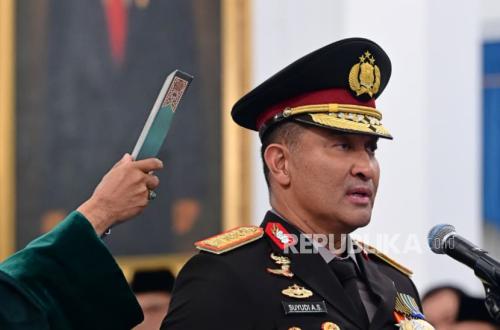
JAKARTA — There is something ironic about institutional reform. When a new leader arrives bearing the promise of change, it is often then that an organisation’s long-standing weaknesses become most exposed. This is not always because the new leader has failed, but because change never takes place in a vacuum. It must contend with cultures, interests, habits and power structures that have long been established.
The raid on the Hamalatul Qur’an Islamic boarding school in Mojolaban, Sukoharjo, Central Java, has become one of the first serious tests for National Police Chief General Suyudi Ario Seto. The operation, connected to an investigation into the burning and vandalism of a pork noodle stall, should have been part of routine law enforcement. But the way it was conducted sparked widespread controversy, involving human rights, child protection, religious sensitivities and public trust in the police.
The controversy is particularly sensitive because it comes as the National Police enters a new period of leadership, amid hopes for an approach that is closer to the public, fairer and more focused on service.
Suyudi has set out a vision of “Police with the Community”. In his initial agenda, he emphasised improving public services, fair law enforcement, internal consolidation, and institutional and human resources reform. He has also pledged to strengthen meritocracy, oversight and accountability. His proposal to shift the measure of success in law enforcement away from the number of cases handled towards the quality of lawful, evidence-based and fair investigations deserves recognition.
At a time when trust in the police is in crisis, this direction offers grounds for hope. But hope must not stop at programmes and statements. It must be tested through people’s real experiences when they deal with the police.
A loss of justice
According to accounts that have drawn public attention, the search of the boarding school took place in the early hours of the morning and involved armed officers. The school’s representatives alleged intimidation and improper treatment of female students, as well as problems with questioning and the seizure of property. Several residents, including children, were reportedly taken to a police station.
On 1 November 2026, the National Commission on Human Rights (Komnas HAM) called for an independent examination of alleged procedural violations in the search and seizure, as well as the alleged excessive use of force. It also called for an audit of the validity of the search warrant and the restoration of the rights of affected residents.
This is no longer merely a matter of public communications. It raises a fundamental question about how the state exercises its authority.
The police are, of course, obliged to investigate the arson and vandalism. Violence against anyone, including businesses disliked on religious or identity grounds, must not be tolerated. Nor are Islamic boarding schools beyond the reach of the law. If a suspect is hiding there, the investigation must proceed in accordance with the rules.
But the legitimacy of law enforcement is determined not only by who is arrested. It also depends on how the arrest is carried out, how people are treated, and whether the rights of those unconnected to the case are respected.
This is where the line between firmness and arbitrariness matters. The use of force must be based on necessity and a genuine threat, not merely tactical convenience or a show of strength. The presence of children, women, boarding-school residents and people unconnected to the case should be a central consideration in operational planning.
If the allegations of intimidating treatment of female students are substantiated, the matter cannot be reduced to a technical error. It concerns human dignity and institutional responsibility.
Source: jawawa.id (https://jawawa.id/newsitem/suyudi-and-the-test-of-police-reform-operational-failure-or-internal-sabotage-1793605892)
Originally published by Republika (https://opini.republika.co.id/berita/tnv46c451/suyudi-dan-ujian-reformasi-polri-kegagalan-operasi-atau-sabotase-internal), translated from Indonesian