
Suwung Landfill Quota Restrictions in Bali Reduce Waste Volume and Methane Emissions
The government faces a policy dilemma with no truly comfortable solution.
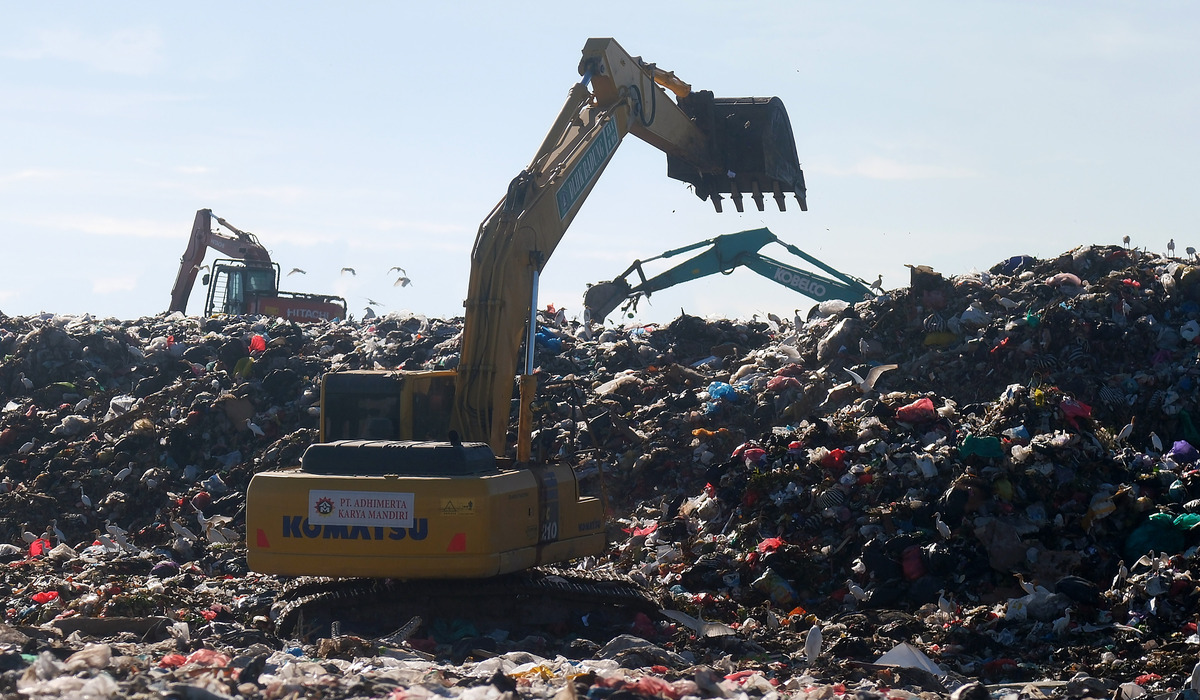
The Ministry of Environment and Forestry/Environmental Control Agency (KLH/BPLH) conducted monitoring and direct inspections at the Suwung Final Processing Site (TPA) in Bali, as a follow-up to the waste disposal restriction policy that has been in effect since 1 April 2026. Under this policy, the Suwung TPA now only accepts residual waste and no longer accommodates organic waste.
This step is part of a major transformation of the national waste management system, shifting from the old collect-transport-dispose pattern to a source reduction-based approach with more environmentally friendly processing. The policy also aligns with sustainable waste management principles that emphasise sorting, processing, and reducing the burden on TPAs.
The Chief Inspector of KLH/BPLH, Winarto, stated that the implementation of the policy in the field shows positive developments, although it still requires strengthening in supervision aspects.
“Waste management in the field has already shown progress. However, supervision needs to be improved, including the optimisation of two-stage verification and the use of technology such as CCTV to make all processes more accountable and transparent,” he said.
In agreement, Bali Governor I Wayan Koster stated that this restriction policy is beginning to have a real impact. He revealed a significant decrease in the number of waste trucks entering the Suwung TPA since the regulation was enforced.
“Since only residual waste can enter the TPA, we have seen conducive developments. The number of entering trucks has decreased significantly, and various dynamics and obstacles have been conveyed to KLH/BPLH as material for joint evaluation,” Koster said.
Empirically, this policy is also starting to encourage changes in public behaviour. Initial indications show an increase in waste sorting practices at the source level, particularly the separation between organic and inorganic waste. This change is considered crucial to reduce the volume of waste ending up at the TPA while improving the efficiency of the management system.
From an environmental perspective, restricting organic waste to the TPA has significant potential to suppress greenhouse gas emissions, particularly methane (CH₄) produced from the decomposition process in landfills. Thus, the policy not only impacts waste volume reduction but also contributes to climate change mitigation efforts.
KLH/BPLH emphasises that monitoring and evaluation will continue to be carried out sustainably. According to the ministry, the success of this policy greatly depends on synergy between the central government, local government, business actors, and the community.
Looking ahead, policy strengthening will focus on increasing upstream processing capacity, developing waste management infrastructure, and enhancing public education. This step also serves as a transition strategy while awaiting the construction of Waste Processing to Electricity Energy (PSEL) facilities, so that waste generation reduction and public behaviour changes can proceed more quickly and consistently.
There is no other solution for trucks that do not fully comply with the provisions other than returning to the waste source for re-sorting.
In addition to the Environmental Office, waste transportation services such as the Dalung Village-Owned Enterprise also conveyed socialisation regarding the waste sorting policy.
Hundreds of waste trucks queued long at the entrance to the Suwung TPA. Observations at the location showed a long queue nearly 2 kilometres from the entrance gate to the Suwung TPA.
Bali’s waste problem has reached a high vulnerability level and can no longer be handled with the old pattern that relies on TPAs.
Governor of Bali Wayan Koster’s policy to close the Suwung TPA to organic waste has sparked controversy.