
Suwastika's Efforts to Preserve Tradition by Crafting Tedung
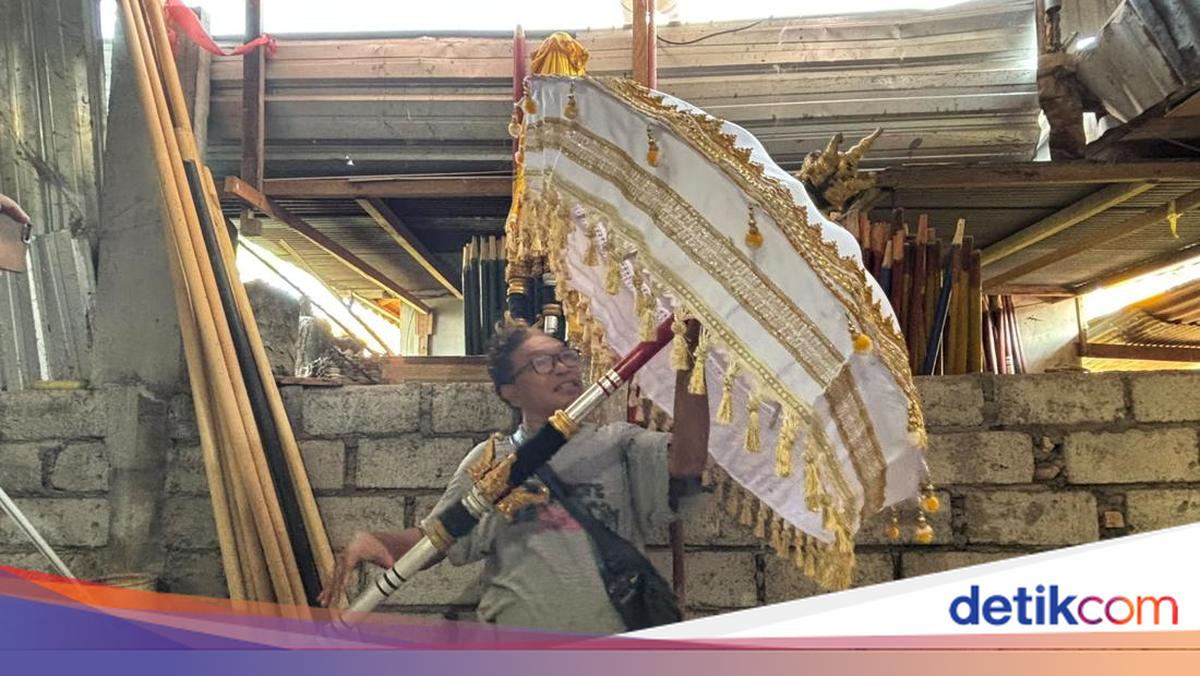
Anak Agung Gede Anom Suwastika is striving to preserve Balinese tradition by dedicating himself to crafting tedung (traditional ceremonial umbrellas). His business is located in the Puri Satria Kanginan area, Paksebali, Klungkung, Bali. Suwastika can produce 20 one-metre tedung per day. Production can increase to up to 50 umbrellas per day ahead of the Galungan holiday. “Approaching Galungan, we are usually overwhelmed because demand keeps rising,” said the 56-year-old in a written statement on Friday (19/6/2026). Suwastika makes tedung in various sizes, from 90 centimetres, one metre, to 1.25 metres. The traditional umbrellas are sold at prices starting from Rp65,000 for the 90-centimetre size, Rp85,000 for one metre, and up to Rp125,000 for the 1.25-metre size. In addition to standard models, the former hotel employee produces tedung agung with more intricate ornaments. Producing tedung agung also takes longer, and not all artisans are capable of making them. Suwastika sells the tedung to several traditional markets in Denpasar, such as Pasar Sanglah, Pasar Kreneng, and Pasar Kumbasari. The one-metre size is the most popular among buyers. According to Suwastika, the main difficulty faced by tedung artisans is sourcing raw materials, especially wood and bamboo for the umbrella frames. The wood used generally comes from fruit trees such as durian and wani. “During the rainy season, it is even harder to find materials,” he revealed. Suwastika applied for a Kredit Usaha Rakyat (KUR) loan from BRI amounting to Rp100 million to strengthen his business capital. The loan was used to increase raw material stock so that production can continue when demand rises. “The KUR assistance is very helpful for capital to buy materials first before the money is turned over again,” he said. Suwastika also utilises digital banking services, such as BRImo. Cashless payments facilitate transactions because buyers often make partial payments before the goods are delivered. Regional CEO of BRI Region 17 Denpasar, Hery Noercahya, stated that the state-owned bank continues to encourage community economic traditions like the tedung-making business to keep thriving in Bali. “Seeing the ever-present demand potential, especially in Bali, economic activities like this must be continuously supported because they can drive the grassroots economy,” he said. Hery believes the presence of digital services like BRImo also helps business operators in conducting payment transactions, purchasing raw materials, and recording business finances. The use of mobile banking has become an essential need amidst digitalisation, as most customers now use cashless transactions. “With neater transaction records, business operators will find it easier to access bank credit in the future,” he added.