
Sustaining the School Ecosystem: Achievement, Culture, and Empathy
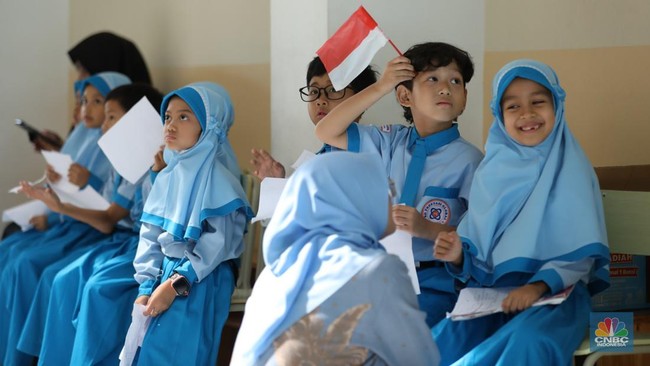
The success of a school is often measured by its academic achievements. The higher the students’ accomplishments, the better the school’s image in the eyes of the public. However, in practice, achievement is not the ultimate goal of education. It is merely an indicator that an education system is functioning well. The real challenge emerges after such achievements are attained: how to maintain quality, preserve public trust, and pass on a culture of excellence to the next generation.
This reflection arose when the author had the opportunity to serve as a resource person at a working meeting of SMP Negeri 49 Jakarta, which recently recorded a proud achievement by ranking first in the 2026 Academic Ability Test (TKA) for junior high schools across DKI Jakarta. This accomplishment is undoubtedly the result of collective effort involving the principal, teachers, education staff, students, parents, and all stakeholders who are part of the educational process. However, as is the case with many excellent organisations, the greatest challenge lies not in reaching the top position, but in maintaining it.
In organisational science, sustainable success is not determined solely by strategy, resources, or short-term gains. Edgar H. Schein (2017) explains that organisations capable of surviving in the long term are those with a strong culture and the ability to instil values agreed upon by all their members. In other words, sustainable achievement is born from culture, not merely from programmes or policies.
To understand the importance of this culture, a school can be viewed as an ecosystem. A simple analogy is a lake ecosystem. A healthy lake does not consist only of fish as its main inhabitants. Life within it depends on water quality, the presence of aquatic plants, sunlight, microorganisms, nutrients, and various other organisms that interact to form a balance. If one component is disturbed, the impact can be felt throughout the entire system.
The same principle applies in education. A school is not built by a single individual or a single profession. It is an ecosystem consisting of the principal, teachers, education staff, students, parents, the school committee, the government, and the surrounding community. Each has a different function, yet all are interconnected. When the relationships between these elements run harmoniously, the school has a strong foundation to grow. Conversely, when one element is disrupted, the effects can ripple through the entire system.
This view aligns with the mandate of Article 8 of Law Number 20 of 2003 on the National Education System, which affirms that the community has the right to participate in the planning, implementation, monitoring, and evaluation of education programmes. Education is not solely the responsibility of schools, but a shared responsibility between the government, families, and society. In the context of Jakarta, this spirit is also reflected in DKI Jakarta Regional Regulation Number 8 of 2006 on the Education System. The regulation emphasises the importance of community participation in education delivery and encourages synergy between schools, families, and the social environment in supporting the learning process of students. Thus, a school’s success is essentially the result of collaboration among various elements working within the same ecosystem.
If water is the element that connects all life in a lake, then communication is the element that connects all members of a school. Through communication, information is conveyed, expectations are built, trust is cultivated, and culture is passed on. Communication links teachers with students, schools with parents, principals with education staff, and students with their social environment. Therefore, school culture is actually shaped by the daily communication that occurs within it. The way a teacher greets students, how students treat their friends, how leaders provide direction, and how the school responds to criticism are all part of the process of forming organisational culture. Culture is not born from slogans posted on school walls or vision and mission documents stored in administrative cabinets. Culture is born from small habits performed consistently every day.
Michael Fullan (2020) notes that the success of educational transformation is largely determined by the quality of human relationships within the educational organisation. Schools with a collaborative culture tend to be more capable of adapting to change, resolving conflicts more quickly, and achieving educational goals more effectively than schools where relationships among members are formal and transactional.
One of the most important elements in the school ecosystem is the relationship between the school and parents. Unfortunately, in some cases, this relationship is still narrowly understood as a relationship between a service provider and a service recipient. When a child encounters problems, a tendency to blame each other emerges between the school and the family. As a result, communication, which should be a means of resolution, instead becomes a source of conflict. In reality, schools and parents are not competing to determine who is right. They are on the same team with the same goal: ensuring the child can develop optimally.