
Sustainable Marine Management Becomes Key to Strengthening Coastal Economies
The positive performance of non-oil and gas commodity trade continues to serve as a pillar of the economy. Indonesia’s vast maritime potential positions the marine and fisheries sector as a strategic component in supporting national food security, regional economic growth, and the improvement of coastal community welfare. Consequently, various policy innovations and development programmes in this sector are being encouraged to create economic benefits while maintaining environmental sustainability.
Effective coastal area management is considered vital for strengthening regional competitiveness, increasing fisheries productivity, and supporting the blue economy concept, which is currently a focus of national development. In recognition of these efforts, the government has bestowed the Satyalencana Wira Karya Honour in the Field of Government, Management, Development, and Marine and Fisheries Development upon several regional heads and heads of regional agencies who have successfully introduced innovations with a tangible impact on coastal communities and the fisheries sector.
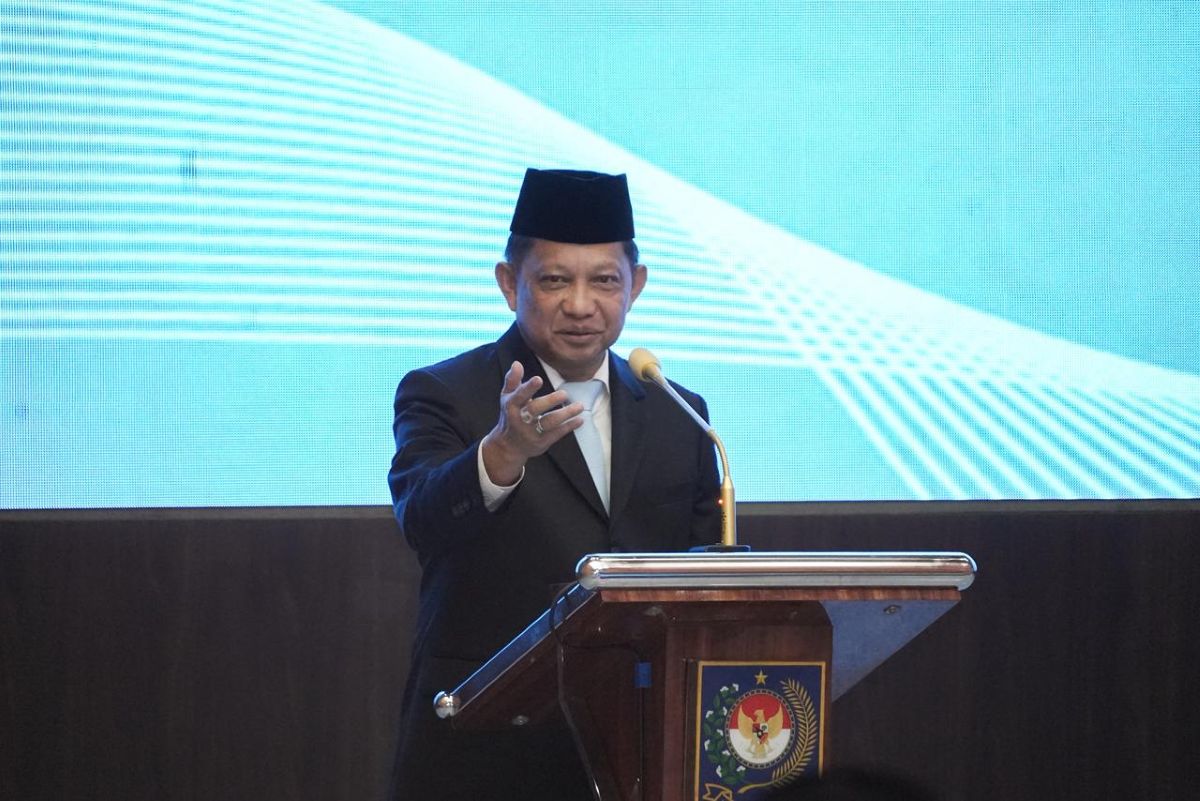
The conferment of these honours was conducted by the Minister of Home Affairs on behalf of the President of the Republic of Indonesia at the Ministry of Home Affairs Building in Jakarta on Monday (1/6), coinciding with the commemoration of the Birth of Pancasila. Minister of Home Affairs Tito Karnavian emphasised that the marine sector holds a strategic position for national development. With a maritime area of approximately 6.4 million square kilometres and a coastline of about 108,000 kilometres, Indonesia possesses immense potential to strengthen food security and the maritime economy.
“This award is a recognition of the dedication, innovation, service, and real contribution in strengthening the governance of the marine and fisheries sector,” said Tito. The honours were presented to seven figures, including regional heads and heads of regional agencies, who were judged to have implemented policies and innovations contributing to the quality of the coastal environment and the welfare of fishing communities.
The government hopes these awards will motivate other regions to continue developing innovations in coastal and fisheries management, ensuring Indonesia’s maritime potential is utilised optimally without neglecting environmental sustainability. Safrizal ZA, Director General of Regional Administration at the Ministry of Home Affairs, explained that the awards were granted through a long and multi-layered selection process. In addition to technical and administrative assessments involving various ministries and agencies, candidates underwent track-record verification by several law enforcement institutions, including the State Intelligence Agency (BIN), the Corruption Eradication Commission (KPK), the Indonesian National Police, and the Attorney General’s Office.
Following successful verification, the assessment continued through the Presidential Military Secretariat (Setmilpres) and the Council of Titles, Decorations, and Honours, before being formalised via Presidential Decree Number 126/TK/Year 2025. Furthermore, the reform of business licensing in the marine and fisheries sector through Government Regulation (PP) Number 28 of 2025 introduces a new spirit of a faster, more transparent, and efficient system.