
Sustainable Financing in Southeast Asia Plummets 46 Percent in Q1 2026
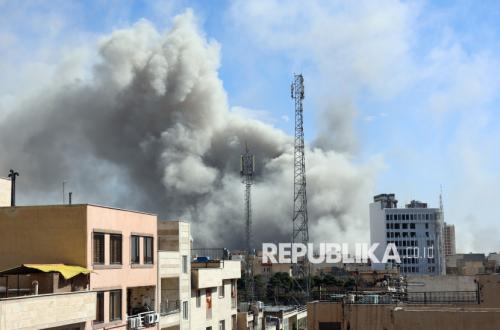
REPUBLIKA.CO.ID, SINGAPURA – Volume of sustainable financing in Southeast Asia had a poor start to 2026. This is due to companies focusing on managing volatility and increasing uncertainty caused by the ongoing Iran war.
Funds from environment, social, and governance (ESG)-labelled loans in the region plummeted to $5.9 billion in the first quarter of this year, a sharp 46.3 percent drop from $11.1 billion a year earlier, according to data from financial data provider LSEG.
A similar trend was observed in the ESG bond market, with issuance values declining 26.5 percent to $4 billion from $5.4 billion in the same period.
“The Iran conflict has added volatility and complexity to the operational environment, prompting many companies to prioritise short-term operational and financial priorities, with sustainable financing potentially sidelined for the time being,” said Jeong Yoonmee, Head of Global Wholesale Banking Sustainability Office at OCBC, as quoted by the Business Times website.
The Asia-Pacific market, excluding Japan, also saw a sharp decline, with ESG loan funds reaching $16.6 billion in the first quarter of 2026, down 40.3 percent from $27.8 billion in the same period last year. However, the global market moved in the opposite direction, with values rising 11.5 percent to $148.5 billion from $133.2 billion in the same period.
Due to energy price shocks impacting the global economy, ASEAN companies are likely to face material effects on costs, liquidity, and capital allocation in the coming quarters.
“For businesses, sustained energy price volatility has caused margin pressures and tighter credit metrics, particularly in energy-intensive sectors. This can delay sustainability-linked loans, where short-term sustainability performance targets may be affected by factors beyond management’s control,” said Adrian Ow, Head of ESG Strategy for Group Wholesale Banking at UOB.
Issuance of structured financing, such as ESG loans, requires more time to set sustainability performance targets, develop frameworks, and externally validate them. Therefore, companies have deferred these fundraising needs when visibility is limited, leading to temporarily slowed issuance activity amid execution risks, he added.
“In the short term, companies have adopted a more cautious stance amid uncertainty and heightened execution risks, prioritising balance sheet resilience and liquidity management,” he said.
Source: jawawa.id (https://jawawa.id/newsitem/sustainable-financing-in-southeast-asia-plummets-46-percent-in-q1-2026-1776855142)
Originally published by Republika (https://esgnow.republika.co.id/berita/tdvj4u423/pembiayaan-berkelanjutan-di-asia-tenggara-anjlok-46-persen-pada-kuartal-i-2026), translated from Indonesian