
Sustainability Reporting Standards Tightened in Bid to Prevent Greenwashing
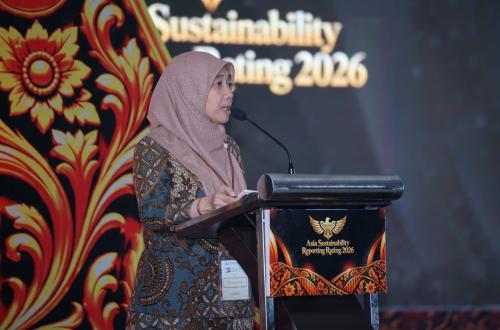
YOGYAKARTA — The quality of corporate sustainability reports needs to be strengthened so that information about economic, social and environmental impacts is not merely a formality. Reports are also expected to provide transparent, credible and relevant information that is connected to business strategy, enabling it to inform decision-making.
The National Center for Corporate Reporting (NCCR) has made the International Standard on Sustainability Assurance (ISSA) 5000 a mandatory requirement for participants seeking a Platinum rating in the Asia Sustainability Reporting Rating (ASRRAT) from 2027.
NCCR Chairman and Executive Director Ali Darwin said the policy was intended to increase the credibility of sustainability reports while reducing the risk of misleading information, or greenwashing.
“Independent assurance helps strengthen the credibility of disclosures and reduce the risk of misleading information (greenwashing). Therefore, starting with ASRRAT 2027, every report receiving a Platinum rating must be assured in accordance with ISSA 5000,” Ali said at ASRRAT 2026 in Yogyakarta on Friday (27 November 2026).
Sustainability reporting in Indonesia is also evolving with the implementation of Sustainability Disclosure Standards (PSPK) 1 and PSPK 2 from 1 January 2027. The two standards, which adopt IFRS S1 and IFRS S2, require companies to disclose climate-related risks and opportunities in more measurable terms.
Sylvia Veronica N.P. Siregar, chair of the board of the Institute of Certified Sustainability Practitioners (ICSP) and head of the ASRRAT 2026 jury, said this year’s assessment looked beyond compliance with Financial Services Authority (OJK) regulations, particularly POJK 51/2017 and SEOJK 16/2021, and alignment with Global Reporting Initiative (GRI) standards. The judges also assessed the extent to which information in the reports could inform strategic decision-making.
“Many reports have moved beyond simply describing activities to explain why an issue is material and how it relates to a company’s strategy. However, some reports remain stuck presenting long lists of programmes without showing their relevance to the business model,” Sylvia said.
GRI Chief Executive Officer Robin Hodess said in a video recording that reporting is the starting point for organisations to understand the impact of their business activities, engage stakeholders, identify risks and make better decisions.
“Most importantly, reporting creates accountability, and accountability is the key to trust,” Robin said.
For ASRRAT 2026, NCCR and ICSP assessed 97 companies and organisations from Indonesia, Bangladesh and the Philippines. The number of participants rose by 18 per cent compared with the previous year.
The results saw 27 participants receive Platinum, 57 Gold, nine Silver and two Bronze ratings. Indonesian companies in the Platinum category included PT Bukit Asam Tbk, PT Garuda Indonesia (Persero) Tbk, PT PLN Indonesia Power, PT TIMAH Tbk and PT Bank Mandiri (Persero) Tbk.
PetroChina International Jabung Ltd was among the 57 participants awarded a Gold rating. The results form part of an assessment of sustainability reporting practices among companies and organisations across Asia.
Source: jawawa.id (https://jawawa.id/newsitem/sustainability-reporting-standards-tightened-in-bid-to-prevent-greenwashing-1795848665)
Originally published by Republika (https://esgnow.republika.co.id/berita/tp768t522/standar-laporan-keberlanjutan-diperketat-upaya-cegah-greenwashing), translated from Indonesian