
Sustainability of Tofu and Tempeh Industry Strengthened Through Supply Stability and Government Support
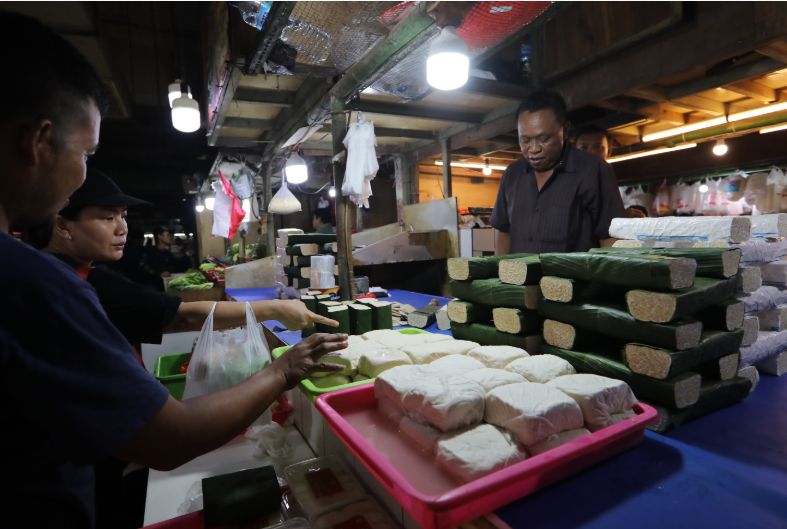
Tofu and tempeh have become essential components of the Indonesian diet and serve as an affordable protein source for millions of families. Furthermore, the tofu and tempeh industry contributes to the national economy through thousands of small and medium-sized enterprises (SMEs) spread across various regions.
In an effort to maintain the sustainability of the industry, business players have appreciated the government’s steps to maintain the stability of the national soybean supply and prices. This includes the establishment of a Soybean Sales Reference Price (HAP) agreed upon by the government, business owners, importers, and producers to ensure the availability of raw materials. Currently, soybean prices in various regions of Indonesia remain within a relatively stable range.
Based on data from the National Food Agency (BPN) as of June 2026, soybean prices in several areas remain below the agreed price limit for producers, providing room for businesses to operate production activities optimally.
Representing the National Soybean Distributor Association (PPKN), Riyanto expressed his appreciation for the various steps taken by the government to maintain the stability of the tofu and tempeh industry. “We highly appreciate the government’s attention and support for the tofu and tempeh industry. Efforts to maintain price stability and supply availability are crucial to providing certainty for all business players throughout the supply chain,” Riyanto stated in an official statement on Thursday.
According to him, besides price stability, the industry’s continuity is also heavily determined by smooth distribution and the continuous availability of raw materials. “When supply is well-maintained and distribution runs smoothly, business players can produce optimally and meet community needs sustainably,” Riyanto added.
Similar views were expressed by Situh, a tofu and tempeh producer in Jakarta. He assessed that the current condition of soybean supply and prices is quite conducive for business owners. “Currently, we are still able to run our businesses well. Government support in maintaining supply and price stability provides certainty for producers to continue producing and serving the needs of the community,” Situh explained.
He added that the success of the tofu and tempeh industry requires attention to all aspects of the supply chain, ranging from raw materials, packaging, and distribution to energy and other operational efficiencies that can affect production costs. “With maintained supply and smooth distribution, we can focus more on improving product quality and ensuring business sustainability.”
Moving forward, industry players support various government efforts to strengthen national food security through the development of domestic soybean production, increased supply chain efficiency, and the strengthening of collaboration between farmers, distributors, business owners, and the government. Riyanto emphasised that synergy among all stakeholders is key to maintaining the sustainability of the tofu and tempeh industry in Indonesia.
As one of the primary protein sources for the Indonesian people, the tofu and tempeh industry is expected to continue growing and contributing to national food security. Government support, accompanied by the strengthening of the supply chain and collaboration among all stakeholders, is believed to further strengthen the industry’s resilience in facing various future challenges.
However, due to the weakening of the Rupiah exchange rate, soybean prices have risen significantly. Tempeh producers in Ponorogo have been forced to reduce product sizes due to the increase in imported soybean prices in order to maintain profit margins and consumer purchasing power. Tofu and tempeh producers in the East Priangan region are currently facing heavy economic pressure. For instance, PrimKopti Ciamis consumes approximately one ton of imported soybeans per day to meet the needs of its 130 tofu and tempeh producer members. Soybean prices in DKI Jakarta have been reported to rise from Rp8,000–Rp8,600 per kg to between Rp10,500 and Rp11,000 per kg at the producer level.
Source: jawawa.id (https://jawawa.id/newsitem/sustainability-of-tofu-and-tempeh-industry-strengthened-through-supply-stability-and-government-support-1782381058)
Originally published by Media Indonesia (https://mediaindonesia.com/ekonomi/904240/keberlanjutan-industri-tahu-tempe-diperkuat-melalui-stabilitas-pasokan-dan-dukungan-pemerintah), translated from Indonesian