
Sustainability-Based Leadership: Lessons from Thailand's King Rama IX
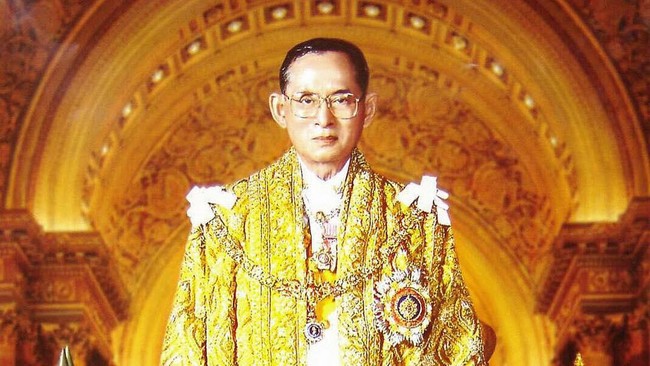
Recently, the Indonesian public sphere has been frequently enlivened by various heated discourses regarding leadership. Amidst the pros and cons of various current leadership styles, both in the realm of public policy and corporations, we often forget the fundamental essence of what makes a leader worthy of being loved and followed.
During several official visits to Kasetsart University in Thailand—a sister university to my institution—I have discussed and delved into the leadership story of the late King Bhumibol Adulyadej, known as King Rama IX. He is widely recognised as the most beloved leader in Thailand’s modern history.
King Rama IX was not merely a head of state with ceremonial powers. Reigning for seven decades, specifically from 1946 to 2016, he was a unifying figure for the nation amidst various political upheavals. However, what makes his figure so relevant to study today, especially for policymakers and development practitioners, is his approach to sustainability. He was not just a leader who thought about short-term economic growth, but a visionary who embraced the principles of sustainability long before the term became a global trend.
One of the most interesting case studies to analyse is the ‘Royal Project’ regarding the development of tilapia farming. In the 1960s, Thailand faced serious challenges regarding nutritional fulfillment for its people. Driven by this concern, King Rama IX sought a pragmatic yet sustainable real solution. The story began when the Emperor of Japan introduced African tilapia to King Rama IX.
Seeing the great potential of this fish, King Rama IX did not immediately order a massive dispersal into all the rivers in Thailand for instant popularity. Instead, he demonstrated mature leadership by avoiding shortcuts. He chose to bring it to the palace environment and conduct intensive aquaculture experiments alongside expert staff from various universities and research institutions. This step was crucial as it showed that he was a data-driven leader. He wanted to ensure that the developed cultivation methods were truly simple and could be adopted by small-scale farmers in remote areas, not just by large industries.
Furthermore, there was the ecological intelligence of King Rama IX worth emulating. During the experimental process at the palace, he conducted deep observations regarding the biological behaviour of tilapia. He realised that if tilapia were allowed to escape into public waters or Thailand’s rivers uncontrollably, there was a significant risk that this species would become invasive and prey upon Thailand’s native endemic fish species. He understood that prioritising the nutrition of the people (the People aspect) must not sacrifice the balance of the ecosystem and biodiversity (the Planet aspect).
This cautious attitude reflects King Rama IX’s deep understanding of the sustainability concept which encompasses the 3Ps: People (public welfare), Planet (environmental preservation), and Profit (sustainable economic prosperity). King Rama IX did not stop at fulfilling nutrition. He realised that to make this project sustainable, rural communities had to have economic independence. Therefore, he encouraged the community not only to consume the fish but also to process and sell it as a value-added commodity. By creating an ecosystem where tilapia could be managed, processed into derivative products, and sold to the market, he ensured an economic circulation capable of improving the standard of living for farmers (the Profit aspect).
By integrating the aspects of People, Planet, and Profit, King Rama IX successfully built a holistic sustainability model long before the ‘Sustainability Triple Bottom Line’ concept became popular globally. He decided that tilapia cultivation should only be conducted within controlled aquaculture systems (artificial ponds), rather than being released into free-flowing rivers. He thought about the future of Thailand; not merely ‘feeding’ the people at that moment, but preserving the biodiversity and economy to be inherited by future generations.
When this ‘Royal Project’ was finally implemented, King Rama IX acted like a true agricultural and fisheries extension officer. He visited various villages, allocated funds, and often ensured that supporting infrastructure—such as village roads—was improved so that community economic access would increase.
Interestingly, there was a very deep humanistic side to King Rama IX; he was initially reluctant to consume the tilapia he cultivated because he felt the fish were like his ‘own children’ resulting from the hard work of experiments with his staff. This is a form of empathy from a leader who merges with the problems of his people.
What can we learn from the leadership of King Rama IX? First, a true leader is one who possesses intellectual integrity. He was not only skilled at giving instructions but also understood technical problems deeply. He went into the field, conversed with farmers, and ensured that the solutions provided were appropriate and environmentally friendly. He demonstrated that being a leader is not about building an image (publicity), but about providing a real, long-term impact.
Second, he is an example of a leader who upholds the principles of sustainability. In every decision-making process, he always considered systemic impacts. By limiting tilapia cultivation to closed aquaculture systems to protect endemic fish and developing it as an economic source…