
Suspended from a multi-storey building, window cleaners rely on ropes and nerve
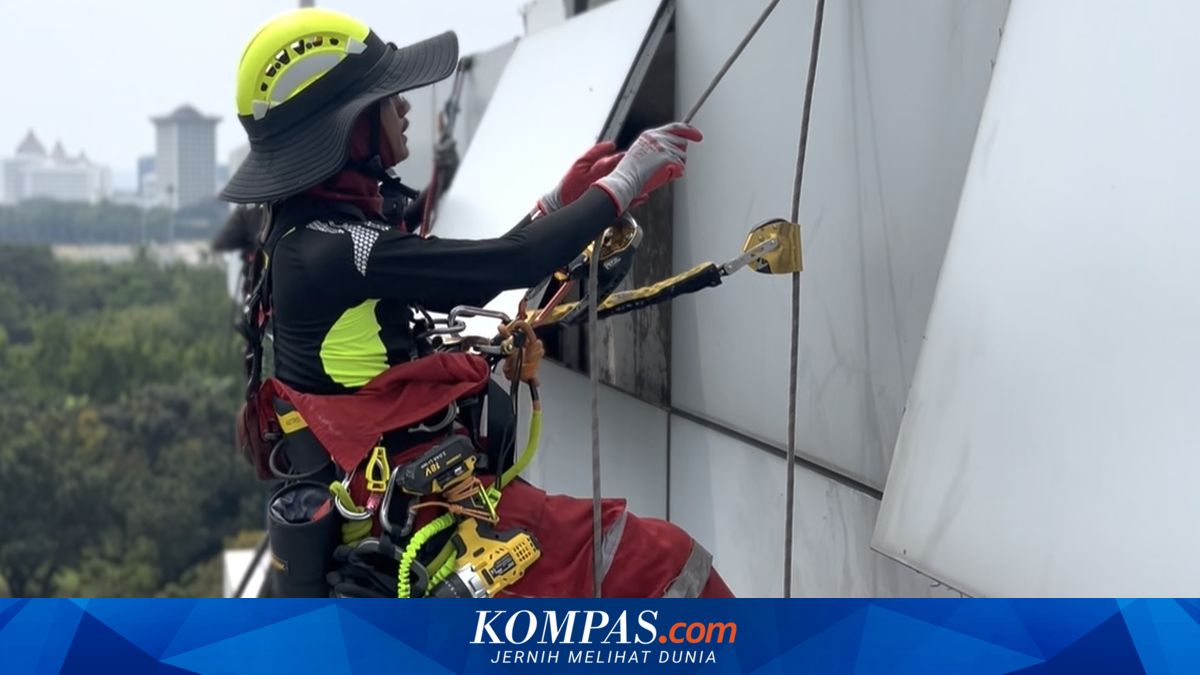
JAKARTA, KOMPAS.com - High-rise window cleaning is one of those professions that almost never truly stands out amid the bustle of a big city. Behind a row of gleaming skyscrapers, workers suspend their bodies from the side of buildings dozens of storeys up to keep the glass clean. They arrive early, bringing heavy and comprehensive safety equipment. When Kompas.com visited the BPH Migas building in Tandean, South Jakarta, on Wednesday (20 May 2026), several workers were seen preparing their tools before descending from the roof. On the harness, there were also various supporting devices such as carabiners, descenders, ascenders and metal anchors that regulate movement up and down the rope while helping maintain the workers’ balance in the air. In addition to the main equipment, they carried safety ropes, gloves and anti-slip footwear to reduce the risk of slipping. Some workers wore protective goggles and face shields to shield themselves from dust, wind exposure and heat from the sun. With the aid of anchor and rope-control devices, they clean the glass while balancing themselves against gusts of wind at tens of storeys’ height. They work freelance under PT Moramon, a company engaged in general contracting, supplier and trading, construction, interior design, and building maintenance. For some people, the job looks extreme and tense. But for Fajar Maulana (27), the job is a challenge he has wanted to pursue for a long time. Fajar says he indeed enjoys challenges. Nevertheless, fear still appears when first working at height. “At first I was scared, because people are bound to fear when learning. But over time you get used to it and become braver, especially once you know the SOP and the tools,” he said. Over about seven years of work, Fajar has tackled various tall buildings in Jakarta and beyond the island. One of the tallest buildings he has tackled reaches around 257 metres or 72 storeys. “If it suddenly rains, we usually descend immediately if possible. If we’re already in the middle of the job, coming down isn’t easy,” he said. Before starting work, the workers typically hold a morning briefing and inspect their tools repeatedly to ensure all equipment is safe to use. “Morning briefing, each person’s prayer, then double-check the tools before starting work,” said Fajar. He says rope-access work requires not only courage but also emotional stability and full focus during work. He says one of the most nerve-wracking conditions is when facing a building with an irregular shape or overhang. “Usually if the building is overhung, the structure protrudes and isn’t flat. That’s what makes it scary,” he said. In addition to the building’s terrain, workers must also study anchor points or safety anchors before descending from the top of the building. In a team, cleaning tall buildings generally involves at least four people. The duration of the work depends on the height and area of the building. According to Fajar, water scale and rainfall splashes are among the most difficult grime to clean compared with moss. Amid the high risks of the job, Fajar says earnings are one of the reasons he remains in the profession. “Those with experience can earn around Rp 15 million or more. Those with decades of experience can earn even more,” he said. Yet he says not everyone can endure this job. Some colleagues choose to quit after starting a family. Fajar says he was once asked by family when deciding to work as a high-rise window cleaner. “At first they asked, ‘Is there no other job?’ But I explained that this job does pay,” he said. He even often sends videos of his work to his family to show that the job still maintains safety standards. A similar story is also shared by Rizki Rianto (36). Before becoming a rope-access worker, he worked in a workshop.