
Suspected Causes of the Deadly Flash Flood in Nepal That Killed Hundreds
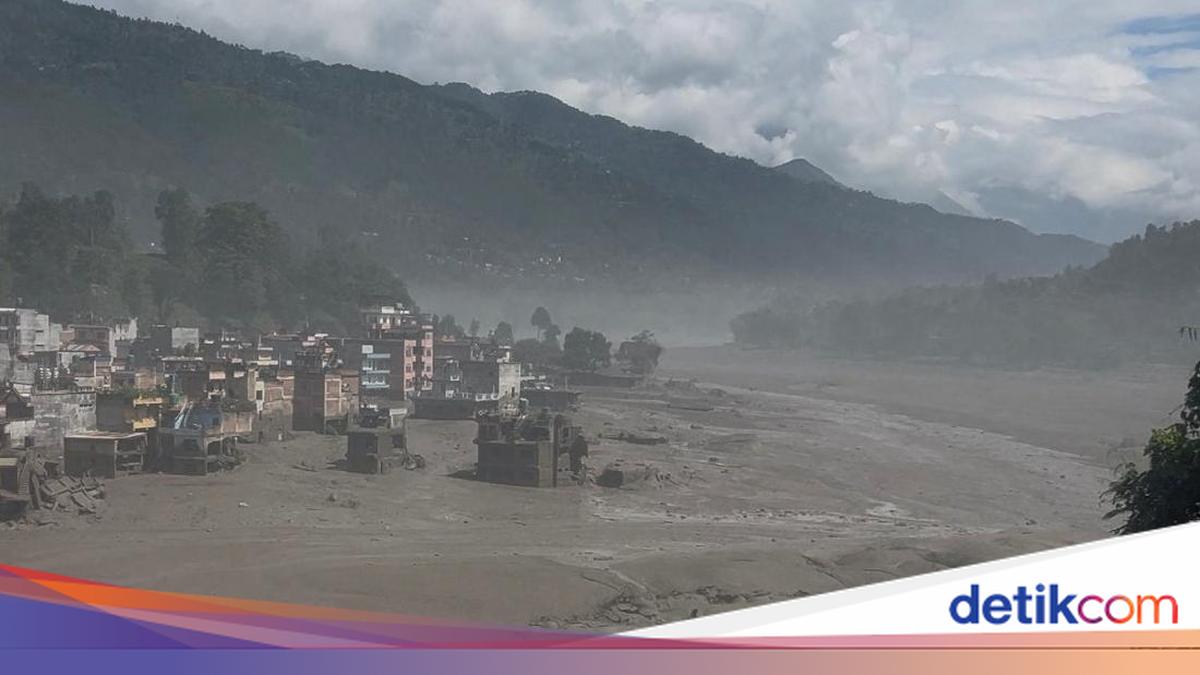
A massive landslide and terrifying flash flood occurred on the Nepal-Tibet border, causing widespread damage and leaving hundreds dead or missing. What triggered the flood?
According to BBC and CNN, Nepal’s Foreign Minister Shisir Khanal stated that an earthquake was reported along the Tibet-Nepal border shortly before the landslide. His remarks indicated that the earthquake may have been the trigger for the disaster.
Initially, the US Geological Survey (USGS) reported a magnitude 4.4 earthquake along the Nepal-China border at 8.37 am local time. At almost the same moment, a torrent of ice and rock surged down the mountain slope towards the Lhende Khola River.
This river is a tributary of the Bhote Koshi River, which flows from China into Nepal and often passes through deep gorges. The USGS later clarified that the recorded tremor was not an earthquake, but rather vibrations caused by an extremely powerful landslide.
The tremor, believed to have been caused by the landslide, was recorded as having a force equivalent to a magnitude 5.2 earthquake. It will take weeks to confirm the exact cause, but an international team of scientists believes that a large chunk of glacier broke away from the mountain and fell into the valley below.
In other words, it was not an earthquake that caused the glacier collapse. Rather, the landslide itself produced tremors resembling an earthquake.
Meanwhile, the cause of the torrential flood that struck and devastated parts of Nepal and Tibet is still being analysed further. Nepal is a region that is highly vulnerable to climate-related disasters amid global warming.
Vast expanses of ice are melting and rocky mountain slopes are becoming unstable, losing their solidity and becoming more precarious. As glaciers melt and form large lakes at high altitudes, summer melting can cause lake water to overflow downstream.
In addition, climate change is triggering more extreme rainfall, which has the potential to cause deadly floods. Scientists are still working to determine the exact cause of the disaster.
They are examining satellite imagery to pinpoint the precise location of the landslide, checking whether any glacial lake suddenly emptied its water, and identifying possible river blockage points, while also analysing recent rainfall data.
To date, Nepalese authorities have recovered 165 bodies. Hundreds more are still reported missing. Search efforts are ongoing.
“The pain and loss you are experiencing is not small,” said Nepal’s Prime Minister Balendra Shah in a statement on social media.
“But I want to reassure you that you are not alone in this difficult time; the state stands with you with all its strength and available resources,” he added.
Source: jawawa.id (https://jawawa.id/newsitem/suspected-causes-of-the-deadly-flash-flood-in-nepal-that-killed-hundreds-1787806343)
Originally published by detikcom (https://news.detik.com/internasional/d-8636134/ini-dugaan-penyebab-banjir-bandang-ngeri-di-nepal-tewaskan-ratusan-orang), translated from Indonesian