
Surviving on Rainwater, Earthquake Refugees in Mekandetung Await Clean Water
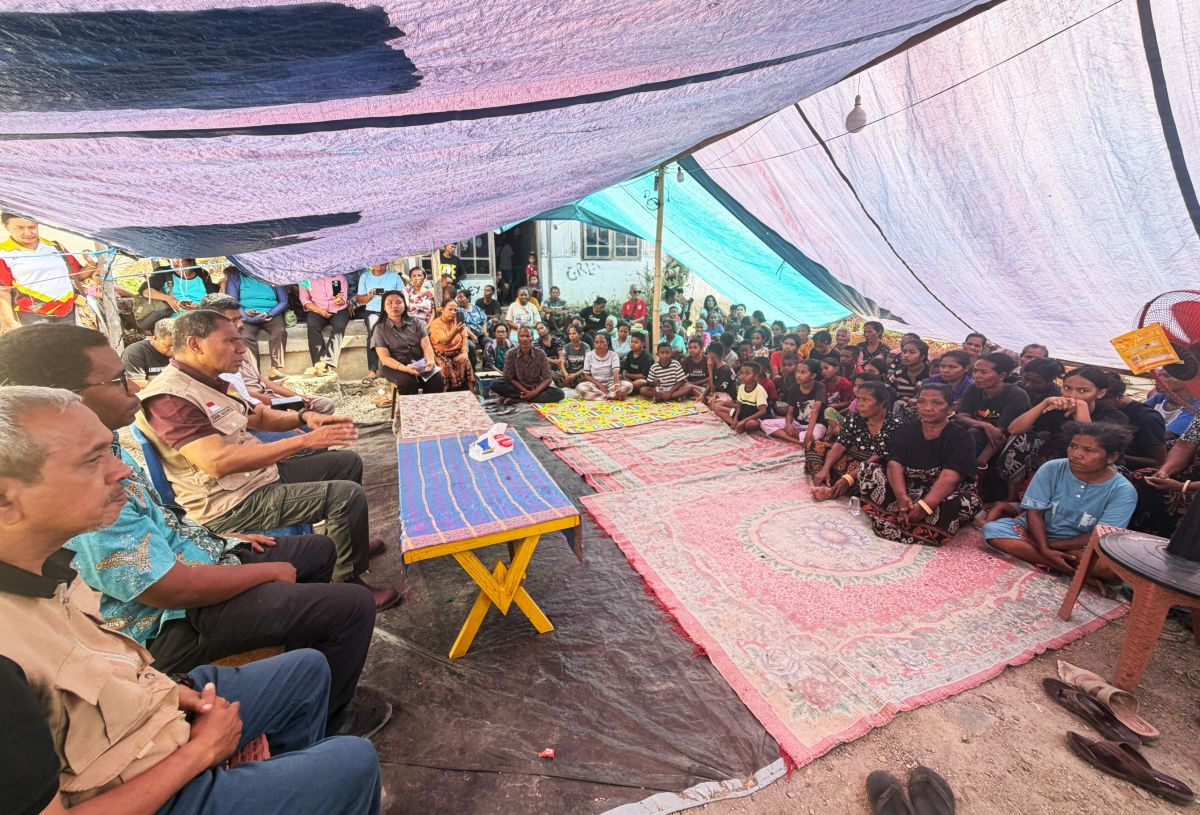
For residents sheltering in Mekandetung village, Kangae district, Sikka Regency, East Nusa Tenggara, rainwater is no longer merely a blessing. Water from the sky has become a supply for meeting daily needs after the 7.7-magnitude earthquake on Saturday (15/8).
However, when the rain stops and supplies begin to run out, residents once again depend on tanker truck deliveries. “We use rainwater here. When the rainwater runs out, we use water from tankers. We really need water, especially since we live on a hill,” said Kristina Potut, a resident living in an evacuation tent.
The need for clean water was conveyed by residents when Deputy Governor of East Nusa Tenggara Johni Asadoma met them at the evacuation site on Sunday (23/8).
For local residents, the clean water problem feels more severe because daily activities now take place in evacuation tents. Water is needed for drinking, cooking, cleaning, and meeting the needs of families that include infants, elderly people, and residents with disabilities.
Mekandetung village has 17 evacuation points accommodating 495 families or more than 900 people. In Kangae hamlet alone there are three evacuation points with 29 families or 79 people, including one infant, 10 elderly people, and residents with disabilities.
Complaints about the need for clean water received an immediate response from Johni. The government will send water supplies using tanker trucks to the evacuation points that need them. “We will send two water tankers to each point that needs them,” Johni stressed.
Johni also asked the sub-district and village governments to continue recording residents’ needs so that aid distributed matches conditions at each evacuation location.
In addition to clean water, residents said food supplies are beginning to run low. They are also still facing fear and trauma after the earthquake.
The earthquake has changed the activities of Mekandetung residents. Homes that previously served as shelter can no longer all be used. Residents are choosing to remain in evacuation tents.
Kangae sub-district secretary Cristiniati Baga said a number of villages in Kangae district have been quite severely affected, both in terms of residents’ homes and public facilities.
“We express our gratitude because the Deputy Governor has come to visit us. In Kangae district there are three to four villages that have been quite severely affected, both residents’ homes and public facilities,” she explained.
A number of educational facilities have also been damaged, including two schools and one early childhood education centre. Several road sections have also suffered cracks and even split apart.
Although there were no fatalities in the area, a number of residents suffered injuries from being struck by falling debris. “For now, community activities are centred in evacuation tents,” Cristiniati added.
Amid these conditions, health facilities have also been affected. The Mekandetung village health post has suffered severe damage. The Waepare community health centre has since requested tents so that health workers can continue providing services to residents.
Basic needs assistance has previously been received by Mekandetung village residents, including staple food packages and blankets.
However, aid distribution to a number of affected areas still faces access constraints. Infrastructure damage has slowed aid mobility, especially towards remote areas.
Johni cited the condition of Palue Island, which still faces limited vehicle access. “In Palue, cars and other vehicles still cannot pass. There are also not many volunteers to transport goods. So it is not that aid does not exist, but mobility is still slow,” he explained.
Therefore, Johni asked residents to be patient because many people in remote villages have not yet been reached due to road damage. “I ask all residents to be patient. I hope the aid that arrives is neither excessive nor insufficient, because there are still many people who have not been reached. There are still many remote villages with roads that are severely damaged and even split apart due to this earthquake,” he said.
In Mekandetung, the problem boils down to the most basic need: water. When rain falls, residents collect water to meet their daily needs. When supplies run out, they wait for deliveries from tanker trucks.
The two water tankers promised by the government are expected to ease the burden on residents still living in evacuation sites. For as long as life has not fully returned to normal, clean water remains a need that cannot be postponed.
Source: jawawa.id (https://jawawa.id/newsitem/surviving-on-rainwater-earthquake-refugees-in-mekandetung-await-clean-water-1787493060)
Originally published by Media Indonesia (https://mediaindonesia.com/nusantara/925090/bertahan-dengan-air-hujan-pengungsi-gempa-di-mekandetung-menanti-air-bersih), translated from Indonesian