
Surviving Amidst the Squeeze of Fuel, Food, and Interest Rates
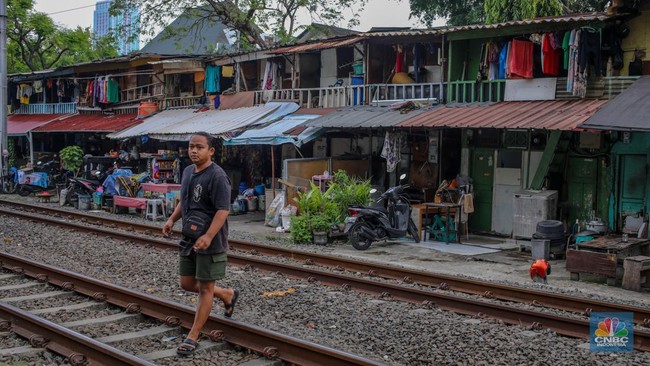
Pressure on public finances has arrived again simultaneously. The increase in non-subsidised fuel prices, food prices, and the upward trend in benchmark interest rates are creating a compounding effect for households and the business world. In the macroeconomic landscape, this phenomenon gives rise to a ‘triple squeeze’ condition: simultaneous pressure that erodes purchasing power, drives up production costs, and makes the cost of funds more expensive.
This condition cannot be dismissed as a mere seasonal cycle. Household consumption is the main engine of national economic growth. Data from the Central Statistics Agency (BPS) for the first quarter of 2026 consistently shows that domestic consumption contributed more than 53 percent to GDP. When purchasing power falls, the domino effect will directly hit business profitability due to plummeting domestic demand.
Economist Mohammad Faisal previously warned that the weakening purchasing power of the middle class is a systemic threat to economic growth targets. As the main driver of national consumption, when this group begins to curb spending due to a cost-of-living crisis, a macroeconomic slowdown becomes an unavoidable consequence.
Theoretically, the increase in non-subsidised fuel prices triggers a multiplier effect. Rising transportation and distribution costs directly transmit price pressure to consumer goods. This is cost-push inflation: inflation triggered by price surges on the upstream production side. This condition is exacerbated by strategic food commodities that are prone to volatility due to supply chain disruptions. On the other hand, the increase in the BI-Rate to maintain Rupiah exchange rate stability impacts the rise in banking interest rates. As Joseph E. Stiglitz explained, the combination of rising staple goods prices and high financing costs will always hit middle- and low-income groups most aggressively.
Facing this layered pressure, we are forced to change strategies to maintain solvency. At the household level, adaptability becomes the main anchor. Research by Irmayanti and Santosa (2025) found that the most effective strategy for dampening inflationary pressure is to rationalise consumption patterns, diversify income sources, strengthen liquidity buffers, and cut non-priority spending items. When interest rates are high, suppressing consumer debt with floating rates becomes a crucial step to save family cash flow.
The challenges in the business sector are no less daunting. According to Mohammad Faisal, when purchasing power slows while production costs rise, corporations must shift their focus from aggressive expansion towards tightening efficiency and optimising existing markets. According to Michael Porter, corporate resilience in times of crisis is largely determined by its ability to achieve cost efficiency without sacrificing value innovation. Research by Annazwa and Faradila (2025) on business actors shows that operational digitalisation, product diversification, supply chain efficiency, and business collaboration are the most effective strategy clusters for boosting business endurance. This is reinforced by research from Yuli Soesetio et al. (2024), which proved that innovation and market adaptation capabilities have a significant positive effect on business competitiveness amidst economic turbulence. More specifically, research by Hamzah et al. (2024) confirmed that digital transformation can cut operational costs while instantly expanding market reach. The implication is that corporations cannot simply cut costs; they must fundamentally transform their operations.
In this triple squeeze condition, the government must take on the role of stabiliser. First, it must stabilise staple food prices as quickly as possible. According to Amartya Sen, food crises are often not caused by a lack of food availability, but by fragile accessibility and entitlement failure. Therefore, improving logistics trading governance and supply chain oversight must be prioritised. Second, the government must provide strategic incentives for labour-intensive sectors and MSMEs. Subsidised interest rates for productive credit and tax relaxation, not increases, are important so that the real sector does not resort to extreme efficiency measures in the form of mass layoffs. Logistics infrastructure must be improved, as high logistics costs contribute significantly to regional inflation formation.
Economist Teuku Riefky reminded that strengthening the middle class, enhancing industrial competitiveness, and creating productive jobs are absolute prerequisites for Indonesia to avoid being trapped in the middle-income trap. So far, our economic policies have often been trapped in a reactive pattern, responding after price turmoil occurs in the market. It is time to build an integrated, commodity data-based early warning system. Furthermore, policy attention must be broadened. If the poor are protected by social assistance, the middle class, which is the engine of consumption, is often neglected by the economic safety net. A World Bank report underscored that the middle class is the engine of Indonesia’s economic growth. Maintaining the economic mobility of this group through certainty of quality employment and inflation stability is the main key.
Our success in escaping the grip of this triple squeeze cannot rely solely on business efficiency or public frugality; there must also be exemplary frugality from leaders. Anticipatory, precise, and pro-real purchasing power synergy between fiscal and monetary policy is the only way to ensure the economic foundation remains solid and sustainable.