
Surveyor Indonesia and UMN Collaborate to Build Coastal Community Resilience
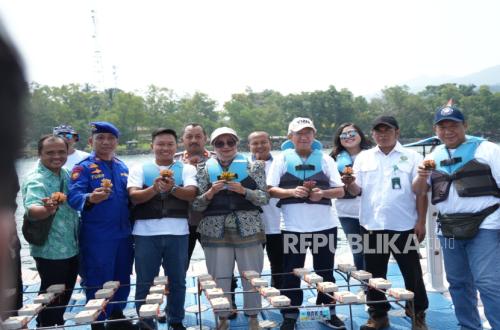
Coral reef damage and various pressures on coastal ecosystems remain significant challenges in several regions of Indonesia. This situation impacts not only the marine environment but also affects the economic activities of communities that depend on coastal resources.
PT Surveyor Indonesia (Persero), together with Universitas Multimedia Nusantara (UMN) and the Underwater Nature Conservation Foundation (KABL), has launched the ‘Pesisir Berdaya Lestari’ (Sustainable Empowered Coast) Programme at Ketapang Beach, Sukarame Village, Carita District, Pandeglang Regency, Banten. The programme serves as a collaborative effort to strengthen the resilience of coastal communities through education, economic empowerment, and environmental conservation.
The programme launch was attended by representatives from PT Surveyor Indonesia, UMN, local government, technical agencies, schools, communities, and local residents. The Head of the Banten Provincial Tourism Office, Eli Susianti, was also present to express support for various coastal development initiatives that prioritise environmental sustainability and community empowerment.
The Pesisir Berdaya Lestari Programme was developed to address the various challenges faced by coastal communities through an integrated approach connecting aspects of education, health, economy, and the environment. Through cross-sector collaboration, this programme is expected to strengthen the capacity of the community to maintain coastal resources while simultaneously improving welfare.
The Head of the Social Responsibility Unit at PT Surveyor Indonesia, Maryanto Tejo Purnomo, stated that the protection of coastal areas is not only about preserving the marine environment but also about ensuring the sustainability of the lives of people whose activities depend on those areas.
“When discussing coastal areas, what we protect is not just coral reefs or the marine environment, but also the lives of the communities that grow and depend on them. Therefore, through the Pili Berdaya Lestari Programme, we are connecting education, environmental conservation, and economic empowerment in one integrated approach,” he said in a press release on Monday (22/6/2026).
The programme is implemented through three main pillars: education, environmental conservation, and community economic empowerment. These three pillars are interconnected to support more sustainable management of coastal areas.
Various pressures on coastal areas are still found in several regions, ranging from coral reef damage, waste pollution, declining water quality, and coastal abrasion to the reduction of coastal vegetation that functions to maintain ecosystem balance. These conditions can affect the fisheries sector, tourism, and the livelihoods of local communities.
Therefore, increasing community awareness and participation is considered a vital factor in maintaining the sustainability of coastal areas. Simple steps such as maintaining beach cleanliness, reducing waste disposal into the sea, supporting community-based waste management, and increasing understanding of the importance of coral reefs can help maintain the quality of the coastal environment.
Various good practices that have developed in several regions of Indonesia show that community involvement can provide a real contribution to environmental preservation. Activities such as beach clean-ups, waste bank management, mangrove planting, coral reef rehabilitation, and the formation of community monitoring groups serve as examples of efforts that not only support environmental recovery but also strengthen the collective awareness that protecting coastal ecosystems is a shared responsibility.
Source: jawawa.id (https://jawawa.id/newsitem/surveyor-indonesia-and-umn-collaborate-to-build-coastal-community-resilience-1782118413)
Originally published by Republika (https://esgnow.republika.co.id/berita/th0wcn416/surveyor-indonesia-dan-umn-kolaborasi-bangun-ketahanan-masyarakat-pesisir), translated from Indonesian