
Survey Reveals 89.9 Percent of Nutrition Service Units Partner with at Least One MSME for Raw Material Supply
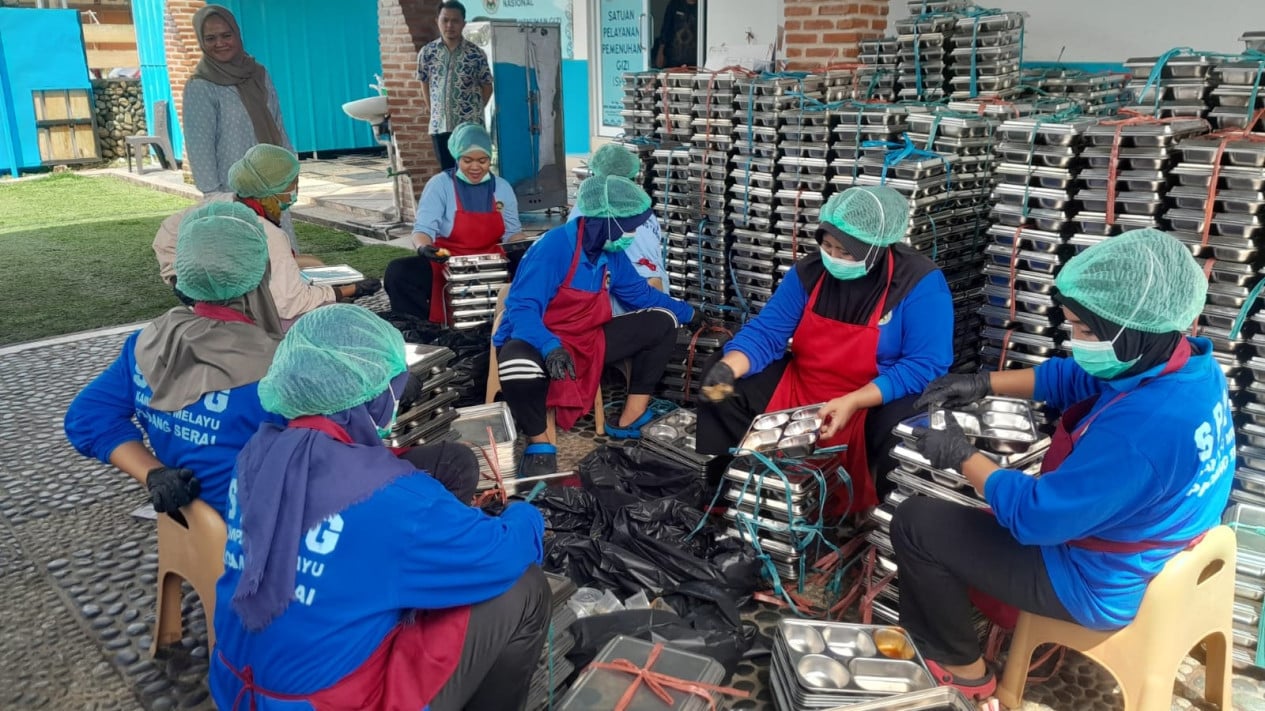
An independent survey regarding the implementation of the Free Nutritious Meal (MBG) programme has found that 86.9 per cent of Nutrition Service Units (SPPG) have at least one small-scale supplier.
Furthermore, Septian Hario Seto, a member of the National Economic Council (DEN), stated that according to the survey conducted by his office, each SPPG partners with an average of three micro, small, and medium enterprises (MSMEs) as suppliers for raw materials and other operational needs.
“The first positive result we observed is that 86.9 per cent of the current SPPGs have at least one small supplier,” Seto said at the Presidential Palace Complex, Jakarta, as reported on Wednesday, 10 June 2026.
These findings indicate that the MBG programme is not only contributing to the improvement of nutrition for Indonesian children but is also creating a new supply chain ecosystem involving local business actors.
Furthermore, Seto noted that approximately 65 per cent of the MSMEs serving as suppliers are located in the same regency as the SPPG. This condition demonstrates that the economic benefits of the MBG programme are being largely felt by local entrepreneurs in the regions.
“Therefore, it is important to note that it is not large suppliers entering, but rather the MSMEs that are emerging are indeed those located within the regency or the location where the SPPG is situated,” he explained.
The DEN survey also found that almost 99 per cent of the workforce employed in SPPGs consists of people from the surrounding community. This indicates that the MBG programme is also creating jobs and stimulating regional economies.
Additionally, the DEN noted that the satisfaction level regarding the performance of MSME suppliers is quite high, reaching over 70 per cent.
Nevertheless, several challenges remain that need to be addressed, particularly regarding access to capital for MSME players so they can increase their business capacity and expand the variety of commodities provided.
“This way, they can have better working capital, ultimately allowing them to serve more SPPGs and offer a more diverse range of commodities,” said Seto.
Seto added that strengthening the local supply chain through this programme is one of the factors supporting Indonesia’s economic growth, which has reached 5.61 per cent.
The survey results have been reported by the DEN to President Prabowo Subianto as material for evaluation and input for the future development of the MBG programme.