
Survey: Iran War Becomes the Most Hated Military Operation Among Americans
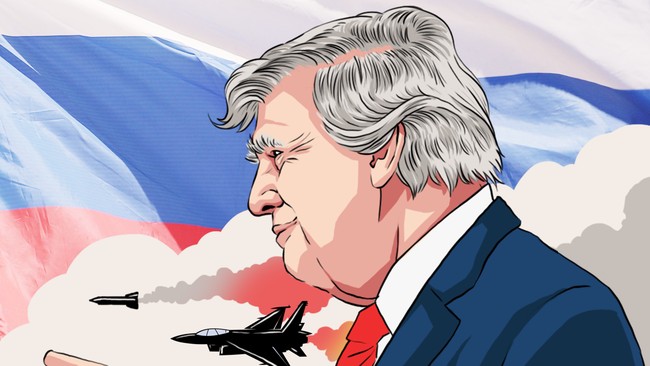
The war between the United States (US) and Iran has intensified once again in recent weeks. Attacks by both nations continued through the end of last week, Sunday (19/7/2026), diminishing hopes that the conflict will soon come to an end.
The US military struck Iran again for the ninth consecutive night.
US Central Command (CENTCOM) in the Middle East said the latest strikes targeted military command centres, air defence systems, coastal surveillance sites, maritime capabilities, missile and drone launch sites, as well as Iran’s communications networks.
Iranian media reported explosions heard in several cities, including Tabriz, Chabahar, Konarak, Bandar Mahshahr, and Bandar Imam Khomeini. The US said the strikes were intended to weaken Iran’s ability to attack commercial vessels passing through the Strait of Hormuz.
Iran retaliated in turn. Attack warning sirens sounded in Bahrain on Monday morning (20/7/2026), whilst throughout last weekend Tehran launched attacks on several US military facilities in the Gulf region. Iran was also reported to have attacked US military assets in Kuwait, whilst Kuwait and Bahrain intercepted a number of Iranian missiles and drones.
The latest fighting has also added to the American death toll. Two US soldiers were killed in an Iranian attack in Jordan on 17 July, whilst another soldier died in Iraq a day later whilst handling remnants of explosives from a downed Iranian drone.
The continuing attacks have created a major problem for US President Donald Trump. He has no clear exit from the war, whilst public support in the US for the conflict continues to plummet.
According to The Economist, the situation has even become the subject of mockery in Washington.
A golden trophy inscribed with the “Iran War Participation Trophy” was erected not far from the Martin Luther King memorial.
The trophy, made by an anonymous group, mocked Trump for being seen as bold enough to take the US into war, but without showing clear results or a way out.
Maura Flint, a local tour guide, found the jibe amusing. However, the reality is far from a laughing matter. In her view, Trump has no clear strategy to end the war.
Similar worries are felt by the American public. A Reuters/Ipsos survey showed that around four in five citizens expect the war to last a long time.
An Economist/YouGov poll also recorded that nearly half of Americans expect the conflict to last at least a year. Net support for Trump’s decision to attack Iran now stands at minus 30%.
The Vietnam War took six years to become deeply unpopular among the American public. The Iran war, by contrast, has reached the same level of unpopularity in just six months.
The Iran War Grows Increasingly Unpopular
Larry Sabato of the University of Virginia believes the most striking aspect is not only the scale of opposition to the war, but also how quickly that sentiment emerged.
According to him, the Iran war is the most unpopular conflict among the American public since opinion polling began. Rejection was already visible from the very first day of the war, on 28 February 2026.
The longer the war drags on, the greater the costs that must be borne. One political cost is declining support for Trump and the Republican Party heading into the midterm elections.
Public support for wars initiated by government choice usually starts high, then gradually declines.
When the US first attacked the Taliban in Afghanistan in 2001, for instance, nearly 90% of Americans supported the move.
President George W. Bush at the time had a rationale easily understood by the American public. The Taliban had sheltered the terrorists who flew planes filled with civilians into the World Trade Center in New York on 11 September 2001, an event that came to be known as 9/11.
According to Gallup, it took 13 years for support for the invasion of Afghanistan to fall below 50%. By that point, more than 2,000 Americans had been killed and around 20,000 others wounded.
The number of American casualties in the Iran war so far is indeed far smaller, at 17. However, the war has quickly affected Americans’ wallets through rising energy prices.
Oil Prices Begin to Burden Americans
Before Trump attacked Iran, the Strait of Hormuz remained open. Now, the route carrying 20% of the world’s oil trade can no longer be traversed normally.
After various efforts to reduce Iran’s control over the strait, Trump claimed oil was in fact flowing more strongly than before thanks to US military might.
However, market data tells a different story.
Brent crude prices have indeed fluctuated up and down. Nevertheless, recent increases have begun to pose a problem for the Republican Party.
Since the start of July, Brent has surged from around US$72 to more than US$90 per barrel.
According to Refinitiv data as of 09:45 WIB, Brent crude rose 2.51% to US$90.31 per barrel, from Friday’s closing position (17/7/2026) of US$88.10 per barrel.
West Texas Intermediate (WTI) also strengthened 2.25% to US$84.35 per barrel, from US$82.49 previously.
Petrol prices in the US are now approaching US$4 per gallon, up from around US$3 before the war began. This rise is felt directly by the public when filling up their vehicles.
The Vietnam War, which involved large numbers of American ground troops, was quickly regarded as the most important problem facing the country.
Americans have not yet placed the Iran war as the country’s biggest problem. However, when asked about the issues that worry them most, many cite the high cost of living and poor leadership.
Therefore, the Iran war could still become a major problem for the Republican Party in the elections, even though the number of American deaths remains relatively limited.
The strongest rejection comes from Democratic Party voters. Their net approval of the war stands at minus 84%.
Among independent voters, net approval is also very low, at minus 52%.
The large group still supporting the war consists of Republican supporters from the Make America Great Again, or MAGA, camp. Net approval in this group still stands at 72%.
However, support from Trump’s core base is also beginning to weaken.
A Washington Post/Ipsos survey showed that, for the first time, more than half of Trump’s supporters only said they were “somewhat approving” of the president’s handling of his job, rather than “strongly approving”.
A sharper shift is visible among non-MAGA Republican supporters. Their net approval of the war has plummeted from plus 26% in April to minus 25% currently.
The Cost of War Comes Under Scrutiny
Democratic politicians have now begun using the Iran war to attack the Trump administration.
At a confirmation hearing on 14 July for Jules Hurst, Trump’s nominee to oversee the Pentagon budget, Democratic senators accused the administration of understating the true cost of the war.
The Pentagon estimates the cost of the war so far at around US$30 billion. That figure comes largely from the value of munitions expended and fuel expenditure.
However, Senator Elissa Slotkin of Michigan offered a rough estimate more than six times the Pentagon’s figure.
Her calculation also included the cost of repairing US military bases as well as losses suffered by consumers as a result of the war.
Slotkin also criticised the Pentagon’s business dealings with several companies linked to Trump’s sons.
Even so, not all politicians regard the war as a mistake.
Mike Lawler, a Republican member of Congress representing a tightly contested district in New York State, believes some Democratic criticism of the war makes no sense.
In his view, Trump made a difficult decision, but one that was necessary to eliminate the threat of Iran’s nuclear programme and Tehran’s support for terrorism.
Lawler admitted he did not know how long the war would last. However, he believes the Iranian government cannot be trusted and understands only military pressure.
Lawler will face Cait Conley, a Democratic military veteran, in the November election.
Conley launched stinging criticism at Trump. In her view, the president has taken the US into a conflict without a clear military objective and without a strategy for getting out.
The Economist’s midterm election model gives Lawler a 68% chance of losing his seat in November.
The model also gives the Democratic Party an 82% chance of taking control of the US House of Representatives. Meanwhile, the Democrats’ chance of securing a Senate majority is estimated at 45%.
Aaron David Miller of the Carnegie Endowment believes Trump’s difficulty in extricating himself from the Iran war reminds him of the words of former US President Lyndon Johnson about the Vietnam War.
Johnson at the time described himself as a hitchhiker caught in a hailstorm on a Texas highway.
“I couldn’t run. I couldn’t hide. And I couldn’t make it stop,” he said.
Source: jawawa.id (https://jawawa.id/newsitem/survey-iran-war-becomes-the-most-hated-military-operation-among-americans-1784559222)
Originally published by CNBC Indonesia (https://www.cnbcindonesia.com/research/20260720111347-128-752153/survei-perang-iran-jadi-operasi-militer-paling-dibenci-warga-amerika), translated from Indonesian