
Survey: Digital Banking Security is Key to Digital Economy Sustainability
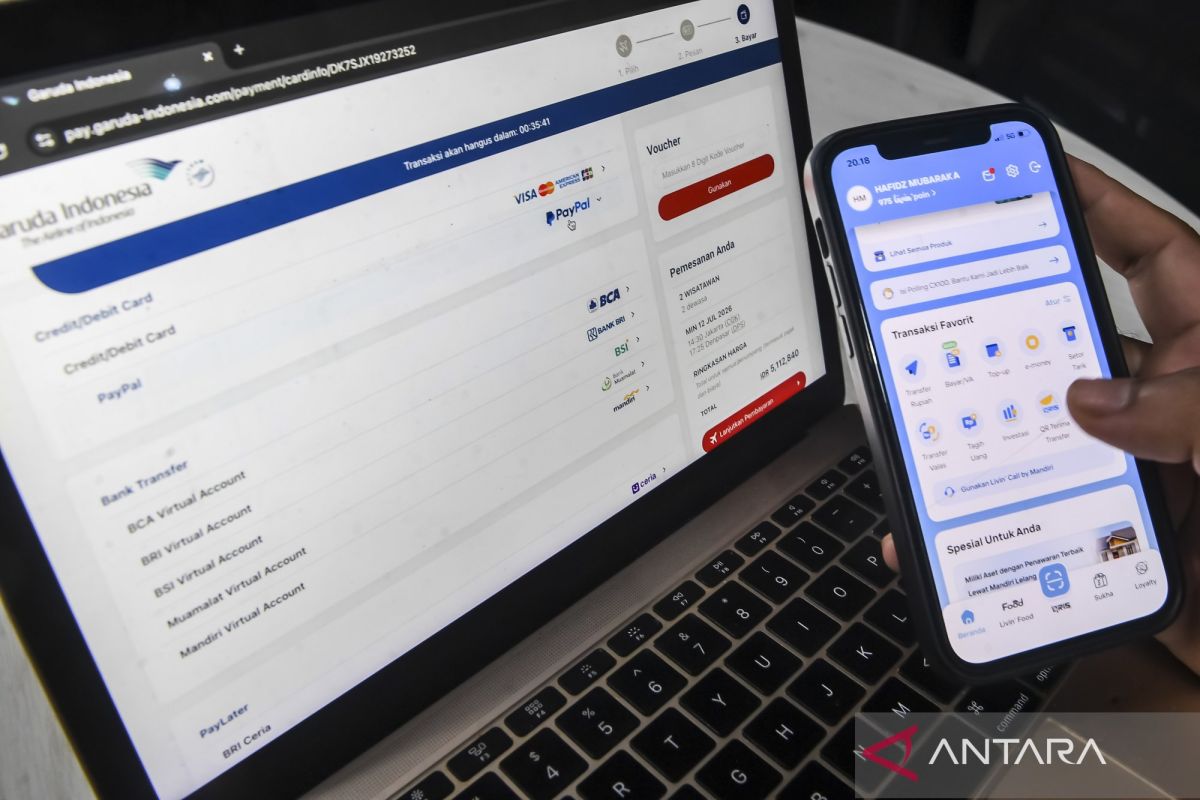
Jakarta (ANTARA) - The Southeast Asia Consumer Tech Trust Score survey, conducted by Vero Indonesia in collaboration with Kadence International, has found high levels of consumer confidence in digital banking and payment technologies, with an average score of 81.7. This high level of trust could serve as a decisive factor for the sustainable growth of the digital economy in Southeast Asia.
Fuad Arrasyid, a strategist at Vero Indonesia, stated that Indonesia’s high level of trust in digital financial services must be accompanied by the acceleration of the digital economy ecosystem, the expansion of financial inclusion, and the implementation of AI-driven operational efficiencies to ensure user loyalty. “Particularly for Indonesia, it is clear that transparency, a proven track record, and accountable incident management are crucial in determining consumer trust levels. Communication is vital as it bridges innovation and public trust, ensuring that technological expectations can be met sustainably,” Fuad said in a statement received in Jakarta on Saturday.
The survey involved 3,000 respondents across Indonesia, Malaysia, the Philippines, Singapore, Thailand, and Vietnam, measuring trust across 10 technology categories, including cloud storage, cybersecurity, e-commerce, digital payments, generative artificial intelligence (AI), instant messaging, online banking, ride-hailing, social media, and telecommunications.
Regarding digital financial services, users in Indonesia and Malaysia show a tendency to cease using services following incidents such as personal data breaches, online fraud, or service disruptions. In Indonesia, 42 per cent of respondents stated they would abandon online banking services following a serious incident, while 2ly per cent would stop using digital payment services. In Malaysia, these figures were 40 per cent and 20 per cent, respectively.
The survey also revealed that 49.5 per cent of Indonesian respondents identify the misuse of personal data as their primary concern when using digital services. Meanwhile, various modes of online fraud represent the most widespread threat, appearing among the top three concerns for 79 per cent of respondents.
Nevertheless, 54 per cent of respondents stated they would only temporarily suspend service use until the company successfully resolves the issue, while 43 per cent prefer to see a proven track record as a signal of a trustworthy technology brand. Diah Andrini Dewi, Executive Account Director at Vero Indonesia, noted that data breaches are no longer merely a cybersecurity issue but a test of public trust, especially for the banking and digital finance sectors that manage personal data and public financial assets.
“These findings show that consumers increasingly judge companies by how they respond to crises, rather than solely by the quality of products or services offered. Rebuilding trust requires more than official statements; it must be accompanied by transparency, tangible remedial actions, and the involvement of credible independent parties,” she said.
While digital banking and payments show above-average usage and hold the highest trust rankings, Ashutosh Awasthi, Director of Kadence International, emphasised that technology companies must understand that business success is determined not just by user numbers, but by the underlying level of trust. “To ensure sustainable growth, they need to make consumers feel confident enough to continue relying on products, even when expectations, risks, or alternatives change,” Ashutimsh added.
The study concludes that amidst rapid digital transformation in Southeast Asia, consumer trust is an asset as vital as technological innovation. For companies, maintaining transparency and strengthening data protection is key to user loyalty, while for governments, clear regulation and the enforcement of consumer protection will serve as the foundation for sustainable digital economic growth.