
Survey: 88.8 Percent of Respondents Satisfied with 2026 Mudik Services
From a scale of 1 to 10, we obtained a score of 7.18. Based on this scale, we can categorise that respondents who undertook mudik were quite satisfied with the services or mudik management provided by the government,” said Head of Research at KedaiKOPI, Ashma Nur Afifah, during the presentation of KedaiKOPI’s annual survey on the implementation of Lebaran mudik, as quoted in an official press release received in Jakarta on Monday.
Ashma stated that this satisfaction was measured across two major aspects: public transportation fleet services, and overall infrastructure and mudik management policies.
Regarding fleet services, she noted that the highest consistent satisfaction was recorded for the comfort of buses, trains, and official travel or shuttle services. However, each mode had its own weaknesses; for bus users, the lowest-rated aspect was the comfort of bus terminals.
Additionally, the survey recorded the biggest complaints from train passengers concerning ticket quota availability, which dropped significantly from last year, from 84.8 percent to 76.1 percent, a decrease of 8.7 percent. Meanwhile, users of official travel services complained about comfort while waiting at pools or pick-up points.
For sea vessels, the highest satisfaction was felt during the queuing process to board the ship, while the lowest aspect was the orderliness of queuing to buy tickets at the port.
For air travellers, in-cabin comfort received the highest appreciation, while ticket quota availability was the lowest aspect, though the figure actually rose from 76.2 percent last year to 80 percent this year.
“Difficulties in accessing train tickets were felt more by respondents this year compared to last year. The biggest drop was in train ticket quota availability, which was 84.8 percent last year and now only 76.1 percent,” said Ashma.
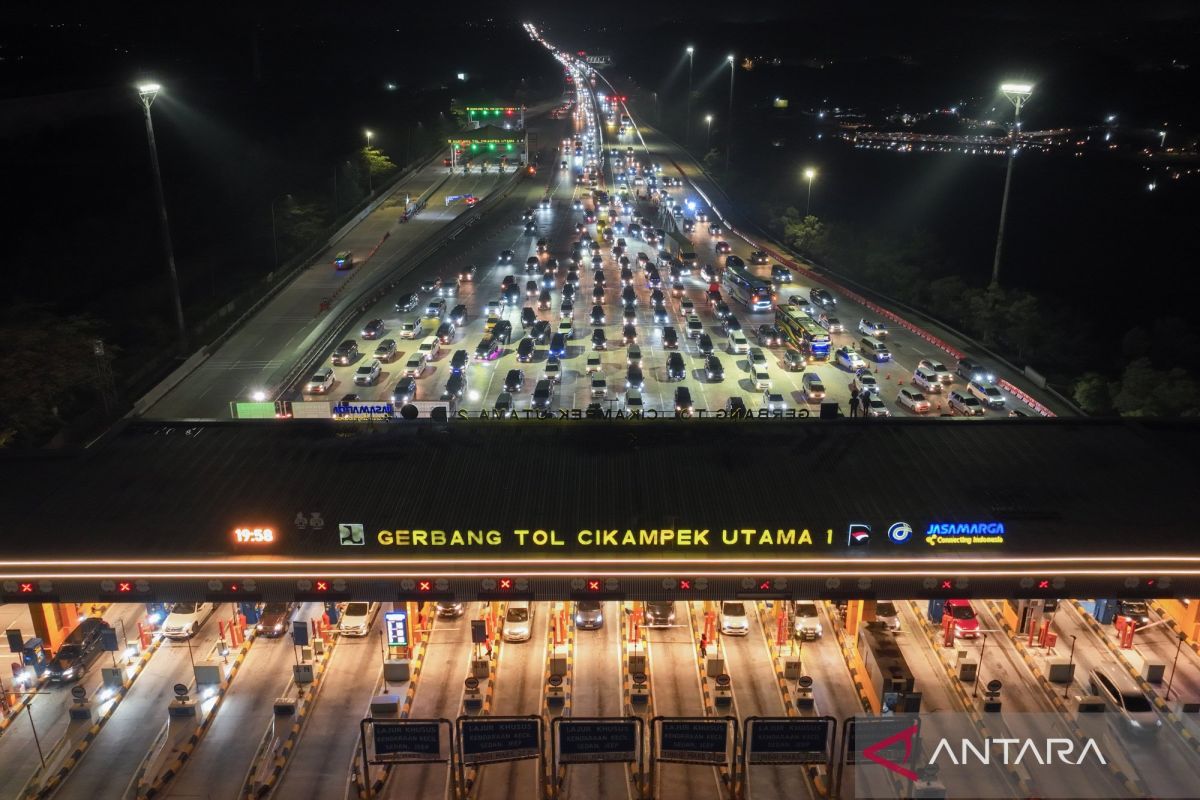
From the road infrastructure side, satisfaction with roads was very high at 91–92 percent. The most appreciated aspects were the condition upon entering the toll road (92.7 percent) and the safety and lighting of the toll road (92.2 percent).
Specifically for toll road lighting, this figure surged sharply compared to last year at only 77.2 percent, an increase of 15 percent.
Additionally, for non-toll roads, the availability of clear and adequate traffic signs received the highest appreciation at 85.8 percent. The most complained-about aspect was the smoothness of roads within districts or destination cities (73.1 percent), down from 82.9 percent in 2025.
“There was an improvement in the safety and lighting aspects of toll roads. Last year, satisfaction was only 77.2 percent; this year it rose to 92.2 percent. So there was indeed an improvement in toll road lighting this year, which was appreciated in maintaining security during the 2026 mudik,” said Ashma.
Ashma then explained that government-implemented traffic engineering policies, such as the one-way system and contraflow, received positive responses from 80.8 percent of respondents.
Meanwhile, 82 percent of mudik travellers expressed satisfaction with the health posts available during the journey.
“Satisfaction with traffic engineering policies previously reached 91.2 percent and health posts 92.9 percent in 2025. We found the same pattern this year; the majority are still satisfied, but the percentages dropped compared to last year,” said Ashma.
One of the most appreciated policies by mudik travellers was the separation of port access based on vehicle type, which applied to the Merak–Bakauheni and Ketapang–Gilimanuk routes from 13–29 March 2026. As many as 91.5 percent of respondents agreed with the policy, with an average support score of 7.66 out of 10.
The KedaiKOPI survey also measured police performance from two sides: traffic police (Polantas) on the roads, and police guarding the security of homes left empty by mudik travellers.
From the Polantas side, Ashma explained that 80.6 percent of respondents felt satisfied with Polantas’ performance in maintaining smooth mudik traffic flow, and 81.7 percent were satisfied with their performance in maintaining mudik traffic security. Although still above 80 percent, Ashma said both figures dropped compared to 2025, decreasing by 5.7 percent and 6.2 percent respectively.
From the home security side, 86.7 percent of respondents believed that local apparatus such as neighbourhood associations (RT/RW) or security guards could protect their homes while they were away on mudik, with an average trust score of 7.78. Trust in the police for maintaining residential area security was recorded at 79.4 percent, with an average of 7.20.
“If we focus on all aspects asked regarding police performance, namely maintaining traffic flow, maintaining mudik traffic security, to maintaining home security, then the average satisfaction score is 7.81. The number of respondents satisfied with Polri’s overall performance is 84.1 percent,” said Ashma.
The survey was conducted from 23–30 March 2026 on 1,101 respondents who met the criteria as 2026 Lebaran mudik travellers.