
Survey: 73.8 per cent of ride-hailing drivers joined due to lack of formal employment
We want to provide protection, but if the design of that protection significantly reduces the number of people able to find work, then the impact on society must also be calculated.
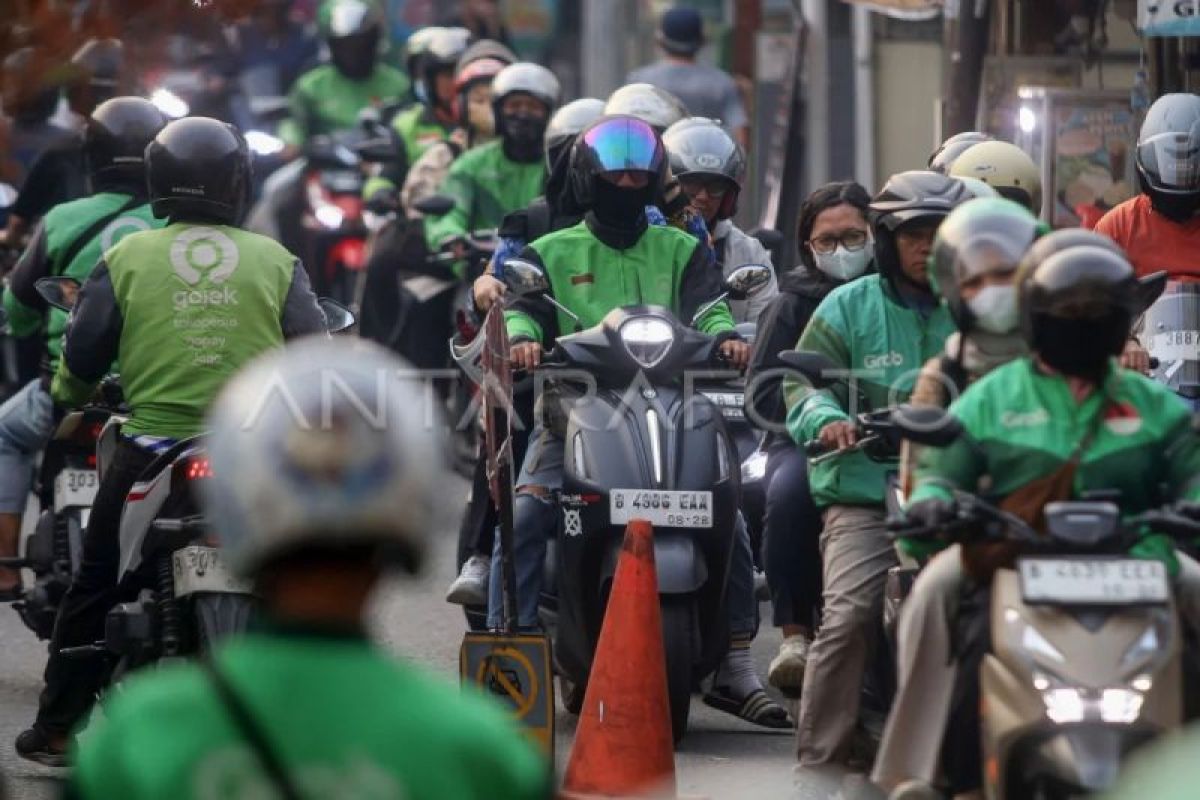
Jakarta (ANTARA) - A survey by the Segara Research Institute shows that 73.8 per cent of online motorcycle taxi (ojol) drivers joined the gig economy or digital platform-based work because they were unable to obtain formal employment.
The survey was conducted between August and September 2026, involving 506 gig workers across Jakarta, Bandung, Surabaya, Medan, and Makassar, including 175 partners driving online motorcycle taxis and cars.
The Segara Research Institute survey, released in Jakarta on Friday, noted that overall, 4-0.3 per cent of respondents chose gig work because they could not secure formal employment. Meanwhile, 57.3 per cent of respondents admitted they have never worked in the formal sector.
Gig workers comprise platform-based workers such as freelancers, online motorcycle taxi drivers, logistics couriers, service providers on digital platforms, and content creators.
Within the group of online motorcycle taxi drivers, 22.1 per cent of respondents also reported having experienced redundancy (PHK).
Segara noted that these findings indicate gig work has become an alternative source of income for people facing limited access to formal employment.
In addition to access to income, time flexibility was the most frequently cited advantage by respondents, at 88.1 per cent. For online motorcycle taxi partners, this figure reached 95 per cent.
Income patterns among gig workers are also diverse. Approximately 81.6 per cent of respondents use gig work as their primary source of income, while 32.4 per cent hold more than one gig job, and 18.4 per cent still maintain formal employment.
The survey also noted that 23.3 per cent of online motorcycle taxi partners are aged 45 and above, a group that, according to Segara, faces relatively greater challenges in re-entering the formal labour market.
Economist at the Segara Research Institute, YB Kadarusman, believes that the characteristics of gig workers must be considered when designing policies related to digital platform-based work.
He stated that such consideration is vital because platforms have served as an entry point for people in need of either primary or supplementary sources of income.
“We want to provide protection, but if the design of that protection makes the number of people able to find work much smaller, then the impact on society must also be calculated,” he said.
Source: jawawa.id (https://jawawa.id/newsitem/survey-73-8-per-cent-of-ride-hailing-drivers-joined-due-to-lack-of-formal-employment-1790956755)
Originally published by Antara (Indonesian) (https://www.antaranews.com/berita/5769196/survei-738-persen-ojol-gabung-karena-tak-dapat-pekerjaan-formal), translated from Indonesian