
Surprising! Plastic Price Surge Has Not Yet Driven Indonesian Inflation, Here Is Why
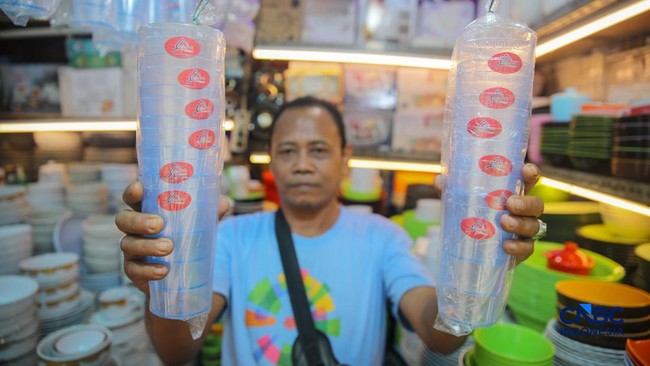
The Indonesian Central Statistics Agency (BPS) has revealed that the recent surge in market prices for plastic has not become a primary driver of consumer-level inflation.
BPS Head Amalia Adininggar Widyanti explained that the impact of plastic prices on inflation depends heavily on whether producers decide to pass these costs on to the public through finished products. Amalia noted that the public does not consume plastic directly in significant quantities, meaning price hikes in raw plastic materials are not automatically felt by consumers.
“Regarding plastic, plastic does not feature significantly within our people’s consumption basket. If we look at the top 20 commodities consumed by the public, the 17th largest is bottled water,” Amalia stated during a Coordination Meeting for Inflation Control at the Ministry of Home Affairs on Monday. “As long as the price of bottled water remains unchanged—depending on whether the producers decide to raise prices due to increased plastic costs—the consumer will not feel the impact of the plastic price itself, but rather the price of the bottled water. We will see the results in the inflation data to be published in early June 2026.”
She added that the impact of rising plastic prices would only be reflected in inflation if food and beverage producers begin raising selling prices due to increased packaging costs. While she cited products like bottled water and plastic-wrapped snacks as examples, she emphasised that the weight of plastic-based products in the consumer basket remains relatively small.
BPS observes that the primary sources of inflationary pressure stem from other components with much larger expenditure weights in Indonesian household consumption. Amalia revealed that the largest expenditures currently consist of electricity tariffs, petrol, and rice. Due to their significant weight in the consumption basket, price fluctuations in these commodities have a far greater impact on national inflation than plastic.
“The reason why rising plastic prices in the market are not yet directly felt by consumers is that the largest weight in the consumer basket is electricity tariffs. The largest proportions of public expenditure are allocated to electricity, petrol, rice, house rentals, meals, internet subscriptions, university fees, clove cigarettes, household fuel, and mobile phone credit,” Amudi explained.
She also noted how changes in electricity tariffs have historically influenced national inflation; when the government provides electricity discounts, inflation eases, whereas returning to normal rates causes inflation to rise. Additionally, subsidised petrol remains a sensitive factor. Amalia noted that as long as subsidised petrol prices remain unadjusted, their impact on inflation is contained, as recent fuel price increases have primarily affected non-subsidised petrol.
Finally, rice was identified as a critical commodity for the direction of national inflation due to its high consumption weight among the population.