
Surprising Facts Regarding the 40% Local Content Requirement for Electric Vehicles
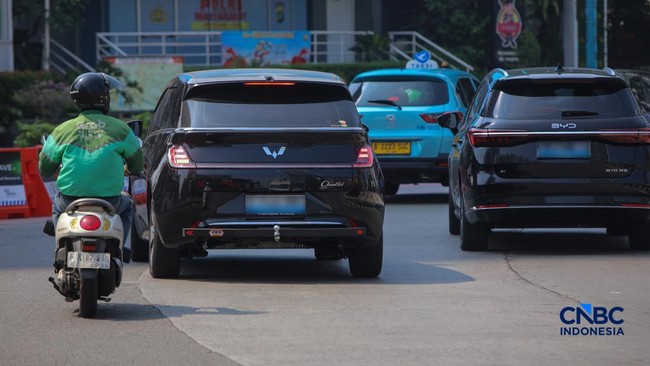
The national automotive component industry still faces a major task amidst the rapid development of electric vehicles in Indonesia. The implementation of the Domestic Component Level (TKDN) for electric vehicles indeed opens opportunities for the local industry, but the scope for component localisation is considered still limited.
This situation is a point of concern because the TKDN policy runs alongside various government incentives designed to boost the electric vehicle market. On the other hand, the TKDN calculation, which assigns a large portion to the assembly process, means that the added value entering the local component industry has not yet reached its maximum potential.
The Secretary General of the Association of Automotive Tool and Part Industries (GIAMM), Rachmat Basundari, stated that several electric vehicle components are actually starting to be considered for domestic production or supply. However, the quantity remains low.
“The specific components are not yet many, such as tyres, wheel rims, safety glass, wiring harnesses, several interior parts, and others,” Rachmat told CNBC Indonesia on Monday.
Opportunities for local component manufacturers are also being opened through explorations with vehicle manufacturers. The government has facilitated meetings between the component industry and parties in need of electric vehicle components.
“In addition to them searching for those parts or components themselves, we have been facilitated with business matching by the government twice. Naturally, we want to be heavily involved,” he said.
Under the electric vehicle TKDN scheme, there are several calculation components that allow the 40% target by 2026 to be achieved through a combination of vehicle production processes and component localisation. This portion does not originate entirely from the use of components produced by the domestic industry.
For the end-2026 target, the vehicle assembly process in Indonesia contributes 30% to the TKDN calculation. Furthermore, battery localisation down to the cell level carries a weight of 40%, while main and other supporting components account for a 10% portion.
Consequently, once the assembly process is conducted in Indonesia, manufacturers only need to pursue an additional 10% through the localisation of certain components to meet the 40% TKDN target by the end of 2026. This localisation has not yet been implemented massively across all types of components.
“The calculation for electric vehicle TKDN is 30% for the car assembly process, 40% for battery localisation down to the cell, and the remaining 10% for localising main or supporting components. By the end of 2026, it must reach 40%. This means 30% is already fulfilled from the assembly process in Indonesia, and the remaining 10% is met by localising several components, even though it is not yet massive,” said Rachmat.
Source: jawawa.id (https://jawawa.id/newsitem/surprising-facts-regarding-the-40-local-content-requirement-for-electric-vehicles-1790600098)
Originally published by CNBC Indonesia (https://www.cnbcindonesia.com/news/20260928161726-4-771516/fakta-mengejutkan-mobil-listrik-wajib-tkdn-40-kondisinya-begini), translated from Indonesian